IPS Definition: What Is IPS, Its Types, And How It Works

Quick Answer
An Intrusion Prevention System (IPS) is a network security solution that monitors traffic in real time, detects cyber threats, and automatically blocks malicious activity. Common IPS types include Network-based (NIPS), Host-based (HIPS), Wireless (WIPS), and Network Behavior Analysis (NBA).
An Intrusion Prevention System (IPS) is a network security solution that monitors traffic, detects cyber threats, and automatically blocks malicious activity before it can harm systems or data. In this guide, you’ll learn the IPS definition, how it works, the different types of IPS, and why it plays a vital role in modern cybersecurity.
IPS Definition: What Does Intrusion Prevention System Mean?
Within the evolving landscape of computer security and cybersecurity, the acronym IPS stands for Intrusion Prevention System. According to the official definition provided by the National Institute of Standards and Technology (NIST) and its Computer Security Resource Center (CSRC), an IPS is a network security technology designed to identify and automatically prevent malicious or unauthorized activities within IT environments. This crucial security & privacy device acts as a gatekeeper, blocking potentially harmful traffic as part of an organization’s overall security architecture.
In the glossary of key security terms maintained by the Information Technology Laboratory (ITL) within NIST, intrusion prevention system is defined as a real-time security solution that not only detects but also actively responds to network threats. To locate an authoritative dictionary entry for IPS, resources such as the Merriam-Webster dictionary and the NIST CSRC Glossary provide clear abbreviations and usage cases, helping cybersecurity professionals and risk management leaders accurately cite this entry in policy documents or white papers.
While “IPS” most commonly denotes intrusion prevention system in a computer security context, it is worth noting that, in other disciplines, IPS can serve as an abbreviation for “inches per second.” Glossary and dictionary resources, therefore, differentiate these meanings based on context, with “inches per second” frequently appearing in style guides, word finder tools, and official publications on measurement units.
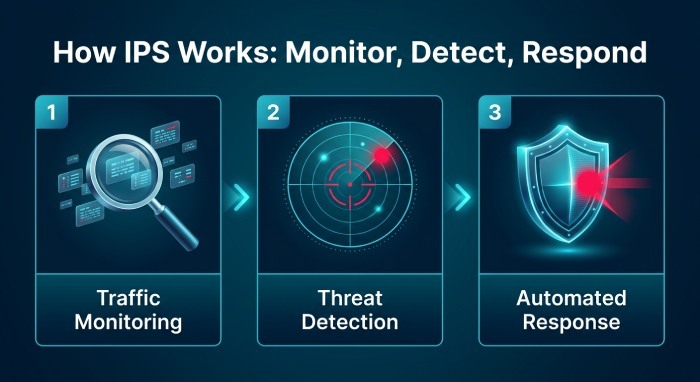
How IPS Works: Traffic Monitoring, Threat Detection, and Automated Response
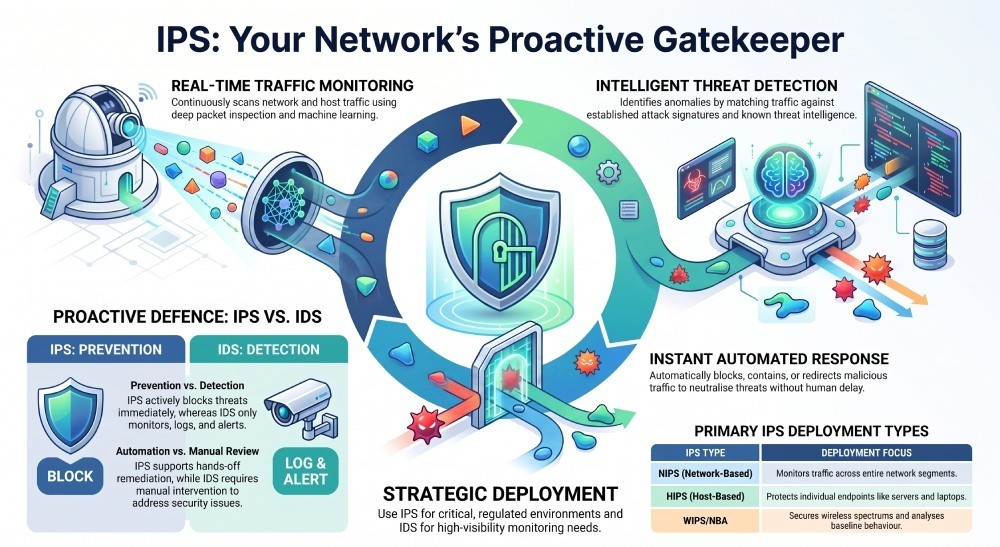
An intrusion prevention system forms a vital layer in network security engineering by performing three critical functions: traffic monitoring, threat detection, and automated response. This comprehensive process is tightly integrated with an organization’s broader cybersecurity and privacy posture.
Traffic Monitoring
Intrusion prevention systems continuously scan network and host traffic, analyzing data packets for suspicious activity using a variety of advanced search algorithms. Technologies such as deep packet inspection, cryptographic technology, and adaptive machine learning enable these systems to review both inbound and outbound data streams in real time. This is a crucial feature described in numerous journal articles and conference papers focusing on cybersecurity, hardware security, and software security challenges.
Threat Detection
The threat detection component of IPS identifies anomalies or patterns that match pre-established attack signatures or deviate from normal network behavior. This functionality, as outlined in Special Publications and security engineering best practices, is achieved by leveraging a curated database of threat intelligence. Many intrusion prevention systems, maintained by applied cybersecurity divisions of leading organizations (such as the National Cybersecurity Center of Excellence), automatically update these threat databases via secure websites and https connections.
Automated Response
Upon detecting a potential security issue, the IPS intervenes by blocking, containing, or redirecting malicious traffic, ensuring that threats are neutralized before they impact network or data privacy. Automated response actions may include resetting connections, altering firewall rules, or alerting the organization’s Computer Security Division for further investigation. As documented in ITL Bulletins, drafts for public comment, final pubs, and interagency reports, such automation is crucial for minimizing the dwell time of adversaries in the network and accelerating incident response cycles.
Main Types of IPS: Network-Based, Host-Based, Wireless, and Network Behavior Analysis
Intrusion prevention systems can be categorized based on their deployment context and technical approach. The four main types, as described in the NIST CSRC glossary, are network-based IPS (NIPS), host-based IPS (HIPS), wireless IPS (WIPS), and network behavior analysis (NBA) IPS.
Network-Based Intrusion Prevention System (NIPS)
NIPS devices monitor all traffic flowing through a specific network segment. Deployed at key points within the network, these systems are widely discussed in white papers and official publications about network security and risk management because they offer broad coverage and central management capabilities.
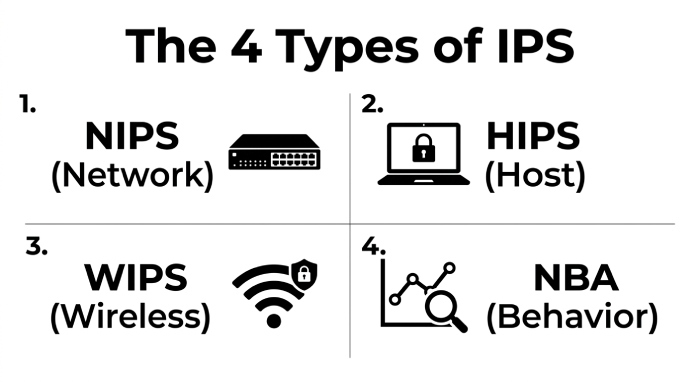
Host-Based Intrusion Prevention System (HIPS)
HIPS solutions are installed on individual devices or endpoints such as servers, desktops, or laptops. They provide in-depth security by monitoring system calls, application behaviors, and software processes locally. The Software Security Group within the Computer Security Division and related project descriptions emphasize HIPS for mission-critical environments where granular protection is required.
Wireless Intrusion Prevention System (WIPS)
As wireless networks grow, so does their vulnerability to intrusion. Wireless IPS technologies are tailored to scan and protect the wireless spectrum, detecting rogue access points or unauthorized devices. These security & privacy applications are vital for organizations adopting mobile or IoT technologies, and their implementation is covered in Cybersecurity and Privacy Applications publications.
Network Behavior Analysis (NBA) IPS
Network Behavior Analysis (NBA) focuses on detecting advanced threats by analyzing baseline network behavior and identifying deviations indicative of attacks such as zero-day exploits or insider threats. This more recent type of IPS often incorporates advanced analytics as referenced in recent books, conference papers, and ITL bulletins.
Choosing the Right IPS
Selecting a particular type of intrusion prevention system depends on the organization’s risk management priorities, hardware and software security requirements, and compliance mandates from the United States government or specific industry publications.
IPS vs. IDS: Key Differences and When to Use Each
Distinguishing between Intrusion Prevention Systems (IPS) and Intrusion Detection Systems (IDS) is essential for any security engineering and risk management strategy. While both technologies are vital components of a robust cybersecurity infrastructure, their roles and response mechanisms diverge significantly.
Key Differences
- Detection vs. Prevention: A traditional IDS is designed to monitor, log, and alert on suspicious activities without taking direct action, serving as a critical monitoring tool for the security division. In contrast, IPS solutions not only detect potential threats but also act immediately to prevent network compromise.
- Automation Level: IDS requires manual interpretation and intervention, while IPS supports automated responses that block, redirect, or remediate security issues without human involvement.
- Deployment Context: IDS may be preferred in scenarios where uninterrupted data flow is essential and false positives must be minimized. IPS is ideal when immediate mitigation of threats is crucial, particularly in highly regulated domains such as healthcare, finance, and government applications.
When to Use Each
Organizations often use IDS in tandem with IPS to maximize both visibility and proactive defense. This layered approach is documented across multiple NIST publications, FIPS standards, and IR reports, helping organizations address emerging threats in information technology systems.
Benefits, Limitations, and Best Practices for Implementing IPS
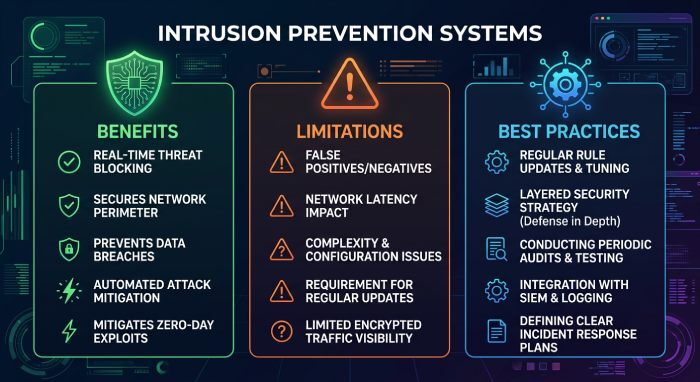
The adoption of intrusion prevention systems delivers clear benefits but also introduces specific limitations that organizations must manage for effective security & privacy outcomes.
Benefits of IPS
- Automated Protection: The primary advantage of IPS is its capacity for real-time, automated responses, minimizing the window of exposure to attackers.
- Comprehensive Coverage: Modern IPS solutions operate across hardware security, network security, and software security domains, supporting holistic protection initiatives highlighted in CSWP and ITL bulletins.
- Regulatory Compliance: By integrating IPS technology, organizations can more confidently meet compliance obligations specified in interagency reports and special publications.
Limitations of IPS
- False Positives: Overzealous detection algorithms may result in false positives, blocking legitimate traffic and potentially disrupting business applications. Addressing these issues often appears in drafts for public comment and final pubs.
- Resource Requirements: Effective IPS deployment demands investment in specialized technologies and skilled personnel—realities documented in white papers and project descriptions on the official website of the National Institute for Standards and Technology and similar entities.
- Evasion Tactics: Advance threat actors continually devise new techniques to evade detection, requiring organizations to stay current with emerging cryptographic technology and security engineering trends.
Best Practices for Implementation
To optimize the effectiveness of an intrusion prevention system, organizations should follow best practices developed by the National Cybersecurity Center of Excellence and the National Initiative for Cybersecurity Education:
- Tune Detection Rules: Regularly review and refine detection signatures and machine learning models to reduce false positives and negatives.
- Integrate with Other Controls: Pair IPS with IDS, firewalls, and secure websites using https connections to create a multi-layered security & privacy defense. Extend that layering to email with DMARC authentication to block spoofed messages before they reach users.
- Ongoing Training: Train IT and security division staff using up-to-date resources including books, conference papers, and journal articles accessible through word finder tools, thesaurus features, or even curated “word of the day” feeds, supporting widespread adoption of best practices.
- Monitor and Audit: Continuously monitor DMARCReport, IPS operation logs, available via account dashboards or advanced search interfaces, and review them as part of your organization’s risk management and publication review cycle. Strong email defenses also depend on maintaining DMARC compliance across your sending domains.
Proper deployment of an intrusion prevention system, guided by authoritative glossary resources and official definitions from recognized standards organizations, helps protect sensitive data, enhance privacy, and support cybersecurity objectives in an ever-shifting threat landscape. For teams extending protection to the email layer, our common DMARC questions page answers the basics.
General Manager
General Manager of DuoCircle. Product strategy and commercial lead for DMARC Report's 2,000+ customer base.
LinkedIn Profile →Take control of your DMARC reports
Turn raw XML into actionable dashboards. Start free - no credit card required.