SMS Spoofing Explained: Definition, Examples, And Security Risks

Quick Answer
SMS spoofing is a cyberattack where scammers fake a sender ID to make text messages appear from trusted sources like banks, businesses, or contacts. It is used for phishing, fraud, malware delivery, and identity theft, putting users and organizations at serious security risk.
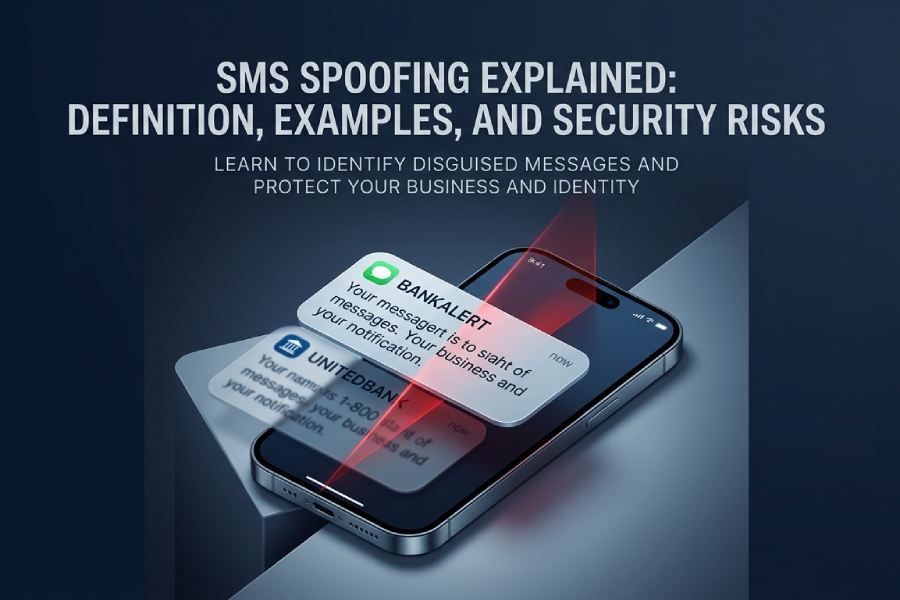
SMS spoofing is a growing cyber threat that allows attackers to disguise text messages so they appear to come from trusted companies, banks, government agencies, or personal contacts. These spoofed messages are commonly used in scams, smishing attacks, identity theft, and financial fraud. Understanding how sms spoofing works, the techniques attackers use, and the risks it creates is essential for protecting personal data, customer trust, and business security.
What Is SMS Spoofing? A Clear Definition
SMS spoofing is the manipulation of the sender ID shown on a recipient’s mobile phone when a short message service text is delivered. Instead of displaying the real originating mobile number, the message may appear to come from a bank, delivery company, government agency, colleague, executive, or another trusted source.
In legitimate communications, businesses often use a branded sender ID—such as a company name in alphanumeric text—for transactional SMS, account alerts, and promotional SMS. However, in sms spoofing, a fraudster abuses this capability to disguise the origin of a text and make a spoofed message look authentic.
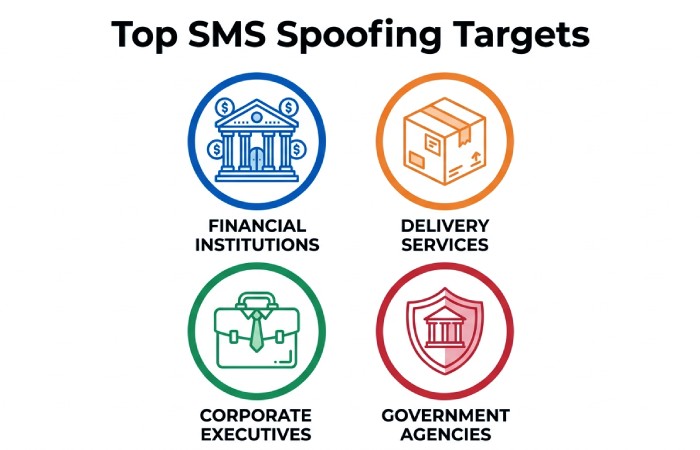
The core risk is impersonation. A scammer can pretend to be PayPal, United Bank, Google, a mobile operator, or a well-known brand to trick customers, employees, vendors, or business leaders into taking unsafe actions. Because text messages feel immediate and personal, sms spoofing has become a common form of cybercrime, often linked to phishing, smishing, account takeover, and identity theft.
SMS Spoofing vs. Legitimate Sender ID Use
Not every customized sender ID is malicious. Platforms such as Sinch, Telesign, and other customer messaging providers support legitimate sender identification for business messaging. Industry reports such as the State of customer communications often highlight how companies use the short message service to send authentication codes, delivery alerts, and service notifications.
The difference is intent and authorization. A legitimate company uses a verified sender ID to communicate with customers. A fraudster uses a fake sender ID to commit impersonation, harvest personal information, or cause financial loss.
SPF, DKIM, and DMARC help protect domains from email spoofing, phishing, and impersonation attacks similar to SMS spoofing scams. To see how each layer works, review the difference between SPF, DKIM, and DMARC. Publishing that protection is easy with a DMARC record generator that creates a ready-to-use record for your domain.
How SMS Spoofing Works: Sender ID Manipulation and Common Techniques
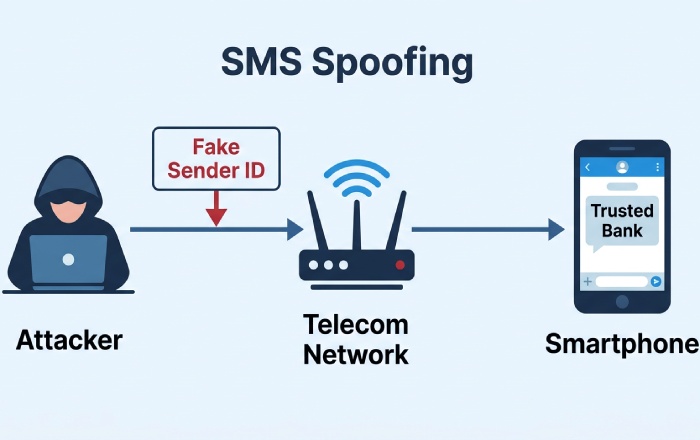
SMS delivery depends on telecom infrastructure involving the SMSC(short message service center) along with network routing, MSCs, carrier agreements, and message gateways. In a normal path, a message travels through a network gateway, reaches the recipient’s home network, and is delivered to the user’s mobile phone.
In an sms spoofing scenario, the attacker manipulates the origin information before the message reaches the recipient. The recipient sees a misleading sender ID, even though the message may have originated from a web platform, compromised service, virtual number, or unauthorized third party provider.
Sender ID Manipulation
A sender ID can be numeric, such as a mobile number, or text-based, such as “BANKALERT.” Fraudsters exploit poorly controlled routes or permissive messaging systems to insert a fake sender ID. The resulting spoofed sms may appear in the same conversation thread as legitimate messages from a bank or online service, increasing credibility.
This is why a spoofed message is especially dangerous. A user may believe the message came from a verified company because their mobile phone groups it with earlier messages from that brand.
Alphanumeric Sender Abuse
Many regions allow businesses to send messages using alphanumeric text as the visible sender. A scammer can exploit this format to imitate brands, banks, delivery firms, or internal company departments. This type of impersonation is frequently used in smishing, where a malicious link directs victims to a fake login page.
Routing and Interconnect Weaknesses
Telecom routing can involve a mobile operator, cellular provider, home operator, aggregator, and interconnect partner. Weak verification at any stage can allow a spoofing attack to pass through. Some schemes also attempt to exploit the billing process, terminate charges, or roaming-related routing logic by making traffic appear as if it came from a spoofed subscriber or trusted network path.
Common SMS Spoofing Techniques
Common methods include using online anonymous SMS tools, compromised bulk messaging platforms, grey routes, malware-controlled systems, or a botnet that sends large volumes of texts. Attackers may also combine sms spoofing with email phishing, voice calls, or social media impersonation to make the fraud more convincing.
Some attacks appear as a simple spam message or unsolicited bulk message, while others are targeted at executives, finance teams, or IT administrators. In advanced cases, sms spoofing can support corporate espionage, credential theft, or deployment of ransomware through a link to malware.
Real-World Examples of SMS Spoofing Attacks
SMS spoofing is not theoretical. It appears frequently in consumer fraud, banking scams, business compromise, and harassment cases reported in news, newspapers, academic sources such as JSTOR, and reference materials like Wikipedia. Researchers using Google Scholar, books, and industry reports have documented how attackers abuse trust in the short message service.
Banking and Payment Impersonation
A common example involves a spoofed message claiming to be from United Bank, PayPal, or another financial institution. The text may warn that an account is locked and ask the customer to verify details through a malicious link. Because the sender ID resembles the bank name, the victim may enter passwords, card data, or other personal information.
This type of smishing can lead to account takeover, identity theft, and direct financial loss. The fraudster may use the stolen data to access an online service, drain accounts, or sell customer data to other cybercrime groups.
Business Email Compromise Extended to SMS
In corporate environments, a scammer may send a text that appears to come from a CEO, finance director, or IT help desk. The spoofed message might ask employees to approve a payment, reset credentials, or install a security update. If the link installs malware, the incident may escalate into a security breach or even a ransomware event.
For a business, sms spoofing can damage brand reputation, expose customer records, and disrupt operations. Competitors, criminals, or hostile insiders may also use spoofed texts for corporate espionage against vendors, employees, and customers.
Premium Rate and Regulatory Abuse
In the UK, historical oversight of premium-rate services involved bodies such as ICSTIS and PhonepayPlus, now associated with the UK premium rate regulator framework. Attackers have abused SMS systems to generate charges, mislead users, or drive victims toward paid numbers and subscription traps. These cases highlight why regulators, law enforcement, and telecom providers monitor suspicious traffic and consumer complaints.
Harassment and False Attribution
SMS spoofing can also be used for harassment. A fraudster may send threats, offensive messages, or misleading claims while making the sender ID appear to belong to someone else. This creates false attribution and can harm an innocent person’s digital privacy, reputation, or relationships.
Security Risks and Consequences for Individuals and Businesses
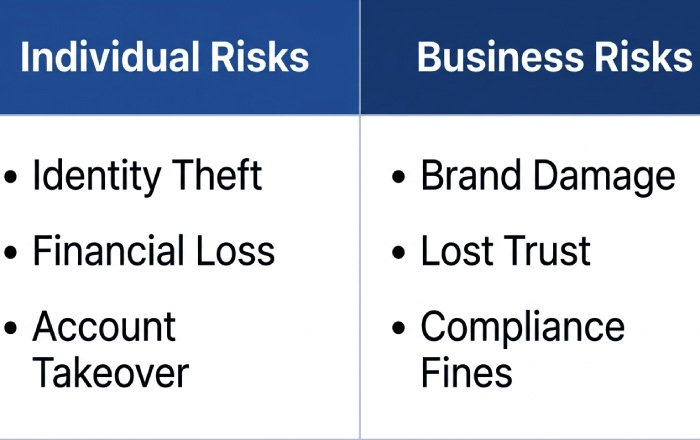
The main danger of sms spoofing is that it undermines trust in the short message service. Many Americans and users worldwide still treat text messages as reliable because they arrive directly on a mobile phone. A convincing spoofed message can bypass skepticism, especially when it appears to come from a trusted source.
Risks for Individuals
For individuals, the consequences include:
- Identity theft from stolen passwords, one-time codes, or government identifiers
- Financial loss through fake bank alerts, investment scams, or payment fraud
- Account compromise on an online service such as PayPal or Google
- Exposure of personal information and loss of digital privacy
- Device compromise if the user installs malware from a malicious link
- Repeated harassment through anonymous or misleading texts
A single spoofed sms can start a chain of harm. Once a scammer obtains a password or verification code, the attacker may change account recovery settings, impersonate the victim, or commit additional cybercrime.
Risks for Businesses
For organizations, sms spoofing creates operational, legal, and reputational risk. A fraudster may imitate a company’s sender ID to target customers. Even if the business did not send the messages, customers may blame the brand. This can increase support costs, damage brand reputation, and trigger regulatory scrutiny.
Businesses also face risks involving employees and vendors. An attacker may use impersonation to request payments, steal credentials, or access internal systems. If customer records are exposed, the event may become a reportable security breach involving customer data, legal obligations, and notification requirements.
Impact on Customer Trust
Customers expect security and privacy when interacting with a company. If they receive a spoofed message that appears to come from the brand, they may lose confidence in future alerts, even legitimate ones. That weakens the effectiveness of transactional SMS and customer communications.
Telecom and Compliance Exposure
Mobile operators, aggregators, and every cellular provider in the chain must manage message authenticity. When attackers exploit routing gaps, the issue may involve multiple parties, including the interconnect partner, sender platform, and recipient home network. Poor controls can increase fraud complaints and enforcement attention.
How to Detect, Prevent, and Respond to SMS Spoofing
Reducing sms spoofing requires a mix of user awareness, telecom controls, business policy, and incident response. No single setting can stop every spoofing attack, but layered defense can significantly reduce risk.
How Users Can Detect a Spoofed Message
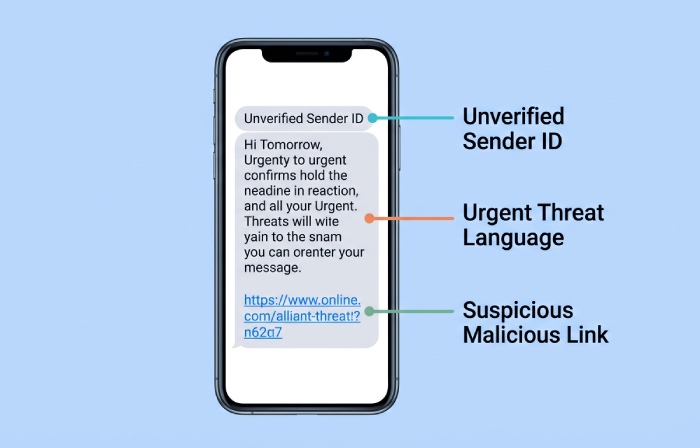
A spoofed message often creates urgency. It may claim that an account will be closed, a payment failed, a package is blocked, or a security alert requires immediate action. Warning signs include unusual grammar, unexpected links, requests for passwords, and pressure to disclose one-time codes or subscriber identity details.
Users should avoid tapping links in suspicious texts. Instead, they should open the official app or type the known website address directly. They should also review phone settings for spam protection, block suspicious senders, and report unwanted messages to their carrier or a complaints helpline where available.
Prevention for Businesses and Mobile Ecosystems
Companies should register and protect branded sender ID usage where possible, monitor lookalike campaigns, and work with trusted messaging partners such as Sinch or Telesign. They should publish clear customer guidance explaining what the company will and will not request by SMS.
Mobile operators and every cellular provider should strengthen validation at the SMSC, block known grey routes, analyze traffic anomalies, and cooperate with law enforcement. Better verification of origin, route, and subscriber identity makes it harder for a fraudster to send spoofed sms at scale.
Businesses should also train employees to recognize smishing, verify payment requests through secondary channels, and escalate suspected cybercrime quickly. Security teams can monitor for fake domains, coordinate takedowns, and warn customers when a scammer is abusing the brand. On the email side, the equivalent safeguard is DMARC—learn about DMARC to stop lookalike domains from spoofing your company.
Response Steps After an SMS Spoofing Incident
If someone interacts with a suspicious message, they should disconnect immediately, avoid entering more data, change passwords, enable multifactor authentication, and contact the affected bank or service provider. If money was transferred, they should report the issue to the financial institution and relevant authorities.
Organizations should preserve evidence, including screenshots, timestamps, the visible sender ID, destination mobile number, and message content. They should notify the mobile operator, investigate whether any systems were compromised, and communicate clearly with customers. Fast action can limit identity theft, reduce financial loss, and prevent a single sms spoofing incident from becoming a wider security breach.
General Manager
General Manager of DuoCircle. Product strategy and commercial lead for DMARC Report's 2,000+ customer base.
LinkedIn Profile →Take control of your DMARC reports
Turn raw XML into actionable dashboards. Start free - no credit card required.