What Is DNS Authentication and Why Does It Matter?

Quick Answer
DNS authentication helps verify that emails and online communications come from trusted sources. Technologies like SPF, DKIM, and DMARC protect domains from spoofing, phishing, and spam attacks. Proper DNS authentication also improves email deliverability, strengthens cybersecurity, and builds trust with recipients by ensuring messages are legitimate and securely sent.

DNS authentication plays a major role in securing online communication. It helps confirm that internet traffic, emails, and domain-related requests are legitimate instead of fraudulent. As cyber threats continue to evolve, organizations increasingly rely on DNS authentication methods to reduce spoofing, phishing, and unauthorized access attempts.
Without proper authentication, attackers can impersonate websites, manipulate email messages, and redirect users to harmful destinations. DNS authentication adds a layer of trust that helps businesses protect their domains, improve email reliability, and strengthen cybersecurity defenses.
Understanding DNS Authentication
DNS authentication refers to the process of validating DNS-based records and configurations to ensure that systems communicating over the internet are genuine and authorized. The Domain Name System acts like the internet’s directory by translating domain names into IP addresses. Authentication mechanisms built around DNS help verify whether requests, servers, and emails originate from trusted sources.
This process is especially important for email communication because many cyberattacks depend on forged sender identities. DNS authentication protocols help receiving servers determine whether incoming emails are actually sent from approved systems.
Why DNS Authentication Is Important
Organizations that do not secure their DNS infrastructure face several risks, including phishing attacks, email spoofing, malware distribution, and domain impersonation. DNS authentication helps reduce these threats while improving trust and communication reliability.
Some major benefits include:
- Preventing unauthorized use of domains
- Improving email delivery performance
- Reducing spam and phishing attempts
- Protecting brand reputation
- Strengthening cybersecurity compliance
- Enhancing customer trust
When properly configured, DNS authentication creates a safer environment for both businesses and their users.
Common Types of DNS Authentication
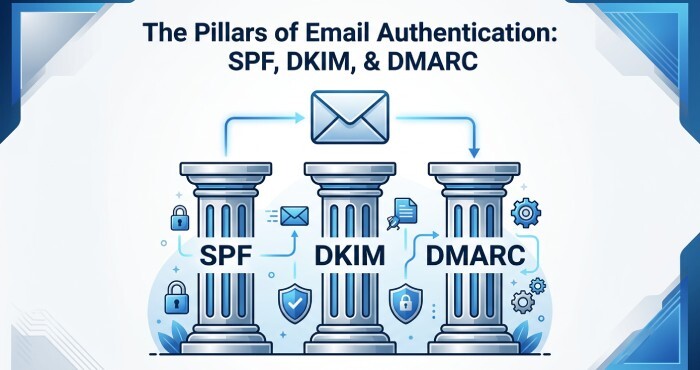
Several DNS authentication technologies work together to secure domains and email systems. Each protocol serves a specific purpose while contributing to overall security.
DNSSEC
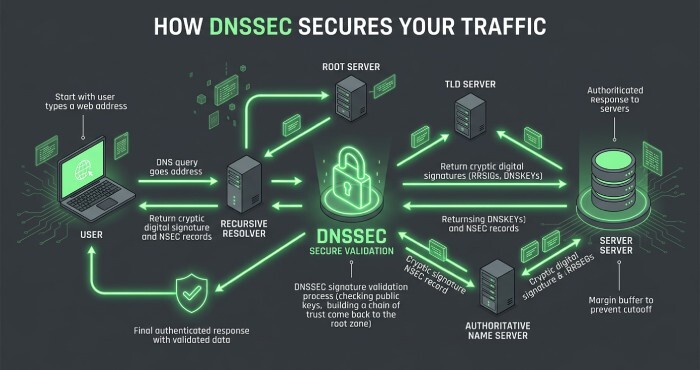
DNS Security Extensions, commonly known as DNSSEC, add cryptographic protection to DNS responses. This technology helps verify that DNS data has not been altered during transmission.
DNSSEC prevents attackers from redirecting users to fake websites by validating DNS information through digital signatures. It is particularly useful against DNS spoofing and cache poisoning attacks.
Key Advantages of DNSSEC
- Verifies DNS response authenticity
- Prevents tampering of DNS records
- Reduces risk of malicious redirection
- Strengthens domain trust
Although DNSSEC does not encrypt traffic, it helps ensure the integrity of DNS information.
DANE
DNS-Based Authentication of Named Entities (DANE) is another DNS authentication method that improves TLS certificate validation. DANE allows domain owners to associate TLS certificates with DNSSEC-protected records.
This adds an extra verification layer for encrypted communications and helps reduce dependency on traditional certificate authorities.
Benefits of DANE
- Improves TLS security
- Protects against certificate spoofing
- Enhances encrypted communication trust
- Works alongside DNSSEC
DANE is especially valuable for organizations that prioritize secure communication channels.
SPF
Sender Policy Framework (SPF) is an email authentication protocol designed to identify which mail servers are allowed to send emails on behalf of a domain.
Domain owners publish SPF records in DNS that list approved sending sources. Receiving mail servers compare incoming email sources with the SPF record to determine legitimacy.
How SPF Works
- A domain owner creates an SPF record in DNS.
- The record specifies approved sending servers.
- Receiving servers check the sender’s IP address against the SPF record.
- Emails from unauthorized servers may be rejected or marked suspicious.
SPF Advantages
- Helps stop email spoofing
- Reduces spam risks
- Improves email credibility
- Supports better deliverability
However, SPF alone is not enough because attackers may still exploit other weaknesses. Learn more about how the Sender Policy Framework validates authorized sending servers.
DKIM
DomainKeys Identified Mail (DKIM) uses digital signatures to verify that email content has not been modified after being sent.
When an email is transmitted, the sending server attaches a cryptographic signature linked to a DNS-published public key. The receiving server validates the signature using the DNS record.
Why DKIM Matters
- Protects email integrity
- Confirms message authenticity
- Reduces email tampering risks
- Builds trust with receiving servers
If the email content changes during transit, the DKIM validation fails.
DMARC
Domain-based Message Authentication, Reporting, and Conformance (DMARC) builds upon SPF and DKIM. It allows domain owners to define how receiving servers should handle emails that fail authentication checks.
DMARC policies help organizations instruct mail providers to monitor, quarantine, or reject suspicious emails.
DMARC Features
- Combines SPF and DKIM validation
- Protects domains from impersonation
- Generates authentication reports
- Improves visibility into email activity
Organizations often adopt DMARC gradually, starting with monitoring policies before enforcing stricter protections. Our page of DMARC questions answered covers the most common setup concerns. Running a periodic DMARC check confirms the published policy and reporting addresses are still valid.
How DNS Authentication Improves Email Security
Email remains one of the most targeted attack vectors for cybercriminals. DNS authentication protocols help secure email ecosystems by making it harder for attackers to impersonate trusted domains.
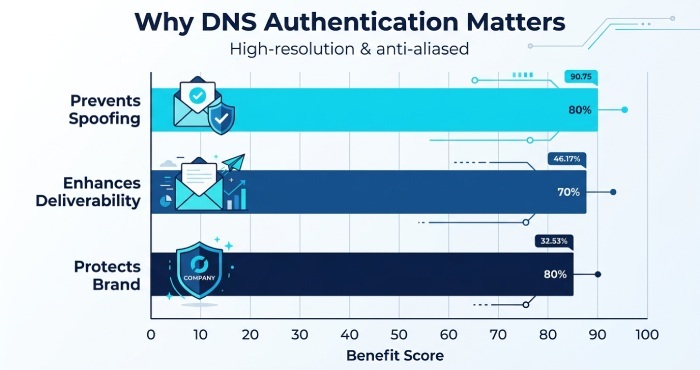
When SPF, DKIM, and DMARC work together, they create a stronger verification framework that improves both security and deliverability.
Enhanced Protection Against Phishing
Phishing attacks often rely on fake sender identities. DNS authentication helps receiving systems detect forged emails before they reach inboxes.
Better Email Deliverability
Authenticated emails are more likely to pass spam filters and reach intended recipients. Internet service providers increasingly favor domains with properly configured authentication records.
Increased Brand Trust
Customers are more likely to trust communications from domains protected with authentication technologies. This helps preserve brand credibility and reduce fraud risks.
Challenges of DNS Authentication
Although DNS authentication offers significant benefits, implementation can sometimes be complicated.
Configuration Complexity
Improper DNS records may cause legitimate emails to fail authentication checks. Organizations must carefully configure protocols to avoid delivery issues.
Ongoing Maintenance
DNS authentication is not a one-time setup. Changes in email providers, servers, or infrastructure require continuous updates and monitoring.
Compatibility Concerns
Some older systems may not fully support modern authentication technologies, creating interoperability challenges.
Best Practices for DNS Authentication
To maximize security and minimize issues, organizations should follow recommended practices when implementing DNS authentication.
Use Multiple Authentication Protocols
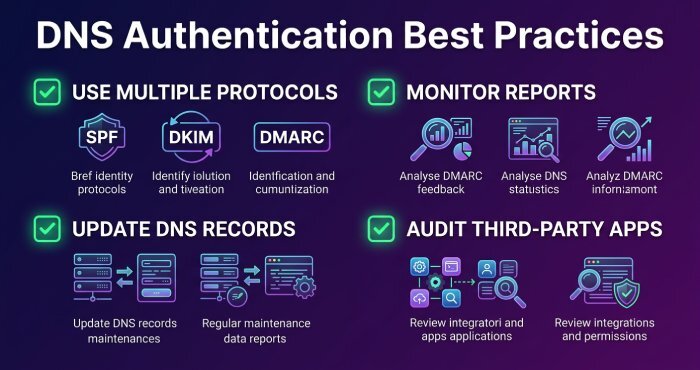
Relying on a single protocol is not enough. Combining SPF, DKIM, and DMARC provides stronger protection.
Monitor Authentication Reports
DMARC reporting features help organizations identify unauthorized senders and configuration issues.
Keep DNS Records Updated
Any changes to email services or infrastructure should be reflected in DNS records immediately.
Gradually Enforce Policies
Organizations should begin with monitoring policies before moving to quarantine or reject modes.
Audit Third-Party Email Services
Marketing platforms, support tools, and CRM systems sending emails on behalf of a domain must be included in authentication records.
The Future of DNS Authentication
As cyberattacks become more advanced, DNS authentication technologies continue evolving. Businesses are placing greater emphasis on email security, encrypted communications, and domain protection.
Industry requirements from major email providers are also encouraging stronger adoption of SPF, DKIM, and DMARC standards. Organizations that fail to implement authentication measures may experience reduced deliverability and increased exposure to spoofing attacks.
Future developments will likely focus on automation, stronger encryption methods, and simplified management tools to help businesses maintain secure DNS environments more efficiently.
Final Thoughts
DNS authentication is a critical component of modern cybersecurity. It helps verify trusted communications, protects domains from abuse, and improves email security across organizations.
Technologies like DNSSEC, DANE, SPF, DKIM, and DMARC each contribute unique protections that strengthen trust and reduce online threats. While implementation may require careful planning and monitoring, the long-term security and deliverability benefits make DNS authentication essential for businesses of all sizes.
By adopting strong DNS authentication practices, organizations can better protect their users, preserve their reputation, and create a safer digital environment.
General Manager
General Manager of DuoCircle. Product strategy and commercial lead for DMARC Report's 2,000+ customer base.
LinkedIn Profile →Take control of your DMARC reports
Turn raw XML into actionable dashboards. Start free - no credit card required.