What Is a Honey Trap Scam? How It Works and How to Stay Safe

Quick Answer
A honey trap scam is a fraud where scammers use fake romantic or personal relationships to gain trust, steal money, extort victims, or obtain sensitive information. Stay safe by verifying identities, avoiding sharing private details, and being cautious of online relationships.
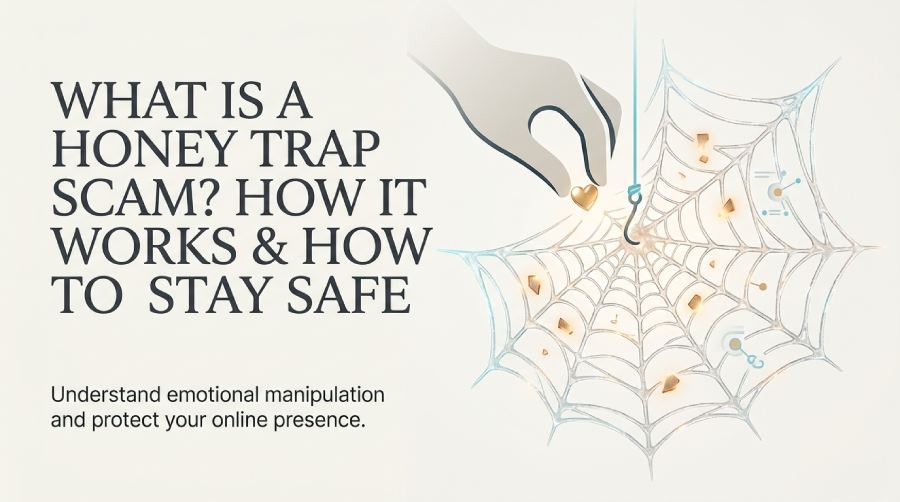
Online scams have evolved alongside social media, messaging apps, and dating platforms. One of the more manipulative forms of cyber fraud is the “honey trap” scam. This type of scheme relies on emotional manipulation rather than technical hacking, making it particularly effective against unsuspecting users.
At its core, a honey trap scam involves deception built around attraction, trust, and emotional engagement. Victims are slowly drawn into a false relationship or connection that ultimately leads to exploitation.
Understanding the Honey Trap Scam
A honey trap scam is a form of social engineering where a fraudster creates a fake identity—often appearing attractive, friendly, or emotionally appealing—to build a relationship with a target.
The scammer’s goal is not genuine connection but manipulation. Over time, they may try to:
- Gain access to personal or financial information
- Convince the victim to send money or gifts
- Extract sensitive photos or private content
- Use emotional leverage for blackmail
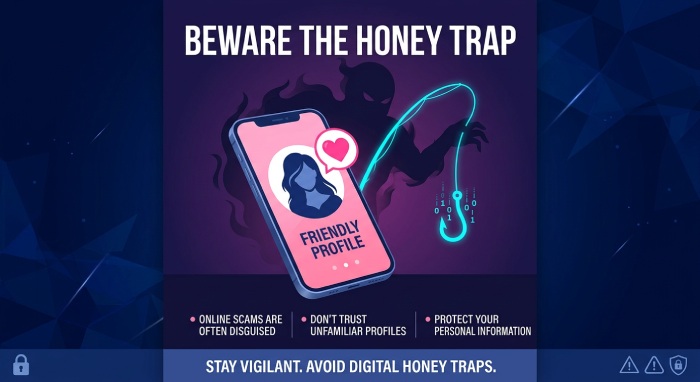 These scams commonly appear on dating apps, social media platforms, messaging services, and even email conversations. When these scams arrive by email, DMARC tools can help confirm whether a message truly comes from the domain it claims.
How Honey Trap Scams Typically Unfold
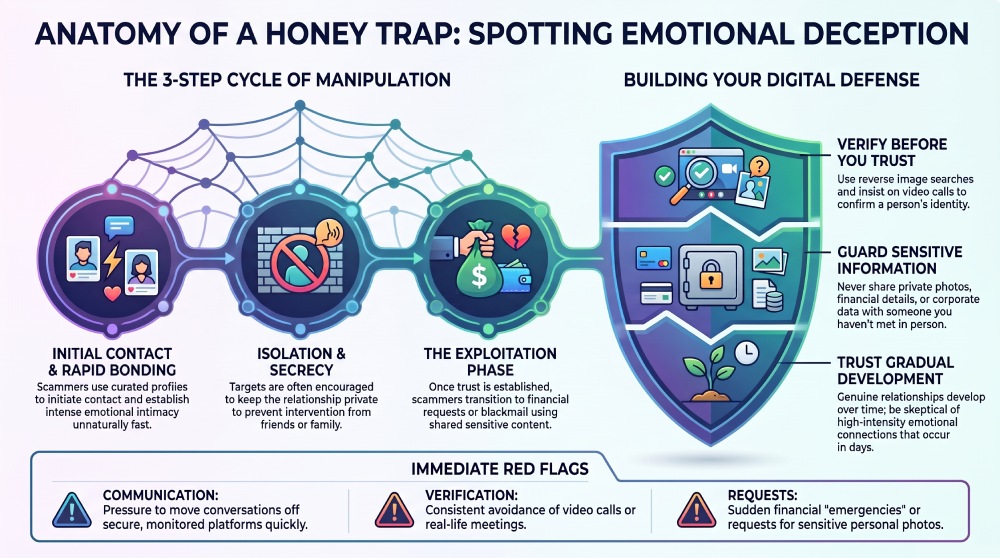
While each case can differ, most honey trap scams follow a predictable pattern:
1. Initial Contact
The scam begins when a stranger sends a friendly message, often appearing unexpectedly. The profile usually looks appealing and trustworthy, sometimes with carefully curated photos and an engaging bio.
2. Rapid Emotional Bonding
The scammer quickly builds emotional intimacy. They may use compliments, affection, or shared interests to establish trust at a much faster pace than normal relationships.
3. Isolation and Secrecy
Victims may be encouraged to keep the interaction private. Scammers sometimes discourage discussing the relationship with friends or family to maintain control.
4. Manipulation Phase
Once trust is established, the scammer begins introducing requests. These can include emotional favors, small financial help, or personal information.
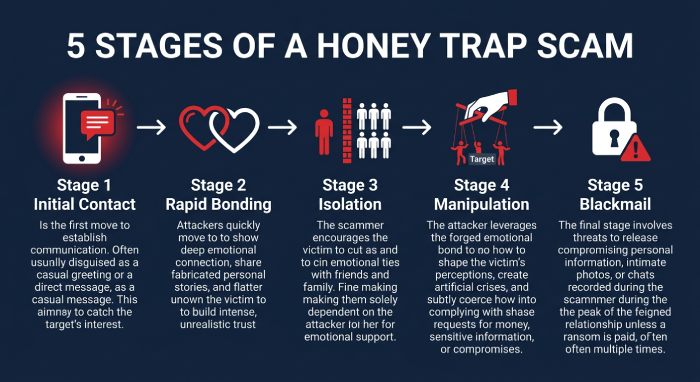
5. Exploitation or Blackmail
In more severe cases, scammers may use sensitive material shared during conversations—such as private images or messages—to threaten or pressure victims for money.
Common Types of Honey Trap Scenarios
Honey trap scams can appear in several forms:
- Romance-based scams: Fake romantic relationships built to extract money
- Sextortion schemes: Victims are tricked into sharing intimate content and then blackmailed
- Fake business or job offers: Emotional trust is used to gain sensitive corporate or financial data
- Social media impersonation: Fake profiles used to manipulate or gather information
Each variation relies on emotional trust as the entry point for exploitation.
Warning Signs to Watch For
Recognizing early red flags can help prevent falling victim to these scams:
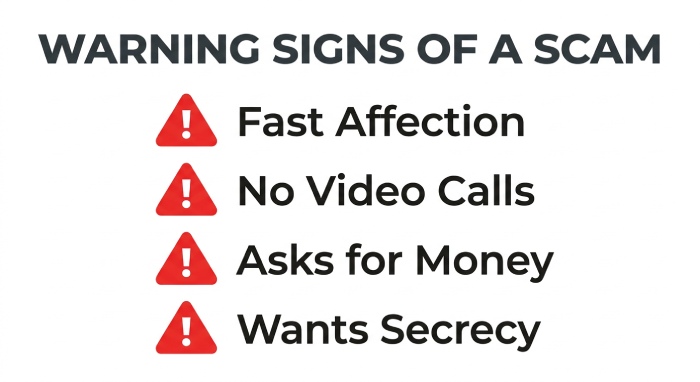
- Overly fast declarations of affection or emotional attachment
- Avoidance of video calls or real-life meetings
- Inconsistent personal details or vague background stories
- Requests for secrecy about the relationship
- Sudden financial requests or emergency situations
- Pressure to move conversations off secure platforms
If something feels rushed or too intense, it often is.
Why Honey Trap Scams Are So Effective
These scams succeed because they target human psychology rather than technical weaknesses. Emotional vulnerability, loneliness, curiosity, or trust can override logical decision-making.
Scammers are skilled at reading responses, adjusting tactics, and slowly building dependency. This makes detection difficult until significant harm has already occurred.
How to Protect Yourself
Staying safe from honey trap scams requires awareness and caution:
- Verify identities: Cross-check profiles, reverse image search photos, and confirm consistency across platforms.
- Avoid sharing sensitive content: Never send private images or financial details to someone you haven’t met in real life.
- Keep conversations transparent: Talk to friends or family if something feels suspicious or rushed.
- Use privacy and security settings: Limit what strangers can see on your social media accounts.
- Trust gradual relationship building: Genuine relationships develop over time, not in a matter of days.
Honey trap scams show why cybersecurity tools like DMARC, DKIM, and SPF matter for preventing phishing and spoofing attacks. Businesses can lock down their own domains with a DMARC generator to stop scammers from impersonating their brand.
Final Thoughts
Honey trap scams are designed to manipulate emotions and exploit trust. They don’t rely on technical hacking but on human connection and psychological pressure.
Being cautious in online interactions, verifying identities, and maintaining healthy skepticism can significantly reduce the risk of falling victim to such schemes.
General Manager
General Manager of DuoCircle. Product strategy and commercial lead for DMARC Report's 2,000+ customer base.
LinkedIn Profile →Take control of your DMARC reports
Turn raw XML into actionable dashboards. Start free - no credit card required.