What is Doxxing and How to Prevent it

Quick Answer
What is Doxxing and How to Prevent it You do not need to be famous, controversial, or wealthy to become a target of doxxing.
Related: Free DMARC Checker ·How to Create an SPF Record ·SPF Record Format

The most common mistake we see during DMARC setup is jumping straight to p=reject without monitoring first, says Vasile Diaconu, Operations Lead at DuoCircle. Start at p=none, analyze your reports for at least a full quarter - you need to catch monthly, quarterly, and annual email senders that only fire periodically. Then fix any legitimate senders that fail before enforcing. We walk every customer through this sequence.
You do not need to be famous, controversial, or wealthy to become a target of doxxing. In many cases, victims are regular people who simply posted something online, joined a debate, or annoyed the wrong person. A single comment, tweet, or review can be enough to trigger someone into digging through your digital life.
What makes doxxing especially dangerous is how silent it is. There is no warning. One day, your information is private; the next, your name, address, phone number, or workplace is shared in online groups you have never heard of. By the time you realize what is happening, the damage is often already done.
This guide explains what doxxing really means, how attackers collect personal data, why people do it, and most importantly, how you can reduce your risk. Whether you are an individual, a freelancer, or a business owner, understanding doxxing is no longer optional. It is a basic part of staying safe on the internet today.
Doxxing exposes personal data online, and using DMARC, DKIM, and SPF helps prevent it by securing email authentication and blocking spoofed attacks.
What is doxxing?
Doxxing, sometimes spelled doxing, is when someone collects your personal information and shares it online without your permission. This information may include your full name, home address, phone number, workplace, email address, or family details. The main goal of doxxing is almost always to cause harm. The word comes from “dropping docs,” which means leaking documents about someone. Earlier, it was mostly used by hackers to expose rivals. Today, anyone can be a target, including regular people, not just public figures.
Doxxers usually gather information from social media, public records, leaked databases, or through tricks like phishing and fake profiles. Once they get the data, they publish it on forums, social platforms, or messaging groups.
Doxxing is done with bad intent. It is meant to shame, threaten, harass, or damage someone’s personal and professional life. Since the person never gives consent, it becomes a serious violation of privacy and can make victims feel unsafe both online and offline.
How does doxxing happen?
Doxxing usually does not happen in one big step. It happens slowly by collecting small bits of information from many places and then joining them together. Most people share more about themselves online than they realize, and doxxers take advantage of this.
1. Stalking social media
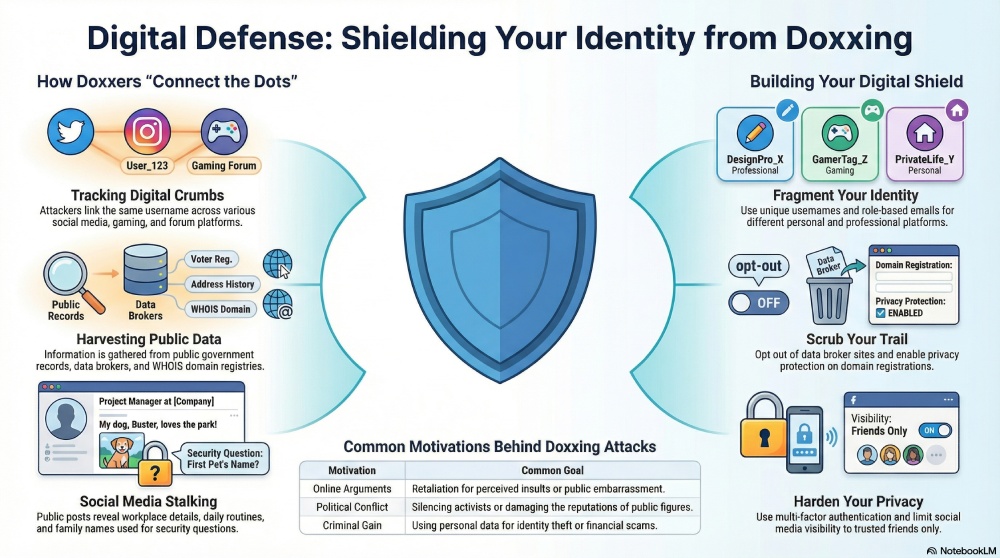
One of the most common methods is stalking social media. Public posts can reveal a lot, like your city, workplace, daily routine, friends, hobbies, and even your birthday. A single photo or comment might look harmless, but when combined with other posts, it can expose your real identity.
2. Tracking usernames across platforms
Many people use the same username on Instagram, Twitter, Reddit, gaming platforms, and forums. A doxxer can search that username across sites and build a full picture of your interests, opinions, and online behavior.
3. Buying data from data brokers
Doxxers also use data brokers. These companies collect personal information from public records, shopping data, and online activity. For a small payment, anyone can buy reports that include phone numbers, addresses, relatives, and past locations.
4. Phishing and social engineering
Phishing is another common tactic. Doxxers send fake emails or messages that appear genuine and trick people into sharing passwords or other personal details. Once they access an account, they can see **private conversations and stored data. 
5. Searching public databases
Many doxxers search public databases. Government records like property ownership, business registrations, and voter lists are often easy to access and can reveal sensitive personal details.
6. Domain registration records
When someone registers a website, their personal details are stored in public WHOIS databases unless **privacy protection is enabled. This can expose names, addresses, and phone numbers to anyone who looks them up.
Common motivations for attempting doxxing
Doxxing is usually driven by **strong emotions rather than clear thinking. In most cases, people do not do it for any good reason. They do it because they are angry, frustrated, or want to feel powerful. Below are some of the most common reasons behind doxxing.
Online arguments
Many doxxing incidents start with simple online fights. These can happen on social media, gaming platforms, or discussion forums. When someone feels insulted, embarrassed, or defeated in public, they may resort to doxxing to retaliate. Instead of continuing the debate, they try to scare or silence the other person by exposing their real identity.

Political conflicts
Doxxing is also common in political and social debates. Journalists, activists, and public figures are frequent targets. In these cases, the goal is often to shut someone up, damage their reputation, or pressure them into changing their views.
Harassment and power
Some people doxx simply because they enjoy having control over others. They feel powerful when they can make someone afraid or uncomfortable by exposing private details.
Financial or criminal gain
In many cases, doxxed information is used for identity theft, account hacking, or scams. Attackers use personal data to trick victims or steal money, which can lead to serious financial loss.
How to prevent doxxing and protect yourself
Doxxing does not start with hackers breaking into systems. It usually starts with small digital traces that people leave behind without thinking. The best way to **protect yourself and your business is to reduce how much personal information is publicly available and make it harder for attackers to connect the dots.
1. Lock down your social media privacy
Start by reviewing your social media settings. Keep personal profiles private and limit who can see your posts, photos, and friend lists. Avoid sharing location updates, office photos, travel plans, or anything that reveals daily routines. Even harmless details like pet names, school names, or inside jokes can be used to guess security questions or build your profile.
2. Use different usernames and emails
Never use the same username everywhere. Create separate identities for personal use, professional platforms, and public communities. This makes it much harder for someone to link all your accounts together. For businesses, use role-based email addresses such as support@ or info@ instead of personal names.

3. Remove data from people search sites
Many data broker websites publish phone numbers, addresses, and family details. Search your name regularly on Google and opt out of these platforms. This process takes time but significantly reduces how easily someone can buy or find your information.
4. Protect your domain and business records
Enable WHOIS privacy when registering domains so your contact details are not publicly visible. For businesses, avoid using personal addresses and phone numbers in **company registrations whenever possible. Use virtual office addresses or business numbers instead.
5. Be alert to phishing and social engineering
Most doxxing campaigns involve tricking the victim first. Do not click unknown links, download random files, or share personal details on unexpected calls or emails. Use a **password manager **and enable multi-factor authentication for all important accounts. Understanding how DMARC alignment works also helps you block spoofed emails that impersonate your domain in these campaigns.
6. Monitor your digital footprint continuously
Set up Google alerts for your name, brand, and domain. This helps you detect early signs of data leaks or impersonation. Businesses should also monitor social media and forums for fake profiles and brand misuse. **Doxxing prevention is not about hiding from the internet. It is about controlling what information exists, where it exists, and who can access it. The smaller your public footprint, the harder it becomes for anyone to weaponize your identity.
Content Specialist
Content Specialist at DMARC Report. Writes vendor-specific email authentication guides and troubleshooting walkthroughs.
LinkedIn Profile →Take control of your DMARC reports
Turn raw XML into actionable dashboards. Start free - no credit card required.