A Practical DMARC Guide for MSPs: Securing Client Email and Building a Scalable Managed Service

Quick Answer
Email continues to be one of the easiest ways for attackers to reach businesses. Phishing, spoofing, and [brand impersonation attacks](https://www.prnewswire.com/news-releases/kela-launches-brand-control-to-proactively-protect-organizations-from-phishing-impersonation-and-brand-abuse-302418401.html) rely heavily on email because it is trusted, widely used, and difficult to police without proper controls. For service providers responsible for protecting client environments, securing email identity has become a foundational requirement.
Related: Free DMARC Checker ·How to Create an SPF Record ·SPF Record Format

Try Our Free DMARC Checker
Validate your DMARC policy, check alignment settings, and verify reporting configuration.
Check DMARC Record →Email continues to be one of the easiest ways for attackers to reach businesses. Phishing, spoofing, and brand impersonation attacks rely heavily on email because it is trusted, widely used, and difficult to police without proper controls. For service providers responsible for protecting client environments, securing email identity has become a foundational requirement.
DMARC (RFC 7489) ties SPF and DKIM together by requiring alignment between the envelope sender and the visible From header. According to Google’s February 2024 bulk sender requirements, a DMARC policy of at least p=none is now mandatory for any domain sending 5,000+ messages per day to Gmail users.
MSPs managing email authentication across dozens of client domains need a platform that scales, says Brad Slavin, General Manager of DuoCircle. DMARC Report’s multi-tenant dashboard lets you onboard clients in minutes and monitor authentication across every domain from one portal.
For MSPs managing email authentication across dozens or hundreds of client domains, automated DMARC reporting and SPF management is an operational necessity - manual monitoring at scale is not viable. The DMARC protocol gives them a single, standards-based way to enforce this across every client domain. This is where DMARC plays a central role.
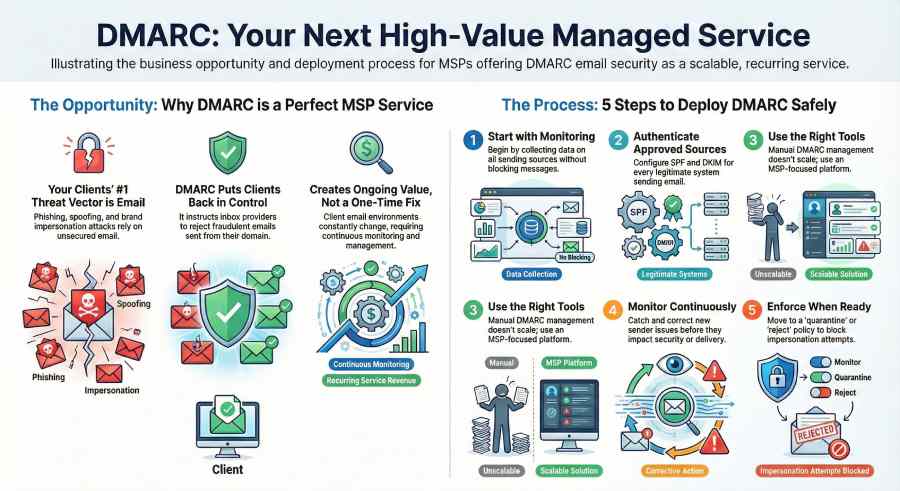
DMARC (Domain-based Message Authentication, Reporting, and Conformance) helps organizations control how their domains are used in email. Instead of leaving inbox providers to guess whether a message is legitimate, DMARC gives clear instructions on how unauthenticated emails should be handled. When implemented correctly, it prevents attackers from sending email that falsely appears to come from a trusted domain.
For Managed Service Providers, DMARC represents more than a technical safeguard . It is a repeatable, high-value service that strengthens client security while creating an opportunity for long-term engagement.
This guide explains how DMARC works, why it matters specifically for MSPs, and how to deliver it as a managed offering. It also outlines practical deployment steps, common pitfalls, and what to look for when choosing a DMARC platform built for multi-client environments.
**Understanding DMARC DMARC is an **email authentication framework **that relies on SPF and DKIM to validate sending sources. Its purpose is to ensure that messages claiming to originate from a domain are genuinely authorized by that domain.
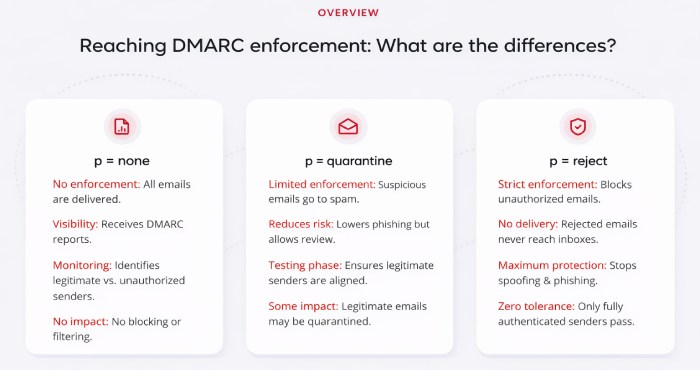
A DMARC policy is published in DNS and tells receiving mail systems how to treat messages that fail authentication. Domain owners can instruct inbox providers to:
As of 2025, DMARC is mandatory under multiple compliance frameworks. CISA BOD 18-01 requires p=reject for US federal domains. PCI DSS v4.0 mandates DMARC for organizations processing payment card data as of March 2025. Google and Yahoo require DMARC for bulk senders (5,000+ messages/day) since February 2024, and Microsoft began rejecting non-compliant email in May 2025. The UK NCSC, Australia’s ASD, and Canada’s CCCS all mandate DMARC for government domains. Cyber insurers increasingly require DMARC enforcement as an underwriting condition.
-
Take no action but send reports
-
Route suspicious messages to spam
-
Reject unauthenticated messages outright
In addition to enforcement, DMARC generates reporting data. These reports reveal which systems are sending email on behalf of a domain and whether those messages pass authentication checks. This visibility is critical for both security and deliverability.
**Why Inbox Providers Expect DMARC Email ecosystems have changed. Major mailbox providers now place greater emphasis on sender authentication, particularly for domains that send email at scale. Marketing platforms, transactional systems, and even routine business email are subject to increased scrutiny.
Domains without a properly configured DMARC policy are more likely to experience delivery issues such as spam filtering, throttling, or outright rejection. Weak or misaligned configurations can have the same effect.
For MSPs, this shift means clients increasingly depend on them to maintain email trust. DMARC is no longer a one-time DNS entry
- it requires continuous oversight as sending sources evolve and infrastructure changes.
**Why DMARC Is Important for MSPs Managing DMARC across multiple customer domains delivers several benefits:
-
Reduces the risk of phishing and spoofing attacks
-
Stops threat actors from impersonating client brands
-
Improves reliability of legitimate email delivery
-
Protects brand reputation and **customer confidence By enforcing DMARC, MSPs help ensure that only approved systems can send email using a client’s domain. This protects employees, partners, and customers from fraudulent messages while improving inbox placement for legitimate communication.
**Alignment, Visibility, and Reporting DMARC relies on alignment between the domain in the “From” address and the domains used in SPF or DKIM. When alignment fails and a **strict policy is applied, inbox providers can block or filter those messages automatically.
DMARC reporting adds another layer of value. Aggregate reports from mailbox providers reveal:
-
Authorized and unauthorized sending sources
-
Authentication failures caused by misconfiguration
-
New services sending email without approval
For MSPs, this data enables proactive remediation rather than reactive cleanup after an incident.
**Why MSPs Should Offer DMARC as a Managed Service Many organizations recognize email threats but lack the expertise or time to manage authentication properly. This creates a clear opportunity for MSPs.
**A Service Clients Understand DMARC ties directly to outcomes clients care about: fewer phishing attacks, better email delivery, and stronger brand protection. It opens the door to broader security discussions without overwhelming non-technical stakeholders. Point clients to a resource with DMARC questions answered so they can self-serve the basics.
**Ongoing Value, Not a One-Time Fix Email environments change constantly. New SaaS tools, marketing platforms, and cloud services can break authentication overnight. DMARC requires ongoing monitoring and adjustment, making it ideal for a recurring managed service.
Reduced Risk for Clients Enforced DMARC policies stop many impersonation attempts before they ever reach an inbox. This lowers exposure to fraud, credential theft, and business email compromise.
**How MSPs Can Deploy DMARC Safely
**Start With Monitoring Begin with a policy that collects data without blocking messages. This phase builds visibility into all legitimate and unexpected senders.
**Authenticate Approved Sources Configure SPF and DKIM for every system that sends email on behalf of the domain. This step often requires coordination with
third-party vendors .
**Use the Right Tools Manual DMARC management does not scale. _MSP-focused platforms allow teams to manage multiple domains, simplify reports, and reduce configuration errors.
**Monitor Continuously New senders appear over time. Continuous monitoring ensures issues are caught early and corrected before they impact security or deliverability.
**Enforce When Ready Once authentication is stable, move to **quarantine or reject policies to block impersonation attempts and strengthen trust with inbox providers.
**Looking Beyond DMARC While DMARC is essential, it does not address every domain-related threat. Attackers increasingly exploit unused subdomains, misconfigured DNS records, and lookalike domains to bypass email controls entirely.
A comprehensive approach requires visibility across the entire domain surface - not just email authentication.
DMARCReport extends protection by helping MSPs identify DNS risks, unmanaged subdomains, and configuration weaknesses that attackers can exploit. This allows service providers to deliver broader **domain-level security without introducing unnecessary complexity.
**Choosing the Right DMARC Platform for MSPs When evaluating solutions, MSPs should prioritize:
-
**Centralized management for multiple clients
-
Clear, actionable reporting for both technicians and customers
-
Support for related standards like SPF, DKIM, BIMI, and TLS reporting
-
Visibility into risks beyond basic DMARC enforcement
Why MSPs Choose DMARCReport DMARCReport is designed specifically for service providers who manage email security at scale. The platform simplifies deployment,
automates monitoring , and provides clear insights into every sending source across client domains.
With continuous visibility, alerting, and domain intelligence, MSPs can detect issues early, prevent abuse, and maintain healthy configurations as environments evolve. Additional capabilities - such as DNS risk detection, brand abuse monitoring, and API access - enable MSPs to offer a more complete domain protection service. For MSPs looking to deliver dependable email security while building a scalable managed offering, DMARCReport provides the foundation to protect client domains and maintain long-term trust.
Sources
Topics
Content Specialist
Content Specialist at DMARC Report. Writes vendor-specific email authentication guides and troubleshooting walkthroughs.
LinkedIn Profile →Take control of your DMARC reports
Turn raw XML into actionable dashboards. Start free - no credit card required.