What Is SPF Include And How To Use Multiple SPF Includes Safely

Quick Answer
Effective email authentication hinges on understanding the Sender Policy Framework (SPF), particularly the use of the SPF include mechanism. Proper implementation of SPF include is critical for businesses relying on multiple third-party email services, ensuring both robust domain authentication and compliance with evolving anti-spam standards from providers such as Gmail and Yahoo.
Effective email authentication hinges on understanding the Sender Policy Framework (SPF), particularly the use of the SPF include mechanism. Proper implementation of SPF include is critical for businesses relying on multiple third-party email services, ensuring both robust domain authentication and compliance with evolving anti-spam standards from providers such as Gmail and Yahoo. This guide provides comprehensive SPF understanding, covering the technical structure of the include directive, best practices for SPF record creation, and advanced management strategies for avoiding common pitfalls. Readers new to the protocol can learn about SPF fundamentals before diving into includes.
What an SPF Include Mechanism Is and How It Works
The Fundamentals of the SPF Include
SPF is a core email authentication protocol that helps prevent sender address forgery. At the heart of its effectiveness is the use of SPF mechanisms and SPF modifiers to determine which mail servers are permitted to send on behalf of a domain. Among these, the include mechanism allows domain owners to delegate mail delivery authorization to third-party service providers by referencing their SPF records within their own.
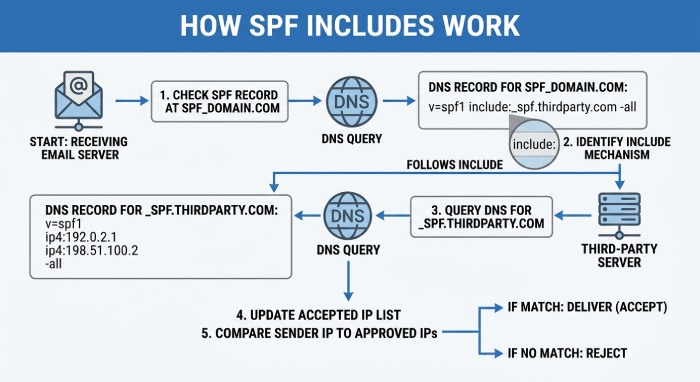
When an SPF evaluation is performed during DNS processing, the receiving mail server queries the DNS for an SPF record attached to the From domain. Inside the SPF record syntax, the include mechanism triggers the resolver to fetch and evaluate the SPF record of another domain, thus extending authentication coverage to additional IPs or servers.
The Role of Mechanisms and Modifiers
SPF syntax distinguishes between mechanisms (such as ip4, ip6, mx, a, ptr, exists, all) and modifiers (such as redirect and exp). The include mechanism is unique in that it chains together multiple domains’ SPF records, effectively broadening the potential range of legitimate email sources. Proper understanding of these interactions is critical for aligning with DMARC and DKIM strategies across SaaS Platforms and external vendors.
When and Why to Use SPF Includes for Third-Party Email Services
The Purpose of Including External SPF Records
Organizations often leverage third-party email solutions, such as marketing automation tools, ticketing systems, or cloud-hosted inboxes, which send email on their behalf. For example, using SPF includes for services like Mailchimp, Salesforce, or a transactional platform ensures the outgoing email passes SPF validation when reviewed by entities like Gmail or Google Workspace.
Achieving Aligned SPF Records and Authentication Coverage
Including external SPF records ensures aligned SPF records with the sending sources, consolidating domain authentication processes. This alignment complements protocols like DMARC and DKIM to maximize deliverability and reputation. Additionally, with major mailbox providers tightening sender authenticity requirements, a domain’s SPF policy must accurately reflect every authorized mail server.
Risks of Omitting Necessary Includes
Failure to configure proper spf includes leads to SPF fails during spf evaluation, resulting in rejected or unauthenticated mail, softfail, or even permerror if DNS lookups exceed permissible limits. Effective use of spf upholds the integrity of mail delivery and protects against phishing or spoofing.
SPF Include Syntax, Examples, and Common Configuration Mistakes
SPF Include Syntax Overview
A standard SPF record syntax begins with a version indicator and is followed by a sequence of mechanisms and modifiers. The include syntax is structured as follows:
v=spf1 include:thirdparty.com -all
This record states: “Permit any sender authorized by thirdparty.com’s SPF, and deny all others.”
SPF Record Examples with Multiple Includes
v=spf1 include:mailproviderA.com include:mailproviderB.com ip4:198.51.100.20 -all
- This example authorizes two third-party providers and one specific IP (using the spf ip4 mechanism).
Qualifiers and Their Effects
- + (pass): default, not usually shown
- , (fail): unauthorized, should be rejected
- ~ (softfail): unauthorized, but marked as suspicious
- ? (neutral): no assertion
- No qualifier yields a default pass
Common SPF Configuration Mistakes
Excessive DNS Lookup Chains
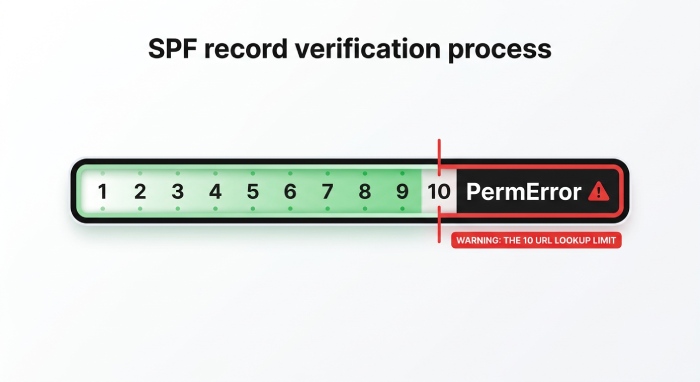
Per the SPF RFC 7208 standard, SPF evaluation permits a maximum of ten DNS lookups per SPF record. Each spf includes triggers at least one DNS query; failing to optimize leads to permerror and spf validation errors.
Redundant Mechanisms or Conflicting Modifiers
Duplicating mechanisms (such as multiple spf mx or spf a) and misusing modifiers (e.g., redirect modifier, exp modifier) can cause ambiguous spf results and reduced trust from mailbox providers.
Syntax Errors and Deployment Issues
Misspelling the include directive, omitting the required hyphens, or incorrectly nesting includes will halt DNS processing, resulting in temperror or none outcomes. Tools like dmarcian’s SPF Survey tool, SPF Surveyor, or dmarc.io can aid in spf troubleshooting and identifying common mistakes.
How to Use Multiple SPF Includes Without Exceeding DNS Lookup Limits
Understanding and Managing the 10-Lookup Limit
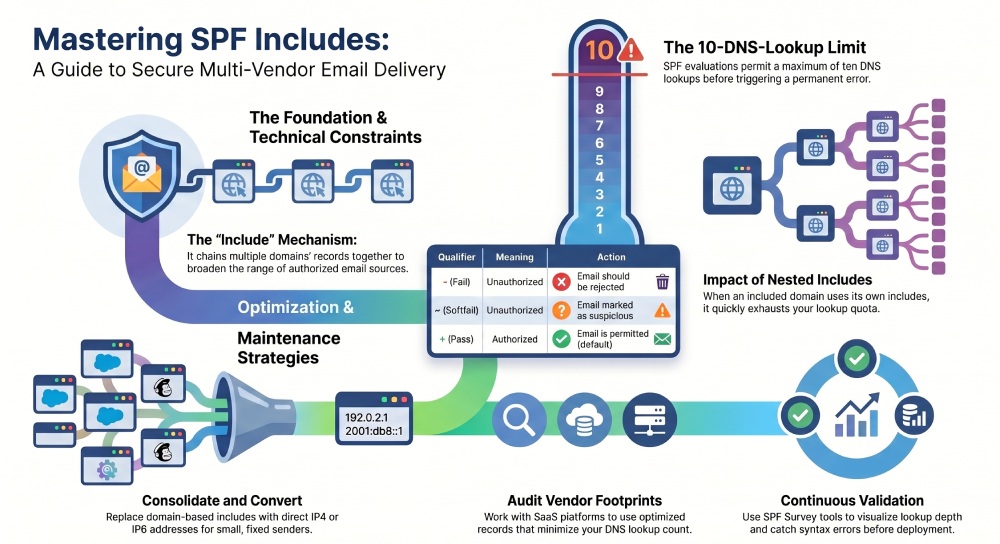
A fundamental aspect of spf management is staying within the ten-DNS-lookup ceiling imposed by the protocol. Each instance of the include mechanism, plus mechanisms like mx mechanism and a mechanism, counts against this quota. Nested includes, when an included domain itself uses include:, can quickly exhaust the limit, leading to permerror.
Strategies for Lookup Optimization
- Consolidate Providers: Work with your third-party vendors to minimize SPF footprint; reputable Software as a service (SaaS) platforms often publish optimized SPF records.
- Use IPs for Authorized Sources: Where possible, replace include: with direct ip4 or ip6 mechanisms for small, fixed senders.
- Audit Nested Includes: Use analysis tools such as the SPF Survey tool, dmarcian’s DMARC Inspector, or SPF Surveyor to visualize the full lookup depth and prevent indirect overruns.
Handling Complex Configurations
Some organizations require extensive third-party integration. Tools like DMARC Management Platform and DMARC Domain Checker can automate spf evaluation and flag DNS processing issues before they impact live mail delivery.
Best Practices for Testing, Monitoring, and Maintaining SPF Records
Validating Records Across Environments
Adhering to spf best practices begins with rigorous spf validation before DNS deployment. An SPF record generator helps you draft a syntactically correct record before you validate and publish it.
- Use online validators (such as DKIM Inspector, DKIM Validator, or Human Converter) to pre-screen for spf error. Our SPF record validator checks your published record for syntax errors and lookup overruns.
- Test with real-world mailbox providers (e.g., Google, Yahoo) to observe actual spf results.
Continuous SPF Survey and Monitoring
Routine audits using the SPF Survey, DMARC Record Wizard, or dmarc.io help ensure records remain accurate as infrastructure evolves. Subscribe to security-focused newsletters or join authentication forums like DMARC Academy to stay informed of emerging threats and solutions.
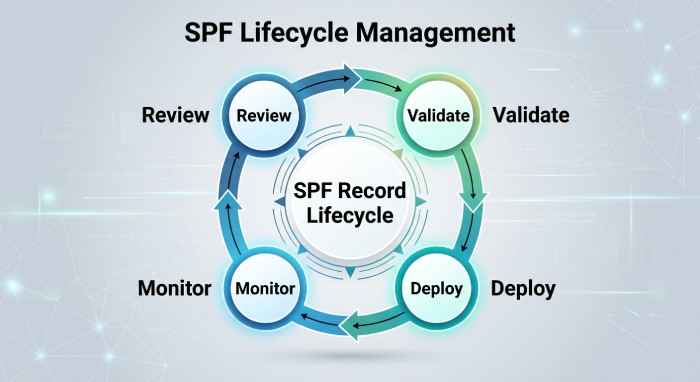
Ongoing SPF Management and Troubleshooting
- Regularly review all authorized sending services for necessity.
- Maintain an up-to-date master list of spf record examples for each unique use case.
- Quickly respond to delivery issues flagged by SPF validation error messages or permerror in recipient logs.
- Use resources like the DMARC Dictionary and consult with DMARC Data Providers for expert guidance.
Automated Checks and Reporting
Leverage modern tools and email authentication reporting (XML reports parsed by platforms like dmarcian) for in-depth SPF survey insights. A well-maintained, aligned spf record safeguards your domain’s reputation and mail flow integrity.
Periodic SPF Policy Review and Update
The landscape of email threats and legitimate service providers changes rapidly. By regularly reviewing and updating your spf policy, and staying vigilant for new spf lookup concerns, you ,ensure compliance and maintain secure, reliable mail delivery across all business, transactional, and marketing communications.
General Manager
General Manager of DuoCircle. Product strategy and commercial lead for DMARC Report's 2,000+ customer base.
LinkedIn Profile →Take control of your DMARC reports
Turn raw XML into actionable dashboards. Start free - no credit card required.