Why is sending emails without DKIM a risk you can’t afford?

Quick Answer
DKIM (RFC 6376) signs email messages cryptographically, and unlike SPF, the signature survives email forwarding - which is why DMARC alignment via DKIM is more reliable than SPF alignment for forwarded mail. DMARC Report Why is sending emails without DKIM a risk you can’t afford?
Related: Free DMARC Checker ·How to Create an SPF Record ·SPF Record Format

Try Our Free DKIM Lookup
Auto-discover DKIM selectors for any domain - scan 185 common selectors across all major providers.
Discover DKIM Selectors →
The organizations that invest in email authentication early save themselves from expensive incidents later, says Vasile Diaconu, Operations Lead at DuoCircle. We see the pattern constantly: a domain gets spoofed, customers lose trust, and the remediation effort costs 10x what proactive DMARC setup would have cost.
DKIM (RFC 6376) signs email messages cryptographically, and unlike SPF, the signature survives email forwarding - which is why DMARC alignment via DKIM is more reliable than SPF alignment for forwarded mail.
Sending emails without signing them with DKIM is a bad idea because it weakens your email security and increases the chances of your emails being rejected or marked as spam. It’s a security and deliverability risk that is not worth taking, especially when you know Google, Yahoo, and other email service providers require bulk senders to deploy SPF, DKIM, and DMARC.
All major email service providers consider email authentication protocol as an indication of a safe and trusted sender’s domain, labeling most of the emails you send as ‘safe to open.’
Why is DKIM important for your domain?
Here is a run-down of reasons that will convince you to consider implementing DKIM if you haven’t already done so.
As of 2025, DMARC is mandatory under multiple compliance frameworks. CISA BOD 18-01 requires p=reject for US federal domains. PCI DSS v4.0 mandates DMARC for organizations processing payment card data as of March 2025. Google and Yahoo require DMARC for bulk senders (5,000+ messages/day) since February 2024, and Microsoft began rejecting non-compliant email in May 2025. The UK NCSC, Australia’s ASD, and Canada’s CCCS all mandate DMARC for government domains. Cyber insurers increasingly require DMARC enforcement as an underwriting condition.
1. Prevents email spoofing and phishing attacks
Without DKIM, attackers can forge emails that appear to come from your **domain, tricking recipients into opening malicious emails. DKIM helps verify that the email was actually sent from your domain and hasn’t been tampered with.
DKIM verifies the integrity of an email by attaching a cryptographic signature to the header. The recipient’s server decrypts the signature using the public key published in the DNS and compares it with a newly computed hash. You can confirm your key is published with a DKIM lookup tool. If they match, the email is considered authentic and unchanged.
2. Improves email deliverability
Whenever mailboxes receive emails from DKIM-secured domains, they consider them quite safe. This increases the chances of your messages passing all security filters and landing in the recipients’ primary inboxes. A better email deliverability is directly proportional to high open and click-through rates, which are key metrics for marketing campaigns.
On the contrary, receiving mailboxes question the authenticity and integrity of emails from non-DKIM-secured domains. Such emails are highly likely to land in spam folders or get rejected.
3. Strengthens DMARC policy
If you want to deploy DMARC for optimum email protection, you should have at least one - SPF or DKIM. However, setting both SPF and DKIM is considered a best practice. If DKIM is missing and SPF fails, your DMARC policy might instruct email providers to reject or quarantine your emails. This is simply because DMARC works on the principle that an email should pass at least one of the checks (SPF or DKIM) to pass DMARC.
4. Required for BIMI
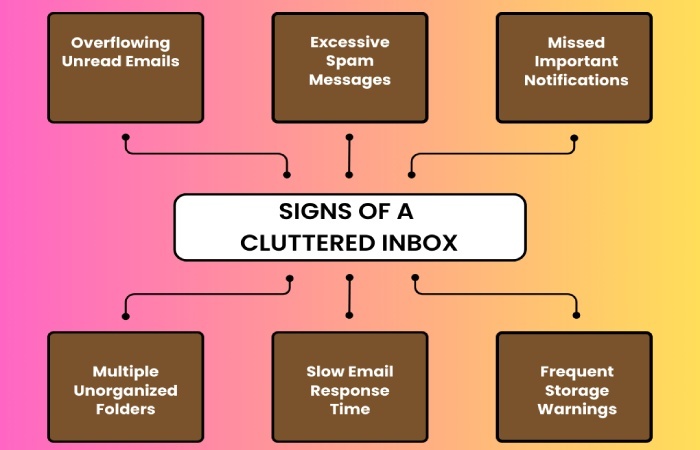
BIMI helps you display your logo next to your emails. This allows recipients to spot your messages in a cluttered inbox, increasing engagement possibilities. If you want to deploy BIMI for your domain, **properly configured DKIM and DMARC records are necessary. Without DKIM, your emails won’t qualify for BIMI, reducing brand visibility in inboxes.
5. Builds trust with ISPs and recipients
ISPs consider DKIM a signal of legitimacy and trust, helping maintain a healthy domain reputation. If DKIM is absent, your domain may have a lower reputation, especially if you send many emails daily. This makes it harder to send **emails reliably and expect outcomes from marketing campaigns.
Configuring DKIM can be daunting. Moreover, it’s not a one-time job; you must keep evaluating DMARC reports as they include insights on failed emails that often indicate misconfigured SPF, DKIM, and DMARC records. It’s a resource-intensive task , so if you need a helping hand, please reach out to us. To verify your setup yourself, learn how to perform a DKIM lookup and check that your signature resolves.
Sources
Topics
General Manager
General Manager of DuoCircle. Product strategy and commercial lead for DMARC Report's 2,000+ customer base.
LinkedIn Profile →Take control of your DMARC reports
Turn raw XML into actionable dashboards. Start free - no credit card required.