Business Email Compromise vs Phishing Attacks — A Deep Dive by DMARCReport
In today’s hyper-connected digital world, email remains the backbone of business communication — and unfortunately, also one of the most exploited attack vectors used by cybercriminals. Sophisticated threat actors continually refine their techniques to deceive trusted recipients, impersonate legitimate senders, and manipulate end users into disclosing sensitive information or transferring funds.
At DMARCReport, we believe that truly understanding the nature of modern email-based threats — particularly the differences between Business Email Compromise (BEC) and Phishing — is essential for organizations of all sizes. Though both attack types involve deception and social engineering, they are distinct in their goals, execution methods, and the defenses needed to mitigate them effectively. In this comprehensive analysis, we’ll break down what makes these threats unique, examine why they succeed, explore recent trends, and outline practical steps for defending against them.
Email Attacks Are a Universal Threat
Email continues to be exploited far more frequently than almost any other digital communication channel, and the reason is simple: it combines trust and convenience with inherent vulnerability. Attackers know that users are conditioned to treat emails as routine business correspondence — often clicking links, opening attachments, and responding to requests without verifying authenticity. In turn, attackers leverage both technical methods and psychological manipulation to achieve their aims, ranging from financial fraud to network intrusion, data theft, and beyond.
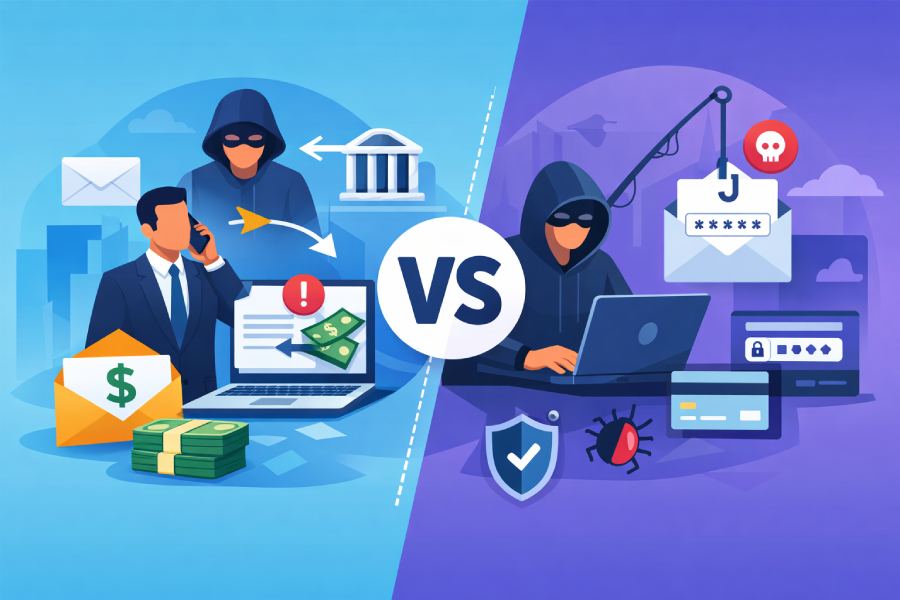
At their core, Business Email Compromise (BEC) and Phishing attacks both rely on deception. They thrive on social engineering — the art of manipulating people into taking actions that benefit the attacker. However, while they share some similarities, BEC and phishing are fundamentally different in terms of scope, sophistication, and impact.
What Is Business Email Compromise (BEC)?
Business Email Compromise is a highly targeted and methodical form of email-based attack in which a threat actor impersonates a trusted individual or entity — such as a company executive, vendor, or partner — to manipulate victims into taking harmful actions. These actions often involve authorizing wire transfers, releasing sensitive data, or making changes to business processes.
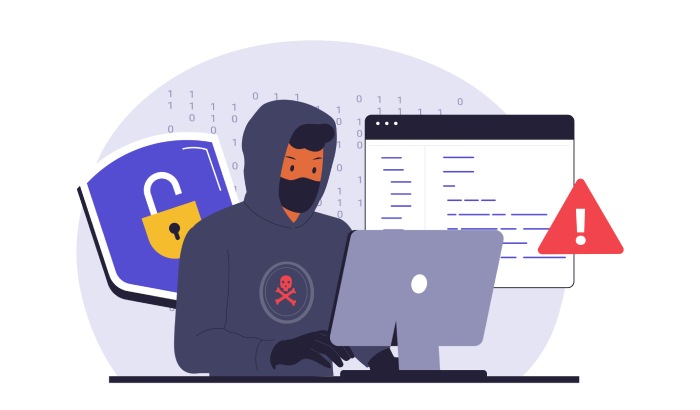
Unlike generic phishing campaigns, BEC attacks are not scattershot. Instead, they are planned with precision, and attackers often spend significant time researching their targets, understanding organizational structure, identifying key personnel, and studying communication styles. This preparatory work enables them to craft messages that feel personal, legitimate, and urgent — making them difficult to detect with simple filters or generic rules.
Common BEC scenarios include:
- CEO Fraud: An email appears to come from a company’s CEO or senior executive, instructing an employee — often in finance or accounts payable — to approve a high-value transfer immediately.
- Vendor Impersonation: An email appears to come from a trusted supplier with updated banking information, prompting changes that route payments to attacker-controlled accounts.
- HR Compromise: Attackers impersonate HR team members to request confidential employee information or modify payroll details.
What sets BEC apart is not just the sophistication of the attack but the impact. These schemes regularly result in losses ranging from tens of thousands to millions of dollars. Beyond direct financial loss, companies suffer regulatory penalties, reputational harm, operational disruption, and long-term erosion of trust with partners and customers.
Defining Phishing Attacks
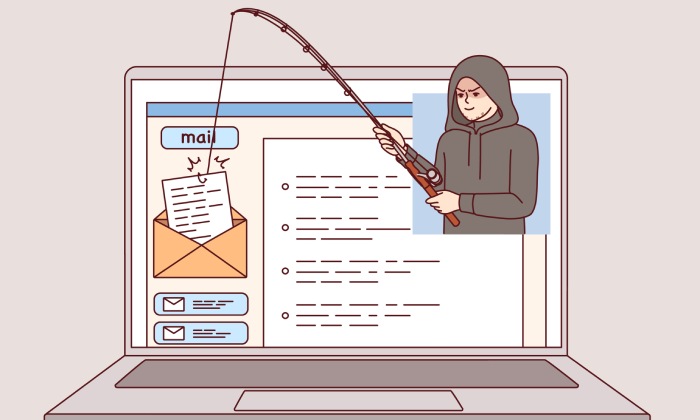
In contrast to BEC, Phishing attacks tend to be broader in scope. Phishing is any attempt by an attacker to trick a recipient into divulging sensitive information — such as credentials, payment details, or personal data — by posing as a trusted source. These scams can arrive via email, text message (SMS phishing), social media, or even voice calls (vishing).
Phishing messages vary widely. Some are poorly written and easily spotted, while others are dressed up with convincing logos, correct branding, and flawless grammar. Modern phishing campaigns often create a false sense of urgency, warning recipients that their account will be suspended unless they take immediate action or that unauthorized activity has been detected.
The most common phishing pattern involves a link that redirects the user to a fraudulent sign-in page or downloads malware once clicked. The goal may be credential theft, the installation of remote access tools, or the initiation of a broader compromise of systems and networks.
Similarities Between BEC and Phishing
Though distinct in key ways, BEC and phishing share some core traits:
- Social Engineering Driven: Both rely on manipulating human trust rather than exploiting software vulnerabilities.
- Email-Centric: Email is the primary delivery mechanism, exploiting its universal use and importance in business operations.
- Financial or Data-Driven Motives: Both aim for financial gain, unauthorized access, or data theft.
Key Differences: Targeting, Tactics, and Complexity
BEC and phishing differ significantly in the following dimensions:
1. Targeting
- BEC: Highly targeted toward specific individuals — often finance staff, executives, or HR personnel.
- Phishing: Usually broad, with attackers casting a wide net in hopes that even a small percentage of victims will fall for the scam.
2. Tactics Used
- BEC: Leverages personalized impersonation, urgent language, and spoofed addresses, and often does not include malicious links or attachments.
- Phishing: Frequently uses malicious links, fake login pages, or attachments designed to harvest credentials or deliver malware.
3. Complexity and Customization
- BEC: Requires significant reconnaissance and context-specific tailoring to the target.
- Phishing: Can be automated and generic, enabling mass distribution with minimal customization.
This variation means that while automated filters might catch many phishing attempts, BEC frequently slips through because it looks like legitimate business communication.
Why These Attacks Succeed
Attackers know that even well-educated employees can make mistakes when under psychological pressure. BEC attackers amplify urgency and authority, often sending messages from addresses that look nearly identical to internal ones. Phishing attacks can exploit fear, curiosity, or routine tasks, convincing users to ignore warning signs. Both succeed because humans, not machines, are often the final decision-maker.
Compounding this is the evolution of threat tools. Recent industry reports show that phishing attacks have become more convincing thanks to techniques like AI-generated content that mimics real correspondence, reducing obvious red flags like poor grammar and amateur visuals.
The Cost of Falling Victim
The impact of email-based attacks extends far beyond the initial compromise. Consider the high costs associated with a successful phishing or BEC incident:
- Direct financial loss
- Regulatory fines and legal costs
- Brand and customer trust erosion
- Business disruption and remediation expenses
Independent reports show that compromised credentials and phishing are leading causes of data breaches, often resulting in losses measured in millions per incident.
How to Prevent BEC and Phishing Attacks
The good news? Neither BEC nor phishing attacks are unstoppable. Effective defense requires a multi-layered approach combining people, processes, and technology.
1. Employee Awareness Training
Human awareness remains the best first line of defense. Regular, focused training helps employees:
- Recognize suspicious messages
- Understand common tactics used by attackers
- Verify unusual requests before taking action
Consistent reinforcement and simulated exercises make real threat detection more intuitive over time.
2. Implement Multi-Factor Authentication (MFA)
MFA adds a second or third verification step beyond passwords, dramatically reducing the risk of unauthorized account access — even if credentials are compromised. This can block attacker access, especially in cases where phishing attempts aim to steal login details.
3. Deploy Email Authentication Protocols
From a technical standpoint, email authentication is one of the most powerful defenses against BEC and phishing:
- SPF (Sender Policy Framework): Specifies authorized mail servers that can send email on behalf of a domain.
- DKIM (DomainKeys Identified Mail): Adds cryptographic signatures to messages, verifying that content wasn’t altered and that it originated from a legitimate source.
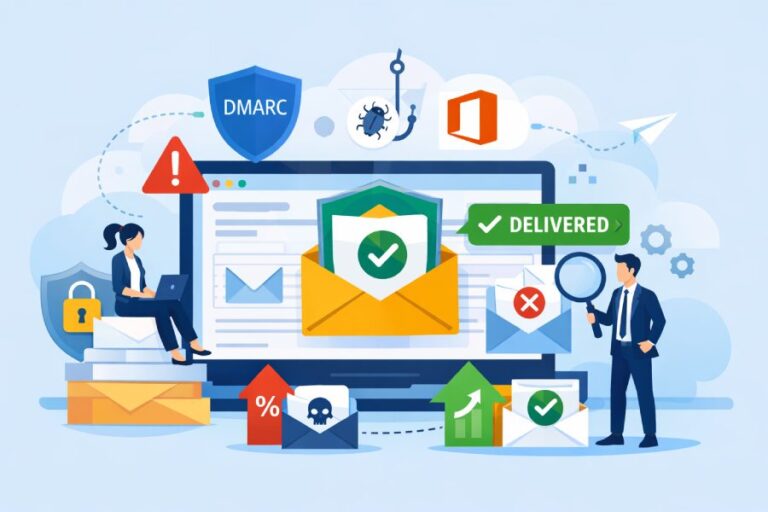
- DMARC (Domain-based Message Authentication, Reporting & Conformance): Coordinates SPF and DKIM to decide how emails that fail authentication should be handled — reject, quarantine, or none — and provides reporting for visibility into unauthorized usage.
Together, these protocols make it far harder for attackers to spoof trusted domains and send fraudulent emails that reach employee inboxes.
At DMARCReport, we emphasize DMARC not just as a technical protocol, but as part of a broader strategic investment in authentication and visibility. A properly configured DMARC policy doesn’t just block threats — it provides ongoing reporting that reveals how your domains are being used or abused.
Looking Ahead: Emerging Trends
Email-based threats continue to evolve. Some trends security teams are watching include:
- AI-Generated Content: Attackers using automation to craft highly convincing, personalized emails.
- MFA Bypass Techniques: Phishing kits that can intercept tokens or one-time co
- QR Code Phishing: Embedding malicious QR codes to redirect victims to fake credential pages.
- Targeting Collaboration Platforms: Threat actors shifting focus to tools like Slack, Teams, or shared cloud apps.
Awareness of these developments helps organizations stay ahead by adapting defenses, training programs, and detection systems accordingly.
Conclusion — Prioritize Email Trust and Safety
Email remains indispensable in business communication, but its openness and ubiquity are double-edged. Both Business Email Compromise and Phishing represent profound challenges that exploit trust, manipulate human behavior, and leverage technical gaps.
At DMARCReport, we believe that defeating these threats requires a holistic strategy built on:
- Employee education and vigilance
- Robust email authentication (SPF, DKIM, DMARC)
- Multi-factor authentication and security best practices
- Continuous monitoring and reporting
By embracing layered defenses and treating email security as a core business concern rather than an afterthought, organizations can significantly reduce their risk exposure and protect both financial assets and reputational integrity.
If you’re looking to strengthen your email defenses or audit your domain security posture, DMARCReport offers tools, insights, and reporting capabilities designed for modern email threat landscapes.