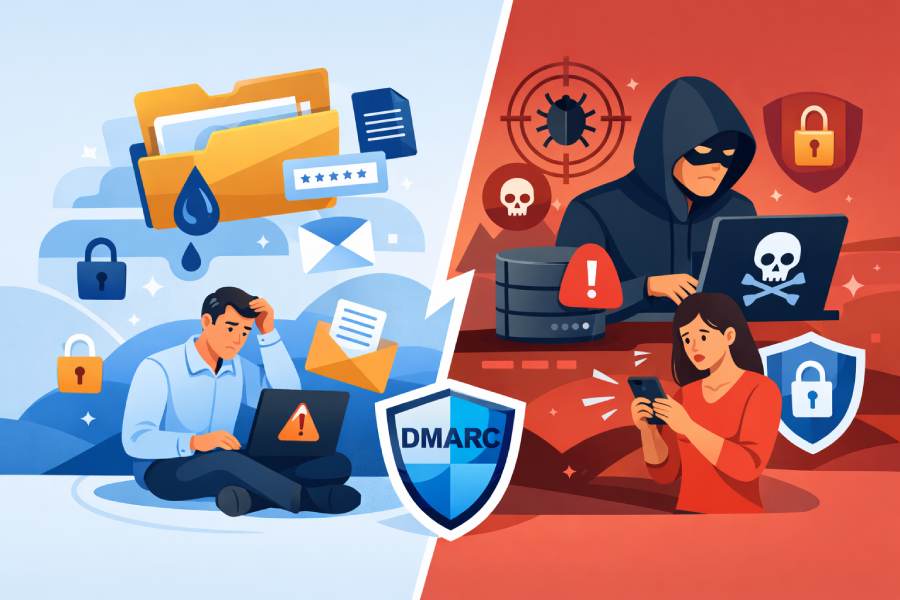
Data Leak vs. Data Breach — A DMARCReport Perspective
In today’s digital world, terms like data leak and data breach are frequently used by news outlets, security blogs, and IT professionals—often interchangeably, but incorrectly. At DMARCReport, we believe that understanding the distinction between a data leak and a data breach is essential for building strong data-protection strategies. When combined with security measures like DMARC, this knowledge helps organizations better prevent unauthorized data exposure and defend against cyber threats. These aren’t just buzzwords—knowing how sensitive information can be exposed or stolen directly influences how effectively individuals and businesses protect their digital assets.
Let’s walk through what each term really means, what causes them, how they differ, and why it matters — whether you are running a small business, managing a large enterprise, or simply care about your personal data hygiene.
What is a Data Leak?
At its core, a data leak refers to the unintended or unnoticed exposure of information — whether that data is “in motion” (being transmitted) or “at rest” (stored somewhere). Crucially, a data leak often does not involve an explicit cyberattack. Rather, it can stem from internal misconfigurations, oversight, human error, or faulty processes.
In practice, a data leak can happen through many channels:
- Sensitive information on a company’s internal server accidentally becomes accessible due to misconfigured permissions.
- A laptop, external storage drive, or USB stick containing confidential data is lost or stolen.
- An employee inadvertently sends a spreadsheet containing customer data to the wrong email address.
- Backup files or archived data — thought secure — are left unencrypted or exposed to public networks.
Data leaks are often invisible: since there is usually no “attack,” the organization may not even realize data has been exposed. That’s why data leaks pose a silent but persistent threat to operational security and data privacy.
What Causes Data Leaks?
At DMARCReport, we see two major categories of root causes:
- Human error and process flaws
- Employees accidentallymisplacing or mis-sending data.
- Mismanaging access permissions, such as giving too broad access to storage or servers.
- Failing to properly encrypt or secure backups and storage media.
- Using weak passwords, failing to change defaults, or using unsecured networks/devices.
- Vulnerabilities in systems or policies
- Poorly configured firewalls or network defenses.
- Unpatched software, unaddressed security flaws in third-party tools, or weak vendor security practices.
- Inadequate training or lack of data-handling guidelines in organizations.
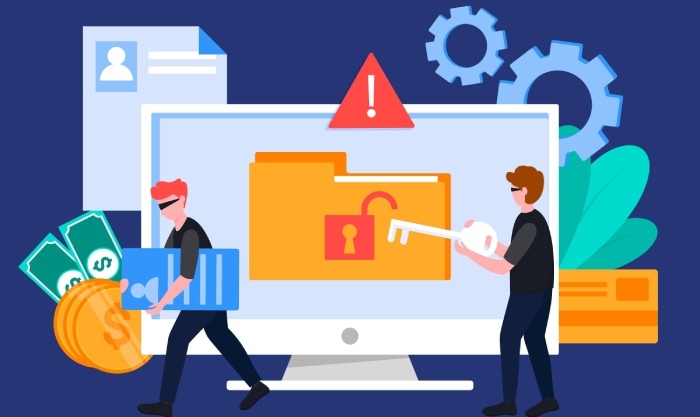
There is also a more troubling scenario: intentional internal leaks. A disgruntled employee or someone with privileged access may purposefully expose or leak sensitive data — whether for whistleblowing, sabotage, or profit. While the leak originates from within, its impact can be just as damaging as an external breach.
Even seemingly “harmless” leaks — like an email address, username, or partial customer information — can become potent information in the hands of a malicious actor. Combined with automated attacks like password-guessing or brute force, partial leaks can open the door to full compromise.
Why Data Leaks Are Dangerous
Because leaks often remain undetected, they are especially insidious. The consequences can include:
- Damage to business reputation or public trust — especially if customer or personal data becomes public.
- Financial losses due to fraud, regulatory penalties, or litigation.
- Long-term strategic damage: leaked internal memos, corporate plans, or proprietary data can benefit competitors.
- Facilitation of more severe attacks: leaked data can be exploited for targeted phishing, social engineering, or full system breaches later on.
In short: a data leak may begin as a small vulnerability, but it can grow into a full-scale disaster if left unmitigated.
What is a Data Breach?
By contrast, a data breach is a deliberate attack or unauthorized intrusion, carried out by external threat actors, with the express aim of compromising sensitive or confidential information. It involves malicious exploitation — not just accidental exposure.
When a breach occurs, hackers may silently infiltrate a network, bypass security protocols, and extract, copy, or exfiltrate data. This may include customer personal information, financial records, trade secrets, intellectual property, internal communications, or any other data deemed valuable.
What Causes Data Breaches?
The techniques used by attackers are varied, often complex, and evolve constantly. Common causes include:
- Malware and malicious software — such as ransomware, trojans, worms, or viruses that install themselves on systems and exfiltrate data.
- Social engineering — attackers use deceptive tactics like phishing, spear-phishing, whaling, or scareware to trick users into giving up credentials or inadvertently providing access. According to security reports, a vast majority of cyberattacks start with this low-tech method.
- Direct hacking or exploitation of vulnerabilities — exploiting weaknesses in software (unpatched vulnerabilities), poor network architecture, flawed authentication, SQL injections, or man-in-the-middle attacks to gain unauthorized access.
Because breaches are purposeful and often sophisticated, they tend to be disruptive. Organizations may not only lose data — they may lose trust, face regulatory penalties, and incur heavy financial costs. According to some industry reports, the average cost of a data breach has been estimated to be in the millions of dollars.

The Consequences of a Data Breach
The fallout from a breach can be devastating:
- Financial loss: beyond the direct cost of data loss, organizations often must invest in forensics, remediation, legal compliance, public relations, customer compensation, and possibly regulatory fines.
- Operational disruption: systems may be taken offline, business operations interrupted, or data rendered inaccessible (especially in ransomware cases).
- Reputation damage: trust from customers, partners, and employees can erode — sometimes irreparably.
- Loss of competitive advantage or intellectual property: trade secrets, product designs, internal roadmaps, or strategic documents may be exposed, giving competitors or malicious actors a big advantage.
- Legal and compliance ramifications: depending on jurisdictions and governing regulations, organizations may have to notify affected individuals, regulators, or face lawsuits — especially when personal or sensitive data is involved.
Because attackers often act stealthily, breaches may go undetected for long periods — making the damage even worse when finally discovered.
Data Leak vs. Data Breach — Key Differences
Given the above definitions, here’s a direct comparison to highlight how leaks and breaches differ:
| Criteria | Data Leak | Data Breach |
| Nature / Origin | Internal: often accidental or due to misconfiguration / human error / oversight. | External: deliberate attack or intrusion by threat actors. |
| Intent | Usually no malicious intent (can be accidental or internal misuse). | Malicious intent — unauthorized access with intent to steal, copy, or expose data. |
| Detection & Visibility | Often invisible — may go unnoticed; unclear when or how long data has been exposed. | More likely to be discovered (though many breaches remain undetected for a time). |
| Typical Causes | Human error, misconfiguration, internal negligence, unpatched systems, internal misuse. | Malware, hacking, social engineering, network/ application vulnerabilities. |
| Potential Impact | Exposure of sensitive information; may lead to further attacks or reputational/financial damage if exploited. | Data theft, operational disruption, major financial loss, legal/regulatory consequences, reputational damage. |
Importantly — a data leak can lead to a data breach. Once information is leaked (even innocently), threat actors may discover it, use it to plan an attack, or exploit it to infiltrate the system.
Why the Distinction Matters — Especially Today
At DMARCReport, we emphasize clarity and awareness because treating “data leaks” and “data breaches” as one and the same can lead to inadequate security strategies.
- A strategy built around preventing only external attacks (breaches) will likely miss vulnerabilities within — leaving the organization exposed to leaks via misconfiguration or human error.
- Conversely, over-focusing on internal controls without protection against external threats means ignoring some of the most dangerous attack vectors (like malware or phishing).
- With the growing complexity of hybrid work, cloud storage, remote devices, third-party vendors and distributed workforces — both leak and breach risks are multiplied.
- Regulatory compliance and data-privacy laws increasingly demand that organizations demonstrate robust data-handling processes — not just perimeter defense. Recognizing and mitigating both leaks and breaches helps meet those obligations.
Thus, understanding both terms, and designing layered, comprehensive defenses, is the only effective way to protect sensitive data.
Practical Steps: Preventing Data Leaks & Breaches
Based on the distinctions and risks outlined above, here are critical measures that organizations (and individuals) should adopt to reduce both leak- and breach-related risk:
- Establish strong internal security policies and access controls
- Grant data access only to those who need it. Use role-based access control (RBAC).
- Maintain strict audit logs of data access, changes, and transmission.
- Encrypt data at rest and in transit
- Use encryption for stored data, backups, and moving data across networks — especially when using cloud storage or third-party services.
- For backups on external drives or offline media, apply encryption and store securely.
- Regularly patch systems and third-party components
- Keep software, operating systems, and third-party tools updated.
- Monitor for known vulnerabilities and apply timely patches.
- Conduct employee training and awareness programs
- Train staff on secure handling of data (sensitive/customer data, internal documents, credentials).
- Educate about phishing, social engineering, safe email practices, and how to handle sensitive data securely.
- Use Data Loss Prevention (DLP) and monitoring tools
- Implement DLP solutions to monitor data leaving the organization (e.g. copying to external drives, uploading to public cloud, sending via unsecured email).
- Maintain real-time alerts and regular audits for suspicious data movement or large exports.
- Implement layered external security defenses
- Firewalls, intrusion detection/prevention systems (IDS/IPS), network segmentation, secure authentication practices (MFA), and zero-trust architecture where possible.
- Ensure proper configuration, vendor security assessments, and regular vulnerability scanning.
- Develop an incident response plan
- Prepare protocols for both suspected leaks (internal exposure) and breaches (external attacks).
- Include steps for containment, reporting (to authorities or affected individuals), forensic analysis, damage assessment, communication & remediation.
By combining internal vigilance with strong external defenses, organizations can significantly reduce their risk — whether from accidental leaks or malicious breaches.

Final Thoughts
In a digitally connected world, data — whether customer records, intellectual property, private communications, or internal documents — is among your most valuable assets. Threats to that data don’t always come from outside hackers with malicious intent. Sometimes, they come from within: misconfigurations, oversight, human error, or simple carelessness. That’s why distinguishing between a data leak and a data breach is more than semantics — it’s foundational to good cybersecurity hygiene.
- A leak doesn’t always require an attack. It can arise internally, silently, and grow unnoticed.
- A breach, on the other hand, is a deliberate intrusion — often aggressive, potentially devastating, and expensive to remediate.
- And worst of all: leaks can turn into breaches if malicious actors identify and exploit exposed data.
At DMARCReport, we champion a layered approach: blending policy, awareness, technology, and resilience. Because protecting data is not a one-time task but a continuous process. Whether you are a small startup, a mid-sized business, or a large enterprise — understanding the difference between leaks and breaches, and defending against both, can make or break your data security posture.
Stay vigilant. Secure your data. Because once lost — you might never get it back.