

Kratos Targets Outpost24, Intuitive Data Breached, Starbucks Staff Exposed
Phishing attacks dominated last week’s cyberincidents. Outpost24, a security firm, fell prey to a phishing attack. Intuitive’s company data was breached because of a sophisticated phishing attack. A whopping 900 Starbucks employees are now prone to threat attacks after phishing actors breached the internal employee portal. Meanwhile, a new phishing campaign has been hijacking legitimate…
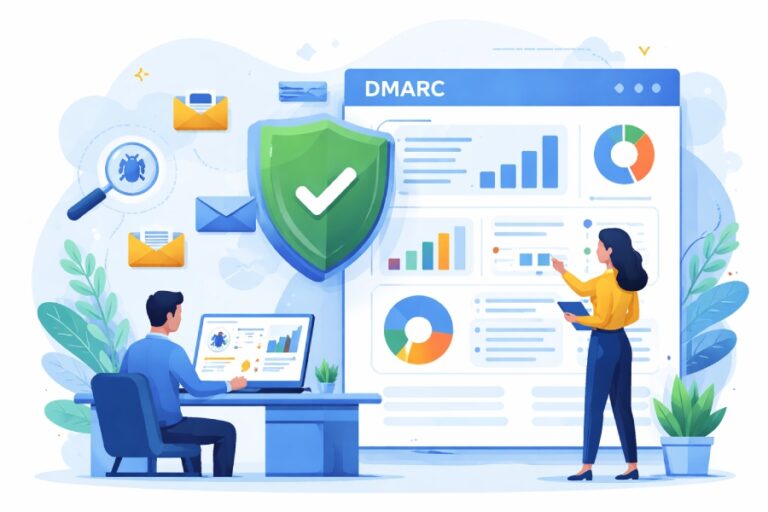
Advanced DMARC Report Analyzer: Smarter Insights for Modern Domains
An advanced DMARC report analyzer must deliver resilient ingestion and normalization of RUA/RUF data at scale, privacy-aware long-term storage, rich analytics and alerting, ML-driven anomaly detection, seamless integrations, and prescriptive policy guidance—from “none” to “reject”—and DMARCReport provides this end-to-end capability for modern domains. DMARC exists to align identity and authentication (SPF/DKIM) with an organization’s “From”…

How to set up DKIM in Google Workspace: A guide
It is easy to think that once an email leaves your server, it will reach the recipient safely, exactly how it was sent. This usually does not happen because cyberattackers have developed ways to intercept your outgoing emails, modify their content, or impersonate your domain before it reaches the recipient. Since your outgoing email passes…

Complete Guide to Setting Up a DMARC Policy for Gmail Domains
To set up a DMARC policy for Gmail/Google Workspace domains, configure SPF (v=spf1 include:_spf.google.com -all), enable and publish a 2048-bit DKIM key from the Google Admin console (selector._domainkey), then add a DMARC record at _dmarc.yourdomain.com starting with v=DMARC1; p=none; rua=mailto:reports@yourdomain.com; ruf=mailto:forensics@yourdomain.com; fo=1; adkim=s; aspf=s; pct=100 (optionally sp=quarantine/reject), monitor for 2–4 weeks with DMARCReport, escalate to…

What Is a Zero-Day Exploit and How Can You Prevent It?
Cybersecurity threats are evolving rapidly, and organizations must constantly adapt to protect their digital infrastructure. Among the most dangerous threats today are zero-day exploits—cyberattacks that take advantage of unknown vulnerabilities in software or systems before developers have time to fix them. These attacks are highly effective because they exploit weaknesses that have not yet been…

What Is a Trojan and How Does It Work?
A Cybersecurity Guide by DMARCReport Cyber threats continue to evolve, and one of the most deceptive types of malware organizations face today is the Trojan. Unlike many other forms of malicious software, Trojans rely heavily on deception and user interaction to infiltrate systems. They often appear harmless or even beneficial at first glance, but once…

How can DMARC lookups help me prove compliance with email security policies?
DMARC lookups help you prove compliance with email security policies by producing verifiable, timestamped evidence of your enforced DMARC configuration (e.g., v, p, rua, ruf, pct, adkim, aspf, sp), which—when stored, correlated with DMARC reports and SPF/DKIM/log data, and demonstrated over time—forms an auditable chain that shows your policies are configured correctly, active across all…

What Is a Password Attack in Cyber Security?
Understanding Methods, Risks, and Prevention Strategies Passwords remain one of the most widely used authentication mechanisms in modern digital systems. From personal email accounts to enterprise cloud platforms, passwords protect sensitive data and system access across the internet. However, because they are so common, they have also become one of the most targeted elements in…
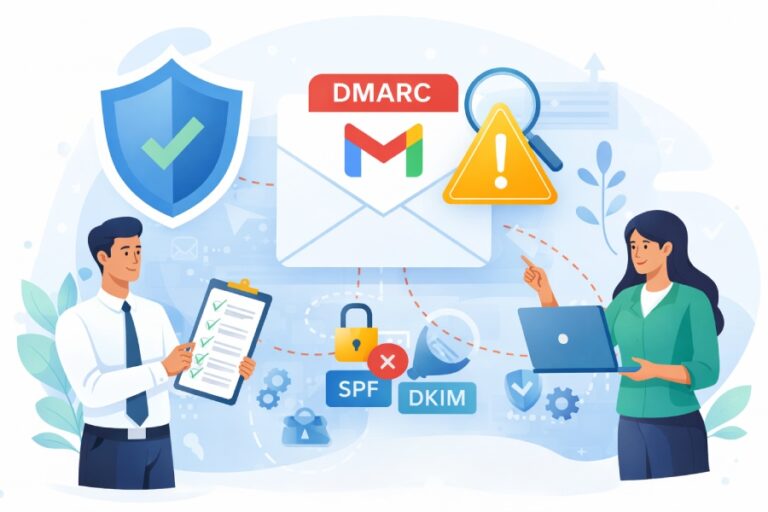
What are the best practices for setting a strict DMARC policy when sending to Gmail addresses?
To set a strict DMARC policy (p=reject) for Gmail recipients without delivery disruptions, roll out in phases with monitored DNS changes and pct ramp-up, ensure SPF and DKIM pass and align to the RFC5322.From domain (use relaxed alignment by default), harden SPF and DKIM configurations (dedicated Return-Path, 2048-bit DKIM keys, predictable selectors), inventory and fix…

What Is a DMARC Failure Report? A Complete Guide by DMARCReport
Email authentication has become one of the most important pillars of modern cybersecurity. Organizations send thousands—or even millions—of emails every day, and attackers frequently attempt to impersonate legitimate domains to distribute phishing messages, malware, or fraudulent requests. This is where DMARC (Domain-based Message Authentication, Reporting & Conformance) plays a crucial role. DMARC works alongside SPF…

Mastering DMARC Reports: Turn Authentication Data Into Actionable Insights
Mastering DMARC reports means turning RUA/RUF data into decisions by correctly configuring report endpoints and SPF/DKIM alignment, parsing and normalizing XML at scale, mapping sources to legitimate senders, automating anomaly triage, driving policy changes, tracking KPIs, avoiding common pitfalls, onboarding third parties safely, and integrating complementary standards—work that DMARCReport streamlines end-to-end with guided setup, a…

How do I troubleshoot email delivery failures after implementing a DMARC record in Office 365?
To troubleshoot email delivery failures after implementing a DMARC record in Office 365, validate SPF/DKIM/DMARC alignment for your domain, analyze DMARC aggregate/forensic reports to pinpoint failing sources, use Office 365 Message Trace and Defender/EOP logs to confirm the failure path, correct SPF/DKIM and third‑party sender configurations, and roll out enforcement gradually—continuously monitored and guided by…

ChatGPT Gemini Users, Optimizely Vishing Breach, Telecom AI Protection
Last week was all about phishing, vishing, and spoofing attacks that kept the experts on their toes. While GPS spoofing attacks saw a sudden spike due to regional conflicts between the US and Iran, the ad tech brand Optimizely was targeted by a group of threat actors. Also, cybercrooks have been trying to exploit users…
