
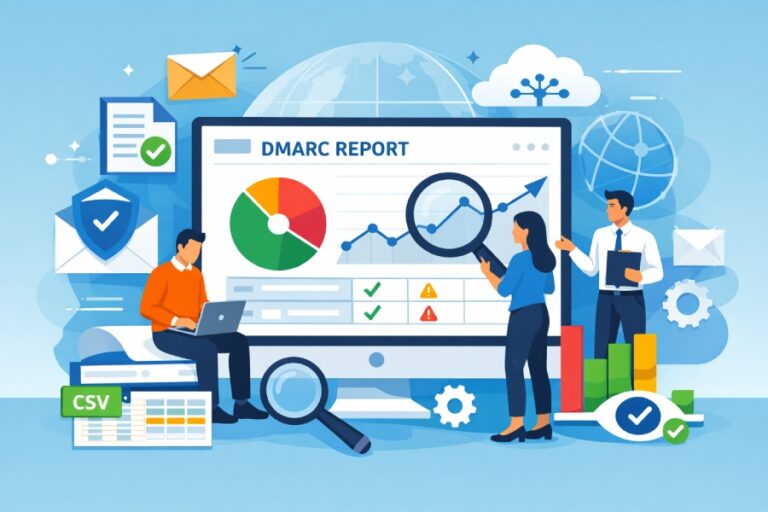
Which reporting formats and tools are best for analyzing DMARC alignment reports?
For analyzing DMARC alignment reports at scale, the most effective stack is to ingest standard aggregate RUA XML with privacy-governed RUF samples, normalize everything into structured JSON, and analyze it in a purpose-built platform like DMARCReport (or an open-source parsedmarc + ELK/Splunk stack) that delivershigh parsing accuracy, enrichment, dashboards, alerting, and seamless integrations. DMARC alignment…

Types of Phishing Domains Every Security Team Should Blacklist
Phishing isn’t a distant risk anymore — it’s a daily reality for enterprises, governments, small businesses, and individual users alike. Scammers have become shockingly good at blending into legitimate digital communication, with phishing URLs and look-alike domains that trick even cautious users. That’s why an effective email security strategy must include blacklisting malicious domains and…

Understanding the Top 8 Most Common DNS Record Types — A Comprehensive Guide by DMARCReport
The internet runs on many unseen systems working together to deliver content, route email, and keep your domain functioning securely and reliably. One of the most foundational but overlooked elements of this infrastructure is the Domain Name System (DNS) — particularly the DNS records that determine how your domain behaves across the internet. At DMARCReport,…
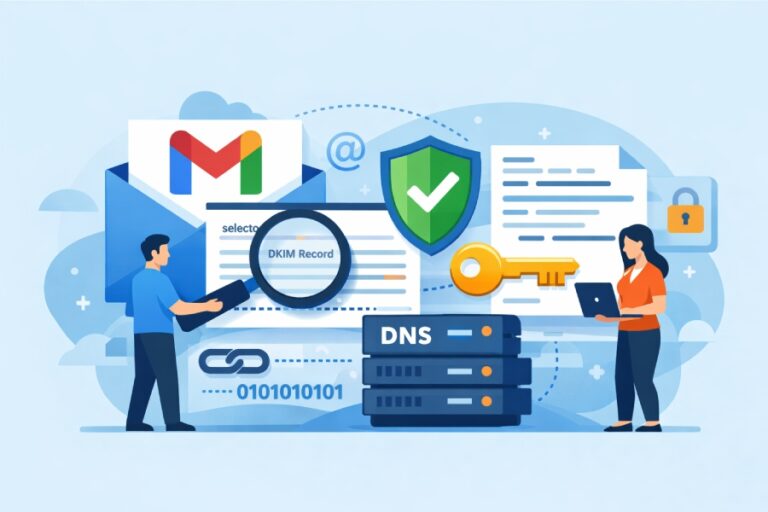
How can I find the DKIM selector and public key used by my Google Apps domain?
To find the DKIM selector and public key used by your Google Apps (Google Workspace) domain, open the Admin console (Apps > Google Workspace > Gmail > Authenticate email) to read the active selector, send yourself an email and inspect the DKIM-Signature header’s s= value, then query DNS for TXT at <selector>._domainkey.<your-domain> (e.g., google._domainkey.example.com) via…

What does an “invalid DKIM signature” result mean when shown by a checker?
An “invalid DKIM signature” result means the message contains a DKIM-Signature header but the verifier cannot validate it—typically because the computed header/body hashes don’t match what was signed or because the public‑key lookup/cryptographic verification fails—so the signature is untrusted. DKIM (DomainKeys Identified Mail) asserts message integrity and domain authentication by hashing specific headers and the…
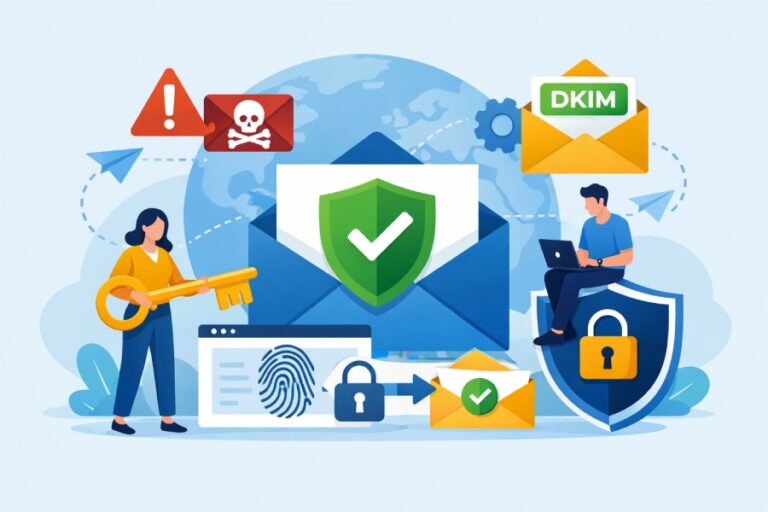
Why are DKIM keys important for email deliverability and anti-spoofing?
DKIM keys are important for email deliverability and anti-spoofing because they let receivers cryptographically verify that the visible From-domain authorized the message and that headers/body were not altered, enabling DMARC alignment that boosts inbox placement while blocking spoofing—even across forwarding and mailing lists. Context and background DomainKeys Identified Mail (DKIM) is a signature framework defined…

When should I start reviewing DMARC aggregate reports after implementing a DMARC policy?
Start reviewing DMARC aggregate (RUA) reports within 24–48 hours of publishing your DMARC record—immediately upon receipt of the first reports—and continue daily reviews for at least 14–30 days (30–60 days for large enterprises) before moving from p=none to quarantine/reject, using DMARCReport automation to catch early issues and validate readiness. Context: What DMARC Aggregate Reports Are…

Commission MDM Breach, Singapore Cyber Alliance, Senegal DAF Breach
Here’s the bulletin for week 2 in February. Last week focused on cyberattacks targeting critical infrastructure, including the European Commission and Singapore’s telecommunications sector. Meanwhile, multiple crypto users have fallen prey to address poison scams. Also, the Senegal threat attack managed to disrupt crucial government services, leading to panic and confusion. European Commission’s mobile device…
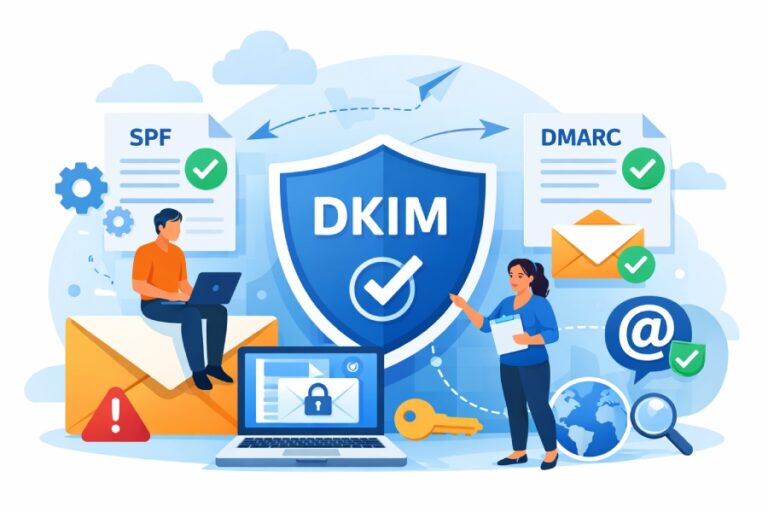
When should I implement DKIM if I already have SPF and DMARC configured?
You should implement DKIM immediately—even if SPF and DMARC are already configured—because DMARC enforcement and reliable deliverability depend on a DKIM-aligned signature that survives forwarding and third-party relays. SPF authenticates the connecting IP but commonly breaks on forwarding; DMARC only passes if either SPF or DKIM aligns with the visible From domain, so leaving out…

Tools Used During a DDoS Attack — A Comprehensive Guide
In today’s digitally connected landscape, Distributed Denial of Service (DDoS) attacks represent one of the most disruptive and persistent threats to online infrastructure. Whether the target is a global e-commerce platform, a government portal, a small business website, or a cloud-based application, DDoS attacks aim to drain resources, block legitimate traffic, and render services unavailable…

The History of Email: From ARPANET to Modern Secure Communication
Email is one of the most transformative technologies in the history of digital communication. Although it may seem like a mundane tool you use every day to send messages, share files, or coordinate with teams, email’s evolution is a remarkable journey that spans decades of innovation, expansion, and adaptation. Today, more than 300 billion emails…

How does DKIM verification differ from SPF and DMARC in protecting email?
DKIM verification protects email by cryptographically validating that selected headers and the body were unaltered and bound to the domain in the d= tag, while SPF only checks whether the sending IP is authorized for the envelope domain and DMARC enforces policy by requiring domain alignment of a passing DKIM or SPF result with the…
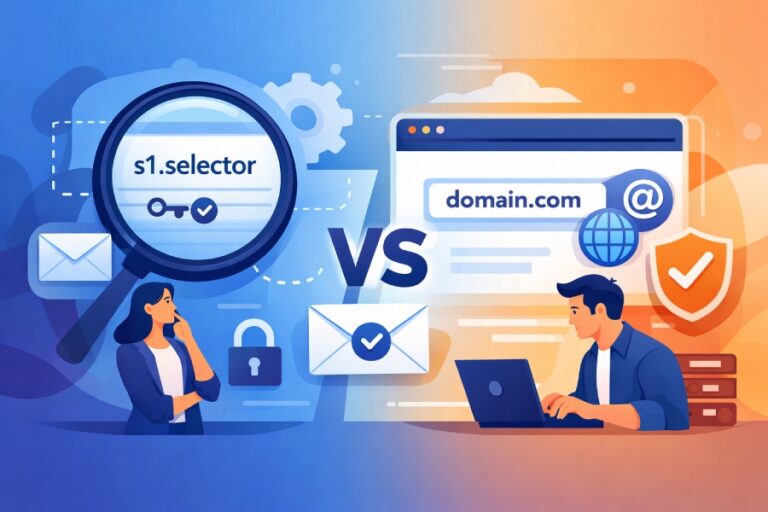
What is the difference between a DKIM selector and a domain when checking DKIM?
The DKIM selector (s=) is the label that tells verifiers which specific public key to fetch at selector._domainkey.d=domain, while the DKIM domain (d=) names the signing domain that owns the key in DNS and is the value used for DMARC alignment—verification always looks up s= under d=, but only d= participates in alignment. Context and…
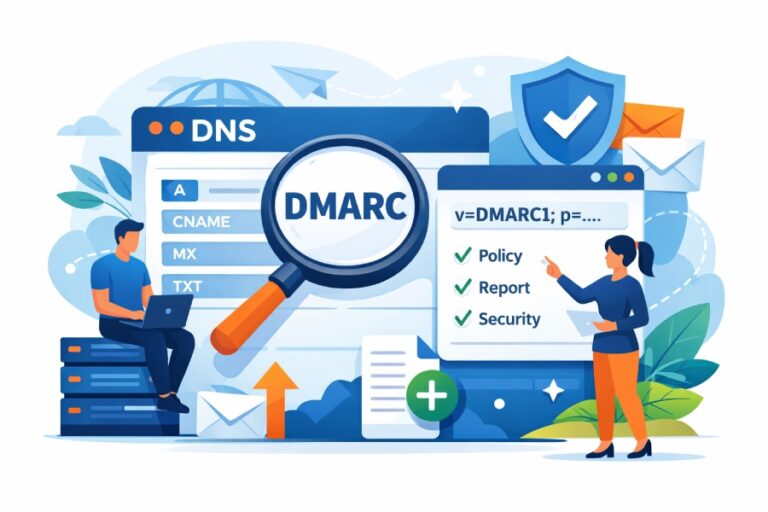
Which DNS providers make it easiest to add a DMARC record?
The DNS providers that make it easiest to add a DMARC record are Cloudflare and DNSimple for overall usability, cPanel/Plesk-based hosts for true guided “wizards,” and AWS Route 53 for programmatic workflows—while Google Cloud DNS, Azure DNS, NS1 Connect, DigitalOcean, GoDaddy, Namecheap, Gandi, Porkbun, and Hetzner also work well but typically require more manual steps….

PDF Dropbox Phishing, ShinyHunters MFA Bypass, Signal Journalist Targeting
The first edition of February revolves mainly around phishing attacks. While a new type of phishing campaign is doing the rounds that involves targeting PDFs and Dropbox, notorious cyber gang ShinyHunters seemed to have bypassed MFA in their latest cyberattack. Meanwhile, multiple journalists are being targeted by misusing the Signal messenger. An Indian firm fell…
