New ClickFix Scam, Dental Practice Banned, UK MPs Targeted


Cybercriminals are getting smarter, quieter, and far more convincing. From a new browser-based ClickFix variant that slips past traditional security tools, to healthcare organizations facing legal action after phishing breaches, and even UK MPs being targeted through trusted messaging apps, recent incidents show how fast attack methods are evolving. These threats no longer rely on obvious malware or shady links. Instead, they exploit user trust, familiar platforms, and small human actions that feel harmless in the moment.
Here is a quick breakdown of the latest cybersecurity incidents making headlines and why they matter for organizations, public officials, and everyday users alike.
Beware of this new ClickFix scam!
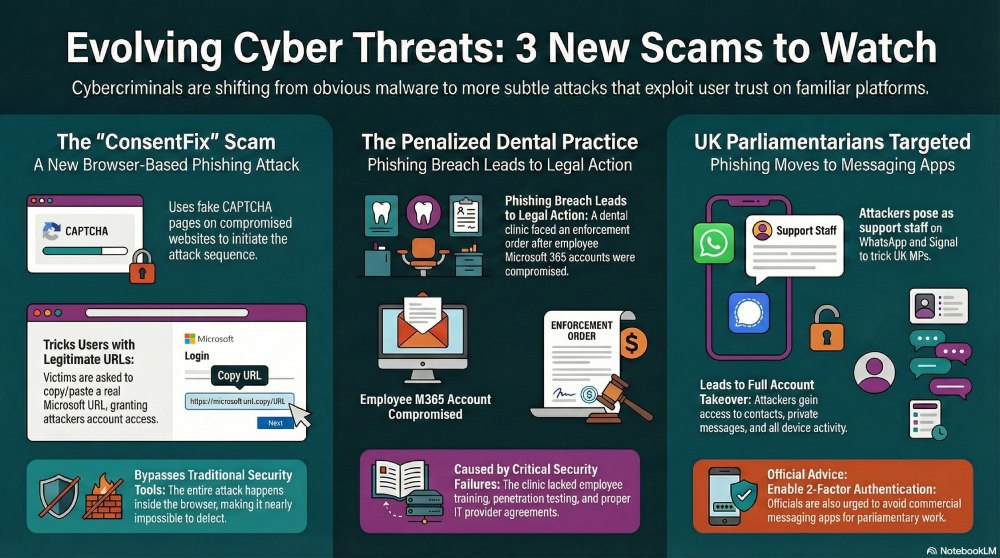
A new type of ClickFix scam is doing the rounds. Known as ConsentFix, this cyberattack tries to bypass security mechanisms. For conventional security tools, it is almost impossible to detect this type of consent phishing attempt.
Generally, in a ClickFix attack, a counterfeit CAPTCHA or a fake error is used to persuade the victim to copy and paste, or execute, harmful commands on their phones or desktops. But in the case of the ConsentFix attack, the entire attack takes place inside the browser. This, unfortunately, eliminates one of the major threat detection checkpoints.
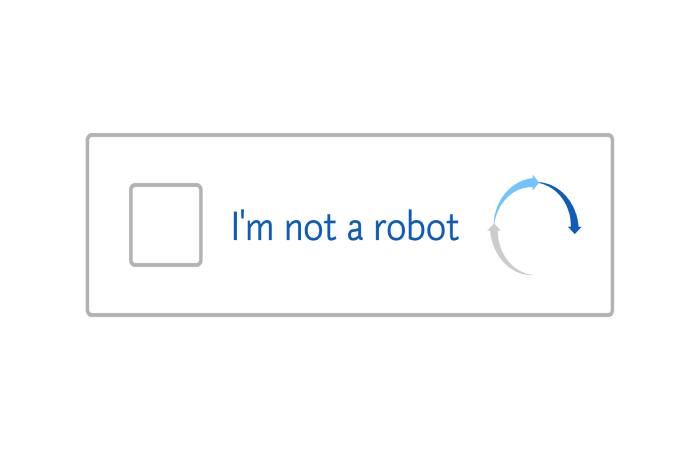
When a victim comes across a legitimate but otherwise compromised website during a Google search, it allows the threat actors to bypass traditional anti-phishing tools. A fake Cloudflare CAPTCHA verification page pops up, asking the victim to share their business email address to prove they are human.
Next, a Microsoft login page appears on the screen, with a legitimate URL. The victim will now have to copy the URL and paste it into the given field again to prove they are human. Now, the threat actor can access to the victim’s Microsoft account via this URL.
Cyber experts believe the success rate of this ConsentFix phishing attack is quite low so far because the likelihood of an employee copying and pasting a long URL is very rare. Cyber experts urge organizations to strengthen email security by properly implementing DMARC, DKIM, and SPF to combat phishing and spoofing attacks.
Dental practice prohibited because of cyber breach involvement
It dates back to October 2024, when Fresh Dental, a dental clinic, was targeted by phishing actors. Cybercrooks had managed to get access to the Microsoft 365 email accounts of some of the Fresh Dental employees. These compromised Microsoft 365 accounts are then misused to send malicious emails to other targets.
When the investigation was carried out, experts found multiple technical and security failures on Fresh Dental’s part. The dental clinic could not carry out its own investigation procedures because of a lack of appropriate technical facilities. Fresh Dental also failed to conduct timely cybersecurity training. Secondly, the dental clinic failed badly at penetration testing before the data breach. Neither was there any professional agreement between Fresh Dental and its IT service provider regarding the handling of personal data.
All these clearly contradict the legalities, and as a result, the Law has issued an enforcement order which requires Fresh Dental to deploy organizational and technical measures to minimize the risk of phishing attacks, sign a legal agreement with the IT provider, and take a penetration test to prove the security efficacy of their systems.
UK MPs are being targeted by message-based phishing attacks!
UK MPs are being targeted by message app-based phishing attacks left, right, and center. It is believed that the threat actors are allegedly from Russia. They are using the Signal and WhatsApp accounts of these MPs to target them. The cybercrooks send messages while posing as support team executives of the messaging apps. Next, they ask the victims to either click on a malicious link, enter a code, or scan a QR code.
If the victim follows all instructions, the threat actor gains access to the victim’s contact list, all parliamentary messages, and the victim’s daily activity on the device. The worst part is that the cybercrook will not even get detected!
The UK parliamentary authority has advised the MPs and other officials to amp up their cybersecurity preparations.
The National Cyber Security Center (NCSC) has advised MPs and officials not to use commercial messaging apps for parliament-related work. Also, for informal communications, Microsoft Teams is considered to be a safe option. MPs have also been advised to enable two-factor authentication on all their messaging accounts, unlink any unrecognized or suspicious devices, and remove them then and there.