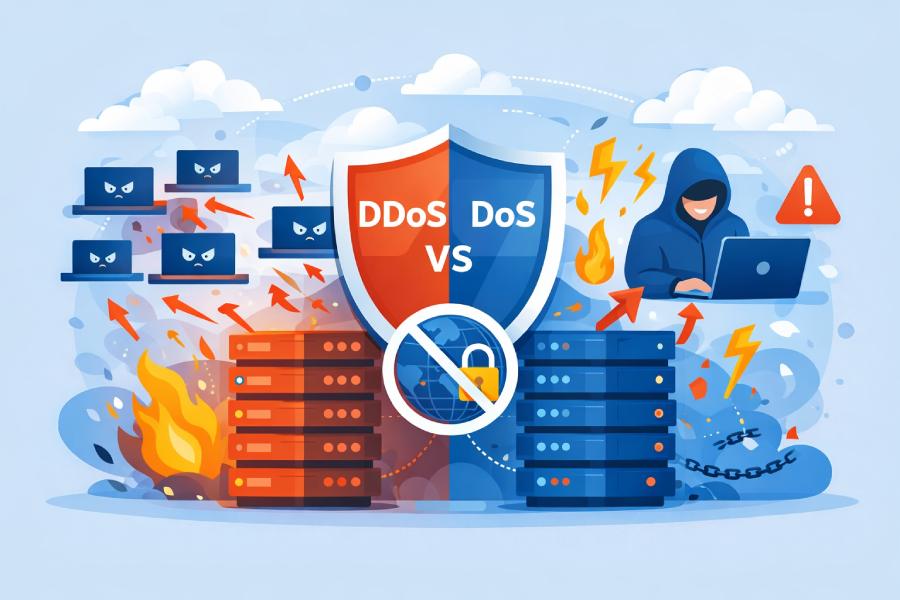
DDoS vs DoS Attacks: A Complete Guide from DMARCReport
In today’s hyper-connected world, where digital services power everything from your business to your personal communications, the threat landscape continues to evolve at an unprecedented pace. Among the most prevalent and damaging types of cyberattacks are Denial-of-Service (DoS) and Distributed Denial-of-Service (DDoS) attacks. These attacks don’t aim to steal data or quietly infiltrate systems—instead, they strike boldly, aiming to take services offline and disrupt operations for users and businesses alike.
At DMARCReport, we believe that understanding the nature, differences, motivations, and mitigation strategies for these attacks is essential for anyone operating online today. Whether you’re an IT professional, a business owner, or simply curious about cybersecurity, this comprehensive guide will help you grasp everything you need to know about DoS and DDoS attacks.
What is a DoS Attack?
A Denial-of-Service (DoS) attack is one of the oldest yet still relevant types of cyberattack. In essence, it’s a method where an attacker overwhelms a target system, server, or network with a flood of bogus traffic or resource requests from a single machine or source. The goal is simple: exhaust the target’s ability to serve legitimate users, rendering the system slow, unresponsive, or completely offline.
Imagine a restaurant where a lone person calls repeatedly to place fake orders—eventually the kitchen gets overwhelmed, legitimate customers can’t place orders, and the restaurant grinds to a halt. That’s a basic metaphor for a DoS attack.
How Do DoS Attacks Work?
DoS attackers typically rely on sending massive volumes of data packets or connection requests using network protocols like TCP (Transmission Control Protocol) or UDP (User Datagram Protocol). Once the target server’s resources—such as memory, bandwidth, or CPU capacity—are exhausted by the bogus traffic, real users are either denied service or suffer significant performance degradation.

Common Types of DoS Attacks
There are several well-known DoS attack techniques that exploit different vulnerabilities:
- Buffer Overflow Attacks: Attackers send excessive or malformed data to an application, causing it to crash or behave unpredictably.
- Ping of Death / ICMP Flood: This exploits weaknesses in network protocols by sending oversized or malformed ping packets that the system cannot process.
- SYN Floods: The attacker sends a rapid succession of connection requests (SYN packets) without completing the handshake, tying up server resources.
- Teardrop Attacks: Fragmented packets are sent that cause the victim’s machine to attempt reassembly, exhausting its resources.
While classic DoS attacks are less common today than their distributed counterparts, they remain a real threat—especially to smaller networks or systems that lack robust defenses.
What is a DDoS Attack?
A Distributed Denial-of-Service (DDoS) attack takes the fundamental idea of a DoS attack and supercharges it by distributing the attack across multiple devices. Instead of flooding a target from one source, attackers marshal armies of compromised machines—often called bots—to overwhelm a service with traffic from hundreds, thousands, or even millions of points worldwide.
These bots are typically infected devices under the control of a cybercriminal, forming what’s known as a botnet. The attacker, sometimes called a “bot herder,” coordinates these bots to launch attacks simultaneously, creating a storm of malicious traffic that’s incredibly difficult to block or trace.
How Do DDoS Attacks Work?
DDoS attacks rely on layers of distributed traffic to overwhelm a target’s bandwidth or server capacity. Because the traffic comes from so many sources, distinguishing malicious traffic from legitimate requests becomes extremely challenging for traditional defenses like firewalls or IP blacklists.
What’s more, the increasing number of Internet of Things (IoT) devices—from smart fridges to home security cameras—gives attackers a larger pool of poorly secured machines to recruit into botnets.

Key Differences Between DoS and DDoS Attacks
At their core, both DoS and DDoS attacks aim to deny legitimate users access to systems or services—but how they operate and the level of threat they pose varies significantly:
| Factor | DoS Attack | DDoS Attack |
| Definition | Single source floods the target | Multiple distributed sources (botnet) |
| Attack Origin | One system / IP | Numerous systems / IPs |
| Traffic Volume | Limited compared to DDoS | Massive, harder to mitigate |
| Detection | Easier to detect | Harder to detect |
| Mitigation | Can block single origin IP | Complex—traffic comes from many IPs |
| Impact Severity | Lower | Higher |
| Difficulty to Carry Out | Easier | More complex & resource intensive |
| Common Usage | Smaller targets | Large enterprises, critical infrastructure |
As we can see, DDoS attacks are typically more powerful, more difficult to defend against, and can cause much more extensive and prolonged disruption than a simple DoS attack.
Motivations: Why Attackers Launch DoS & DDoS Attacks?
Understanding why attackers use these techniques helps defenders prepare and respond more effectively. Motivations vary widely:
1. Financial Gain
Many attacks are financially motivated. Some attackers use DDoS attacks as a form of extortion—demanding ransom for stopping the attack. Others wait for high-traffic events (e.g., Black Friday sales) to take down competitors or demand payment to restore availability.
2. Revenge or Competition
Bad actors may launch attacks out of spite—against competitors or organizations they hold grudges against. These attacks may not be sophisticated, but they can cause serious reputational and operational harm.
3. Ideological or Political Goals
Hacktivist groups sometimes target entities they oppose ideologically—such as political organizations, government websites, or advocacy groups—to disrupt services and broadcast their dissent.
4. Cyber Warfare
In geopolitical conflicts, DDoS attacks are increasingly used as part of broader cyber warfare tactics to disrupt critical infrastructure, financial systems, or government services. These attacks can occur ahead of physical conflicts or as a method of economic disruption.

5. Personal Enjoyment or Challenge
Some individuals launch attacks simply because they enjoy causing disruption or testing their technical skills. Even non-sophisticated attacks can create significant headaches for defenders.
Real-World Impact of DoS & DDoS Attacks
The consequences of these attacks can be serious:
- Operational Downtime: Websites, applications, and services become unavailable to customers and employees.
- Revenue Loss: Businesses lose income directly during an outage.
- Reputational Damage: Consistent service disruptions erode trust with users and clients.
- Security Exposure: DDoS attacks are sometimes used as smokescreens while other breaches occur in parallel.
Modern attacks have grown so sophisticated that even large enterprises with robust defenses can struggle without proactive planning and advanced mitigation strategies.
How to Protect Against DoS & DDoS Attacks
Protecting against these attacks requires a multi-layered approach—some measures focus on preventing attacks, others on mitigating impact:
1. Network Traffic Monitoring
Regularly monitoring traffic patterns helps defenders recognize abnormal spikes or patterns that could indicate an attack in progress. Early detection is key.
2. Firewalls and Rate Limiting
Firewalls can help filter known malicious traffic, and rate limiting prevents a single source IP from overwhelming servers. These measures are more effective against smaller DoS attacks.
3. Scalable Infrastructure
Using load balancers and scalable cloud services allows systems to absorb and distribute traffic spikes more effectively. While not a complete defense against high-volume DDoS, scaling helps maintain service longer.
4. DDoS Protection Services
Many organizations invest in specialized DDoS mitigation services or content delivery networks (CDNs) that scrub incoming traffic and separate legitimate requests from malicious floods.
5. Simulated Testing
Running controlled DoS/DDoS simulations helps organizations evaluate their defenses and incident response plans in advance, strengthening their real-world readiness.

Conclusion: Knowledge Is Defense
Understanding the difference between a DoS and a DDoS attack is not just academic—it’s foundational to defending modern digital systems.While both aim to deny service to legitimate users, DDoS attacks amplify this threat through distributed traffic, making them far more challenging to detect and mitigate.
At DMARCReport, we’re committed to helping you stay ahead of emerging threats like these—not just by defining them, but by helping you understand their motivations, impacts, and defenses. With proactive preparation, layered defenses, and continuous monitoring, you can significantly reduce your exposure to both DoS and DDoS threats.
If you’d like more insights into cybersecurity best practices, from DMARC protection to advanced network defenses, we’re here to help. Stay secure, stay informed, and let your services thrive—no matter what threats come your way.