Why DMARC Is Necessary For Enterprises
Introduction
Enterprise email has evolved far beyond simple communication. Today, it is a mission-critical channel that supports marketing, customer engagement, financial transactions, and internal collaboration. However, as its importance has grown, so has its vulnerability.
Cybercriminals increasingly exploit email as their primary attack vector, using techniques like spoofing and phishing to impersonate trusted brands. At the same time, major mailbox providers such as Google and Yahoo are tightening authentication requirements, making it harder for unauthenticated emails to reach the inbox.
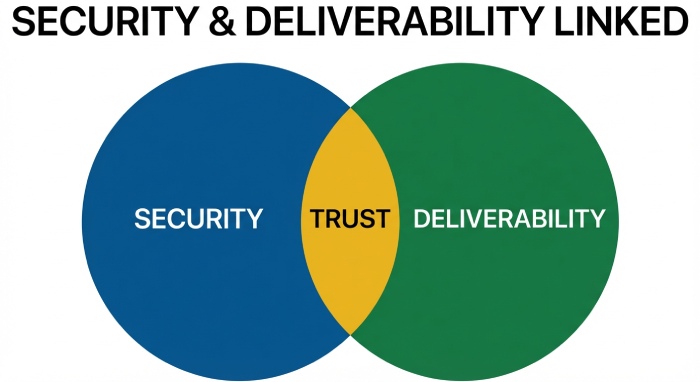
At DMARCReport, we’ve observed a clear shift: email security and email deliverability are no longer separate concerns. They are deeply interconnected—and at the center of both lies DMARC (Domain-based Message Authentication, Reporting, and Conformance).
This article explains why DMARC is no longer optional for enterprises and how it has become a foundational requirement for secure, reliable, and scalable email communication.
The Changing Landscape of Enterprise Email
Enterprise email environments have become increasingly complex. Large organizations often operate:
- Multiple domains and subdomains
- Various third-party email services (CRMs, marketing tools, billing systems)
- Distributed teams sending emails globally
This complexity creates a perfect opportunity for attackers. Without strict authentication, malicious actors can send emails that appear to come from your domain—without ever accessing your systems.
At the same time, mailbox providers have shifted their approach. Instead of trusting senders by default, they now verify identity through authentication protocols. Enterprises that fail to meet these standards face:
- Emails landing in spam folders
- Messages being rejected entirely
- Reduced sender reputation
In short, email is no longer just about sending—it’s about proving authenticity.
What DMARC Does and Why It Matters
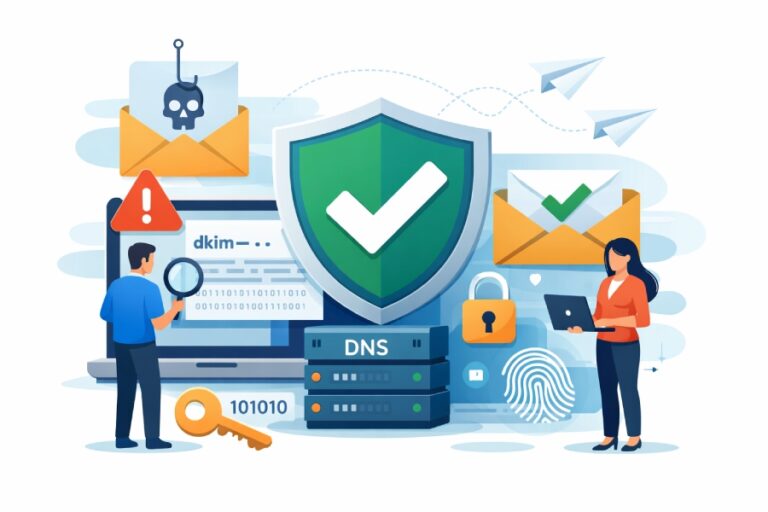
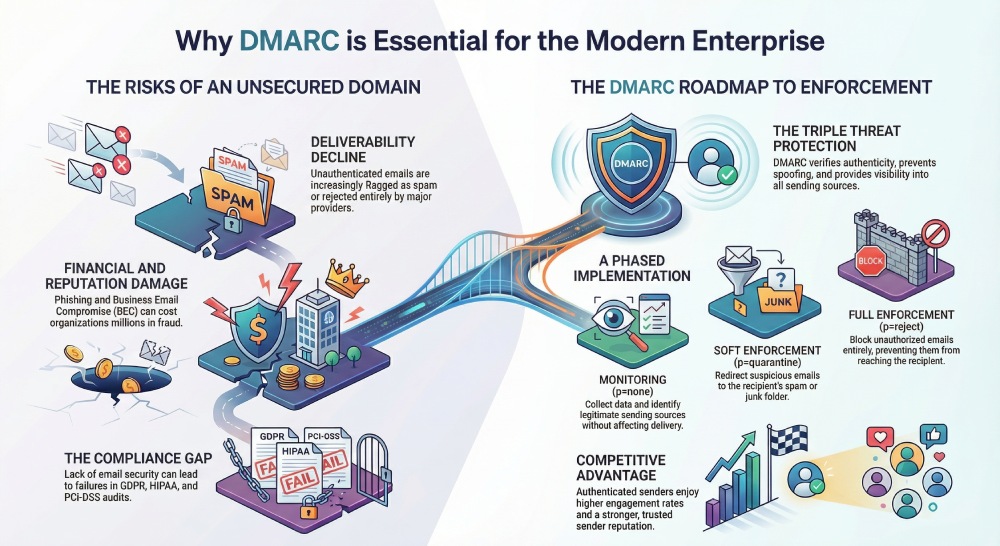
DMARC is an email authentication protocol that builds on SPF (Sender Policy Framework) and DKIM (DomainKeys Identified Mail). It acts as a policy layer that tells receiving servers how to handle emails that fail authentication checks.
At its core, DMARC does three critical things:
1. Verifies Email Authenticity
DMARC ensures that emails claiming to come from your domain are actually sent by authorized sources. It checks alignment between the “From” address and the authentication results of SPF and DKIM.
2. Prevents Domain Spoofing
Without DMARC, attackers can easily impersonate your domain. DMARC allows you to define policies (none, quarantine, reject) that control how fraudulent emails are handled.
3. Provides Visibility
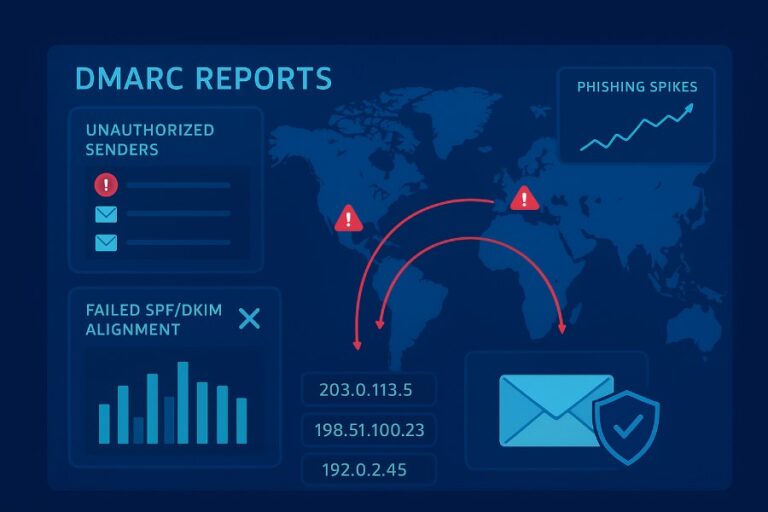
DMARC generates reports that show who is sending emails on behalf of your domain. This visibility is crucial for identifying unauthorized senders and misconfigurations.
By combining enforcement and reporting, DMARC transforms email authentication from a passive check into an active security system.
Why Enterprises Cannot Ignore DMARC
1. Email Deliverability Depends on Authentication
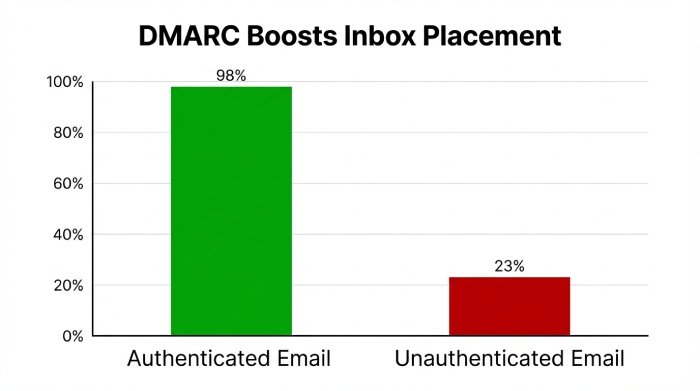
Inbox providers now prioritize authenticated email. If your domain lacks proper DMARC enforcement, your messages are more likely to be filtered or blocked.
For enterprises, this has serious consequences:
- Marketing campaigns fail to reach customers
- Transactional emails (like invoices or OTPs) are delayed
- Internal communications become unreliable
DMARC ensures that your emails are recognized as legitimate, improving inbox placement and engagement rates.
2. Protection Against Phishing and Impersonation
Phishing attacks are more sophisticated than ever. Attackers no longer rely on poorly written emails—they create highly convincing messages that mimic legitimate brands.
Without DMARC:
- Anyone can send emails pretending to be your company
- Customers may fall victim to fraud
- Your brand reputation suffers long-term damage
With DMARC enforcement (especially “reject” policy), unauthorized emails are blocked before they reach recipients, significantly reducing risk.
3. Brand Trust and Customer Confidence
Trust is one of the most valuable assets for any enterprise. Customers expect that emails from your domain are safe and authentic.
When DMARC is properly implemented:
- Recipients are more likely to trust your emails
- Open and click-through rates improve
- Your domain builds a strong sender reputation
Conversely, repeated phishing incidents can erode trust quickly—and rebuilding it is far more difficult than protecting it in the first place.
4. Regulatory and Compliance Requirements
Many industries operate under strict data protection regulations such as GDPR, HIPAA, and PCI-DSS. Email is often a key focus during compliance audits because it is a common entry point for data breaches.
DMARC helps enterprises:
- Demonstrate strong email security controls
- Reduce the risk of data exposure
- Meet regulatory requirements more effectively
In some sectors, failing to secure email communication can result in legal penalties and financial losses.
5. Visibility Into Email Ecosystems
Large enterprises often struggle to track all the systems sending emails on their behalf. Over time, shadow IT and forgotten tools can create hidden risks.
DMARC reporting provides:
- A complete view of all sending sources
- Identification of unauthorized or unknown senders
- Insights into authentication failures
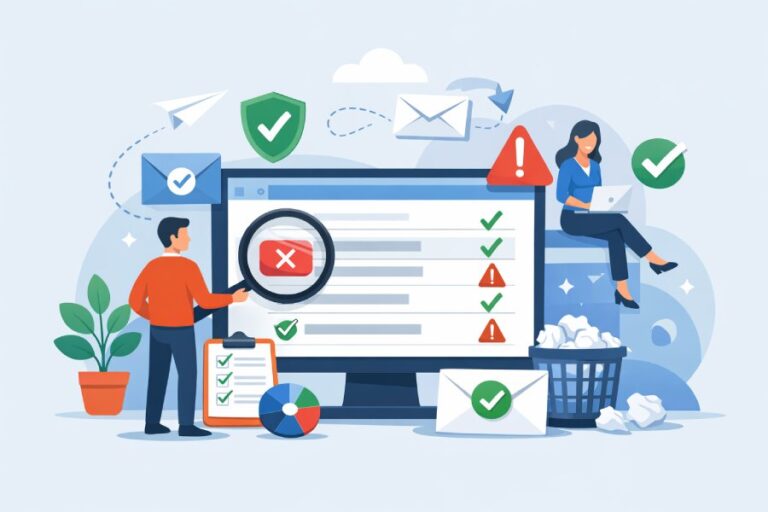
This visibility allows security teams to take control of their email infrastructure and eliminate vulnerabilities.
The Cost of Not Implementing DMARC
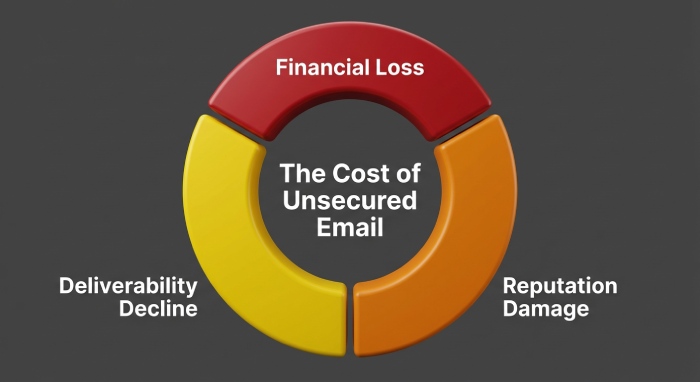
Ignoring DMARC is not a neutral decision—it introduces measurable risks.
Financial Losses
Phishing and business email compromise (BEC) attacks can lead to direct financial fraud, often costing organizations millions.
Operational Disruption
Email failures can interrupt critical workflows, from customer support to payment processing.
Reputation Damage
A single spoofing attack can damage years of brand-building efforts.
Deliverability Decline
Without authentication, your emails may never reach their intended recipients, reducing return on Investment (ROI) on email campaigns.
As email providers continue to enforce stricter policies, these risks are only expected to grow.
DMARC as a Competitive Advantage
Enterprises that fully implement DMARC gain more than just security—they gain a strategic edge.
Improved Inbox Placement
Authenticated emails are prioritized by mailbox providers, leading to better deliverability.
Higher Engagement Rates
When emails consistently reach the inbox, open rates and conversions improve.
Stronger Sender Reputation
DMARC contributes to a positive reputation score, which influences long-term email performance.
Differentiation in the Market
Companies with secure, reliable email communication stand out in crowded inboxes.
In today’s competitive landscape, trust and reliability are powerful differentiators—and DMARC helps establish both.
Implementing DMARC the Right Way
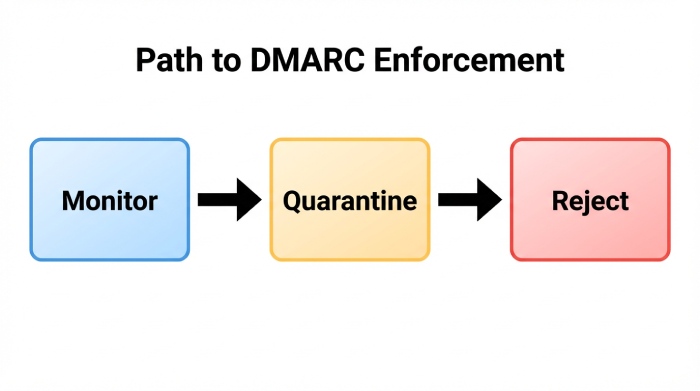
Adopting DMARC is not a one-step process. Enterprises must follow a phased approach to ensure smooth implementation.
Step 1: Start with Monitoring (p=none)
Begin by collecting data without affecting email delivery. This helps identify all legitimate sending sources.
Step 2: Analyze and Align
Ensure that all email sources are properly configured with SPF and DKIM. Fix any alignment issues.
Step 3: Move to Quarantine
Gradually enforce policies by sending suspicious emails to spam folders.
Step 4: Enforce Reject Policy
Once confident, block unauthorized emails completely to prevent spoofing.
Step 5: Continuously Monitor
DMARC is not a “set-and-forget” solution. Ongoing monitoring is essential to maintain security and performance.
The Role of DMARC Platforms in Enterprise Environments
While DMARC itself is a standard, managing it at scale requires specialized tools.
Enterprise-grade DMARC platforms provide:
- Simplified setup and configuration
- Real-time monitoring and reporting
- Automated workflows for large infrastructures
- Clear visualization of complex data
These tools help organizations move from basic implementation to full enforcement without disrupting legitimate email flows.
Deliverability and Security: Two Sides of the Same Coin
One of the biggest misconceptions about email is that deliverability and security are separate goals. In reality, they are deeply interconnected.
- Strong security improves deliverability
- Better deliverability reinforces trust
- Increased trust enhances engagement
DMARC sits at the intersection of these outcomes, making it a cornerstone of modern email strategy.
Conclusion
At DMARCReport, we see DMARC not as an optional upgrade, but as a fundamental requirement for enterprise email.
In an environment where:
- Cyber threats are more advanced than ever
- Email providers enforce strict authentication rules
- Customers demand trust and transparency
DMARC provides the foundation for secure and reliable communication.
Enterprises that adopt DMARC gain:
- Protection against phishing and spoofing
- Improved email deliverability
- Enhanced brand trust
- Stronger compliance posture
Those that delay adoption risk falling behind—not just in security, but in overall business performance.
The message is clear:
If email matters to your enterprise, DMARC is no longer optional—it’s essential.