Why do you need to receive DMARC emails?


On the surface, implementing DMARC with a strict policy may seem enough to keep your domain secure, but enforcement alone only controls how the receiving server handles emails that fail authentication checks. But what if your legitimate emails start failing authentication checks or unauthorized sources begin sending emails using your domain without your knowledge?
To know what’s really happening with your domain, you need visibility into your email activity. That’s where DMARC comes in.
These reports are not random emails that flood your inbox; they are structured data generated by the receiving servers that show how emails claiming to be from your domain are authenticated and handled.
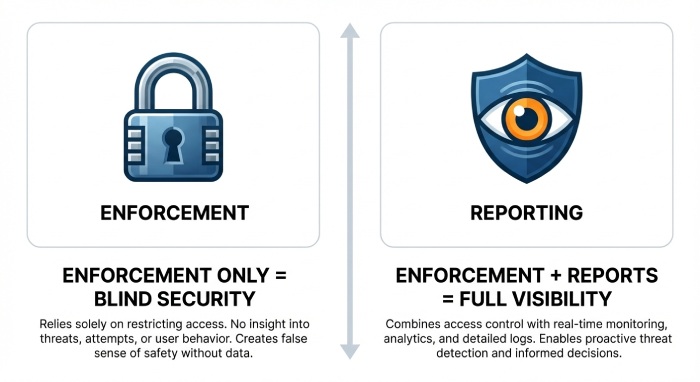
If you let these DMARC reports fill your mailbox without leveraging them, you are missing their actual value. Their purpose is to provide you with important information about your email activity, such as identifying legitimate and unauthorized sources sending emails on your behalf and detecting misconfigurations that may be causing authentication failures.
Let us understand why these reports matter and how they help you stay on top of your domain’s email activity.
What is a DMARC report, and what does it tell you?
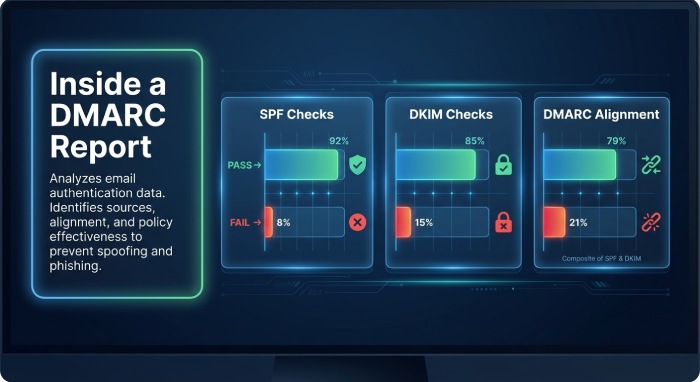
A DMARC report is a summary of your outgoing email activity that shows how recipients’ servers handle your emails. So, when you implement DMARC for your domain, that’s when you choose to receive these reports by adding a reporting address in your DMARC record.
Although we said it is a choice, DMARC reporting is not really optional, because without it, you have no visibility into how your domain is being used in email communication.
DMARC reports provide insights into critical aspects of your email activity. This includes details like who is sending emails from your domain, whether those emails pass authentication checks such as SPF and DKIM, and how they are handled by receiving servers. They also help you understand the volume of emails being sent from different sources and whether those sources are properly aligned with your domain’s authentication policy.
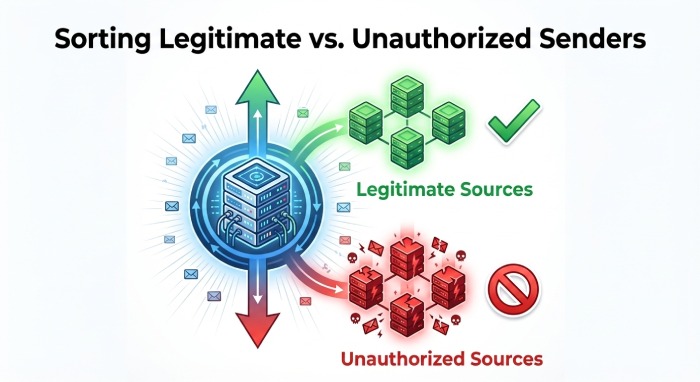
This kind of visibility is important if you need to recognize legitimate senders, detect unauthorized use of your domain, or find any misconfigurations that might be causing authentication failures. Once you have this information, you can use it to take corrective steps, such as fixing authentication issues for legitimate senders and blocking unauthorized ones.
Why do you receive these reports?
As we said earlier, DMARC reporting is a feature you enable when configuring DMARC for your domain. So, once you tell the receiving servers where to send these reports, they begin sharing data on how emails using your domain are being authenticated and handled.
Even though you can choose not to enable DMARC reporting, we recommend treating it as non-negotiable rather than optional. After all, without these reports, you can never know what is really happening with your domain. Without that information, you cannot really work on or fine-tune your authentication strategy.
If you truly want to prevent unauthorized use of your domain while ensuring your emails reach their recipients securely, you need these reports. They show you what’s going on with your domain, who is sending emails from it, which sources are working fine, and which are failing authentication.
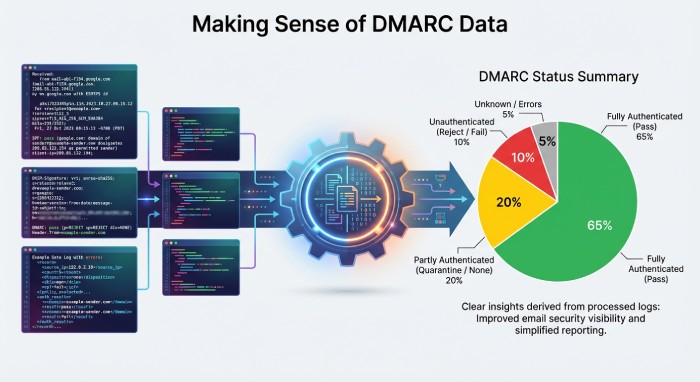
With DMARC reporting in place, you get full agency over your domain. This means instead of just setting a policy and hoping it works, you can actually see what is happening and take action when needed.
Why do you need these reports?
Your domain is only as protected as your ability to see and understand what’s happening with it. If you don’t know whether your domain is being misused or if your emails are reaching inboxes, you will not be able to take the right steps to fix it.
You might have authentication in place. You might even have a strict DMARC policy. But without visibility, you won’t really know whether everything is working the way it should or if it’s causing problems with your own emails. That’s where DMARC reports come in.
With insights like which sending sources are using your domain, whether those emails are passing authentication checks, and how they are being handled by receiving servers, you start to get a clearer picture of what’s actually happening. And over time, this visibility helps you move from just having DMARC in place to actually using it to manage and protect your domain. As you go through these reports, you start to see which senders are actually legitimate, which ones might need to be removed from the list, and if anything catches your attention.
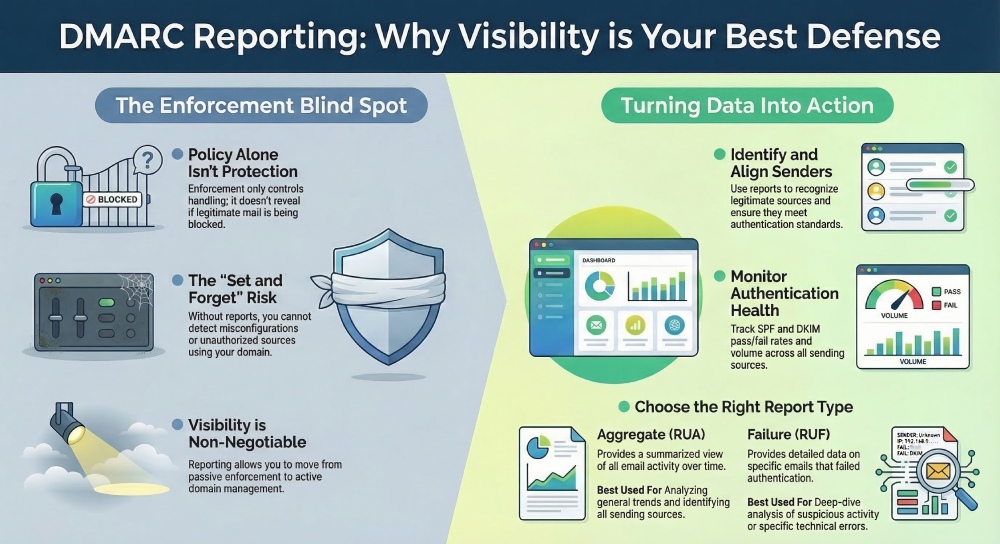
That’s when DMARC becomes more than a protocol you just set once and forget; it becomes something you actively use to manage and protect your domain.
What are these reports all about?
DMARC reports give you a comprehensive view of your domain’s email activity. From how your domain is being used to send emails to how the receiving servers are perceiving them, these reports tell you everything you need to know about what is going on with your domain.
Apart from giving you insights into who is sending emails on behalf of your domain and how these emails are passing authentication checks, these reports also show how receiving servers are handling them. With these reports, you can know whether your emails are being accepted, marked as suspicious, or rejected based on your DMARC policy. They also tell you how many emails are being sent from different sources on your behalf and whether those sources are properly aligned with your domain.
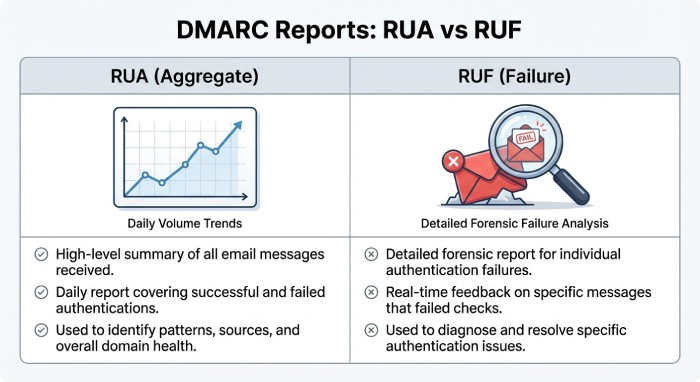
Most of this information comes through aggregate (RUA) reports, which provide a summarized view over a period of time. These reports are most referred to because they are easier to analyze and do not include any data related to a specific email or sender.
There are also failure (RUF) reports, which provide more detailed information about specific emails that fail authentication checks. These reports are only referred to in cases where you need a deeper analysis of authentication failures or suspicious activity.
While DMARC reports tell you everything that you need to know about your domain’s email sending activity, they can be a bit confusing to read and comprehend. If you need help in analyzing your DMARC reports, you may need a tool or platform to make sense of them. Reach out to us to know more!