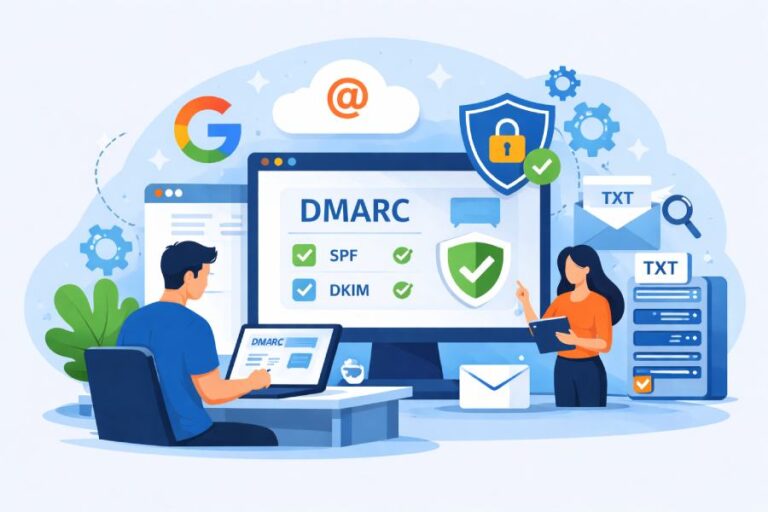
Zoho Mail SPF And DKIM Setup: A Complete Beginner-Friendly Guide
Email is still the backbone of business communication—but only when your messages actually reach the inbox. If you’re using Zoho Mail and struggling with low open rates, emails landing in spam, or warnings about authentication, SPF and DKIM are not optional anymore—they’re essential.
At DMARCReport, we work with organizations every day to fix email deliverability issues and protect domains from spoofing and phishing. One of the most common problems we see? SPF and DKIM records that are missing, misconfigured, or never properly verified.
In this guide, we’ll walk you through how to set up SPF and DKIM for Zoho Mail step by step, using clear language and practical examples—no deep technical background required.
Why SPF and DKIM Matter for Zoho Mail
Before jumping into setup, it helps to understand why these records matter.
Email providers like Gmail, Outlook, and Yahoo want proof that:
- You’re allowed to send email from your domain
- Your messages haven’t been altered in transit
- You’re not impersonating someone else
That’s where SPF and DKIM come in.
What Is SPF?
SPF (Sender Policy Framework) tells receiving mail servers which email services are authorized to send email on behalf of your domain.
When you send an email from Zoho Mail, the recipient’s server checks your SPF record. If Zoho is listed as an approved sender, the email passes SPF. If not, the message may be flagged as spam—or rejected entirely.
What Is DKIM?
DKIM (DomainKeys Identified Mail) adds a digital signature to your outgoing emails. This signature allows receiving servers to verify that:
- The email really came from your domain
- The content wasn’t modified after it was sent
SPF validates where the email came from. DKIM validates what was sent. Together, they build trust.
What You Need Before Getting Started
To configure SPF and DKIM for Zoho Mail, you’ll need:
- Access to your domain’s DNS manager (usually through your domain registrar or hosting provider)
- Admin access to Zoho Mail
- A little patience—DNS changes can take time to propagate
No coding or advanced networking knowledge required.
How to Set Up SPF for Zoho Mail
Step 1: Check If You Already Have an SPF Record
Most domains already have an SPF record—especially if you use multiple email tools.
Log in to your DNS manager and look for a TXT record that starts with:
v=spf1
If you find one, do not create a second SPF record. Having multiple SPF records breaks authentication. Instead, you’ll update the existing one.
Step 2: Add Zoho to Your SPF Record
Zoho Mail requires the following SPF mechanism:
include:zoho.com
If You Don’t Have an SPF Record
Create a new TXT record with:
v=spf1 include:zoho.com ~all
- ~all means “soft fail” and is recommended for beginners
If You Already Have an SPF Record
Simply add include:zoho.com inside the existing record, like this:
v=spf1 include:zoho.com include:_spf.google.com ~all
Make sure:
- There is only one SPF record
- The record stays under the 10 DNS lookup limit
Step 3: Save and Wait for DNS Propagation
DNS updates can take anywhere from a few minutes to 48 hours. Once saved, Zoho Mail will start authenticating messages using SPF.
How to Set Up DKIM for Zoho Mail
SPF alone isn’t enough for strong email authentication. DKIM adds an extra layer of credibility—and many inbox providers now expect it.
Step 1: Generate a DKIM Record in Zoho Mail
- Log in to Zoho Mail Admin Console
- Go to Domains → Select your domain
- Click DKIM → Add DKIM Record
- Choose a selector name (Zoho may suggest one)
- Generate the DKIM key
Zoho will provide:
- A TXT record name (host)
- A TXT record value (DKIM public key)
Step 2: Publish the DKIM Record in DNS
Go to your DNS manager and create a new TXT record using the values Zoho provides.
Important tips:
- Copy the value exactly—no extra spaces
- If the key is long, make sure your DNS provider supports long TXT records
Step 3: Verify DKIM in Zoho
Once the record is added:
- Return to Zoho Mail
- Click Verify next to your DKIM record
If verification fails, don’t panic. Common causes include:
- DNS propagation delay
- Incorrect formatting
- Using the wrong selector
Wait a little and try again.
Common SPF and DKIM Mistakes to Avoid
At DMARCReport, we see these issues repeatedly:
Multiple SPF Records
This is the #1 SPF error. Always combine mechanisms into a single record.
Forgetting Other Email Tools
If you use services like:
- Marketing platforms
- Support ticket systems
- Transactional email tools
They must also be included in your SPF record.
DKIM Not Enabled for All Domains
If you have multiple domains or subdomains in Zoho Mail, each one needs DKIM configured separately.

How SPF and DKIM Support DMARC
SPF and DKIM are the foundation of DMARC (Domain-based Message Authentication, Reporting, and Conformance).
DMARC allows you to:
- Tell receiving servers what to do when authentication fails
- Get visibility into who is sending email on your behalf
- Protect your domain from spoofing and phishing
Without SPF and DKIM in place, DMARC simply won’t work.
Once both are configured and passing, you can safely move toward a DMARC policy that actively protects your domain.
How DMARCReport Helps After Setup
Configuring SPF and DKIM is only the beginning.
With DMARCReport, you can:
- Monitor SPF and DKIM pass/fail results
- Identify unauthorized senders
- Simplify complex DMARC reports into readable insights
- Improve inbox placement over time
Email authentication isn’t a one-time task—it’s an ongoing process.
Final Thoughts
Setting up SPF and DKIM for Zoho Mail doesn’t have to be complicated. With the right steps—and a clear understanding of what these records do—you can significantly improve email deliverability and protect your brand’s reputation.
At DMARCReport, we recommend:
- Configure SPF correctly (one record, all senders included)
- Enable DKIM for every sending domain
- Monitor performance and evolve toward DMARC enforcement
Inbox trust is earned—and SPF and DKIM are where it starts.
If you’re ready to go further, DMARCReport is here to help you take full control of your email security and deliverability.