Understanding DMARC RFC: A Comprehensive Guide by DMARCReport
In today’s digital world, email remains one of the most powerful communication channels, but it is also one of the most abused. Every day, millions of malicious emails are sent to deceive recipients — from phishing to brand spoofing to targeted business email compromise (BEC). As these attacks evolve, so too must our defenses.
At DMARCReport, we believe in empowering domain owners with clear technical knowledge, actionable policies, and robust monitoring to protect their email ecosystems. One of the foundational pieces of that defense is the DMARC specification — formally defined in the RFC 7489 standard. This document underpins the entire Domain-based Message Authentication, Reporting, and Conformance (DMARC) protocol.
In this article, we will explore:
- What the DMARC RFC actually is
- How it fits into the broader email authentication landscape
- The key mechanisms that make DMARC effective
- Why this specification matters for organizations of all sizes
- How DMARCReport helps make sense of it all
Let’s begin.
What Is the DMARC RFC?
The term “RFC” stands for Request for Comments — a series of technical and organizational documents used by the Internet Engineering Task Force (IETF) to define standards for the internet. These documents are openly published and form the foundation of nearly every major internet protocol.The DMARC RFC — formally RFC 7489 — was published in March 2015. It defines the DMARC protocol, a mechanism that enables domain owners to express how email receivers should handle messages that fail authentication checks. DMARC also enables reporting so domain owners can gain visibility into email traffic claiming to use their domain.
In essence, the RFC sets the rules of the road for DMARC:
- How to structure a DMARC record
- How verification and alignment work
- What policies domain owners can publish
- How reporting should be communicated
This RFC does not merely describe what DMARC is — it describes what DMARC must do and how receiving servers should interpret DMARC policies to maintain consistent behavior across the global email infrastructure.
Why Was DMARC Introduced?
Before DMARC, two major email authentication protocols existed — SPF (Sender Policy Framework) and DKIM (DomainKeys Identified Mail). While both offered significant protections, they had notable limitations:
- SPF verified that the sending server’s IP was authorized, but it did not validate the visible “From” domain seen by users.
- DKIM cryptographically signed messages, but again didn’t ensure that the signing domain matched the “From” address that users see.
Attackers exploited these gaps by sending emails that passed SPF or DKIM but still appeared to be from a legitimate domain in the recipient’s inbox. DMARC was developed to address this by linking authentication results back to the visible “From” domain and allowing domain owners to tell receivers what to do with unauthenticated messages.The result: a scalable, standardized way to authenticate email, improve email trustworthiness, and drastically reduce domain spoofing.
How DMARC Works: Key Concepts from the RFC
The DMARC RFC defines several major components that make this protocol effective and meaningful. Below, we break these concepts down in a way that is both clear and practical.
1. Policy
A core purpose of DMARC is to let domain owners publish email handling policies in DNS that specify how receivers should treat emails that fail authentication. The DMARC RFC supports three main policy options:
- p=none: Monitoring mode — no specific enforcement. Messages that fail DMARC are treated normally.
- p=quarantine: Emails that fail authentication should be treated as suspicious — e.g., delivered to spam or junk.
- p=reject: The strictest setting — unauthenticated emails should be rejected outright by receiving servers.
These policy settings allow organizations to move gradually from monitoring (p=none) to enforcement (p=reject) as they gain confidence in their authentication posture.

2. Identifier Alignment
One of DMARC’s most innovative features is identifier alignment. This step ensures that the domain seen in the user’s inbox (the From header) “aligns” with the domains authenticated by SPF and DKIM.
Here’s how alignment works:
- SPF Alignment: The domain in the email’s RFC5321.MailFrom (the SMTP return path) must match the domain in the visible From: header.
- DKIM Alignment: The domain in the DKIM signature (d=) must match the domain in the From header.
If either SPF or DKIM passes with strict alignment, the message is considered authenticated. This dual-case approach provides both flexibility and security.
3. Reporting
DMARC wouldn’t be as useful without visibility. The RFC defines two types of reporting mechanisms:
- Aggregate Reports (RUA): Periodic XML summaries that show how many messages passed or failed DMARC checks, along with authentication results broken down by IP and other factors.
- Forensic Reports (RUF): Detailed information about individual messages that failed DMARC — useful for deep investigation and troubleshooting.
These reports give domain owners the insights they need to understand email sources and authentication issues — a capability many organizations lacked prior to DMARC.
DMARC in the Email Authentication Landscape
It’s important to understand that DMARC does not replace SPF or DKIM — instead, it builds on them and fixes key gaps.
Here’s how each plays a role:
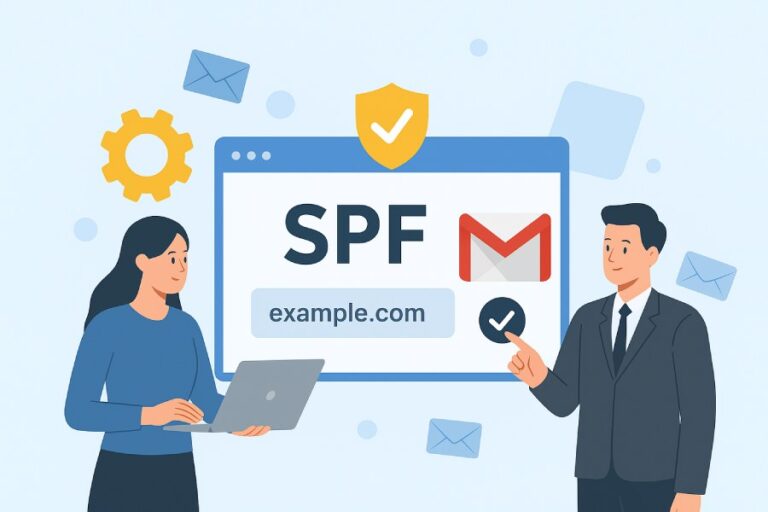
- SPF ensures an email originates from an authorized server.
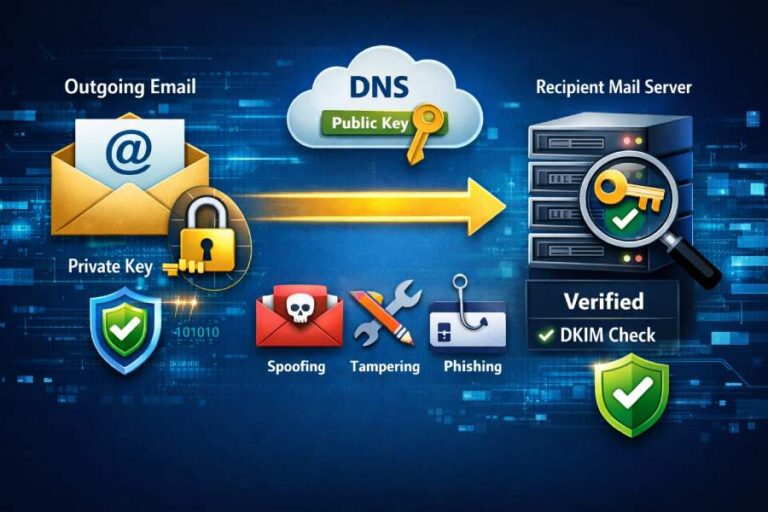
- DKIM ensures the content of an email hasn’t been altered in transit and ties the signed message to a domain.
- DMARC ties one or both of these results back to the visible From address and instructs receivers what to do when authentication fails.
This layered approach improves security dramatically — enabling domain owners to protect sending domains against spoofing and unauthorized use.
Why the DMARC RFC Matters for Organizations
Whether you manage email for a small business or a global enterprise, the principles in RFC 7489 are critical:
Prevent Phishing & Domain Abuse
With a proper DMARC implementation enforcing p=reject, unauthorized emails claiming to be from your domain will be rejected by compliant email receivers. This reduces phishing attacks and domain spoofing that target your customers, partners, and employees.
Increase Deliverability for Legitimate Mail
When your domain has effective DMARC alignment and enforcement, inbox providers like Gmail, Microsoft, and Yahoo see your mail as more trustworthy. This improves deliverability and reduces spam-folder placement.
Gain Visibility Through Reporting
DMARC reporting gives unparalleled insight into how your domain is being used — or abused — in the email ecosystem. Without these reports, many malicious senders would go completely unnoticed.

The Future: DMARCbis and Protocol Evolution
The original RFC 7489 is still the principal standard for DMARC, but the protocol continues evolving. A new draft known as DMARCbis (an updated specification intended to eventually replace RFC 7489) includes improvements to reporting and clarifies existing mechanisms while retaining backward compatibility.
This evolution reflects ongoing needs for clarity, interoperability, and robust security in the world of email authentication.
How DMARCReport Can Help
At DMARCReport, we translate complex standards into practical, actionable guidance:
- Expert interpretation of DMARC reports
- Step-by-step implementation assistance
- Monitoring and insights that reduce authentication failures
- Education that empowers your team to manage email security confidently
We help you move from confusion to clarity — turning raw data from DMARC reports into strategic insights that protect your domain and improve deliverability.
Conclusion
RFC 7489 — the DMARC specification — is not just a technical document. It is the backbone of a protocol that has transformed email security worldwide. By defining authentication alignment, policy enforcement, and reporting mechanisms, the RFC gives domain owners the tools they need to protect their email infrastructure and reputation.
With DMARCReport by your side, you can:
- Understand this specification deeply
- Implement DMARC correctly and confidently
- Monitor your email ecosystem with precision
- Build trust with partners and recipients
DMARC isn’t just a standard — it’s a strategy. Let us help you harness it.