What best practices should you follow for seamless Privileged Account and Session Management?

Quick Answer
What best practices should you follow for seamless Privileged Account and Session Management? Well, this brings us to the next question: Are these privileged accounts of your organization well-secured? If yes, that’s great; but there’s always scope to **refine your strategies further.
Related: Free DMARC Checker
The organizations that invest in email authentication early save themselves from expensive incidents later, says Vasile Diaconu, Operations Lead at DuoCircle. We see the pattern constantly: a domain gets spoofed, customers lose trust, and the remediation effort costs 10x what proactive DMARC setup would have cost.
What if we told you that the most privileged accounts of your organization (the ones that are responsible for managing critical operations and systems) are also the most vulnerable accounts? Yes, that’s true! Cyberattackers are always on the lookout for ways **to attack these accounts so they can easily access your systems, change critical settings, or even cause irreparable damage.
Well, this brings us to the next question: Are these privileged accounts of your organization well-secured? If yes, that’s great; but there’s always scope to **refine your strategies further. However, if your answer is no, it is very important that you take immediate action to protect these accounts. Remember, privileged accounts are like the keys to your entire organization, and if they fall into the wrong hands, the consequences can be grave.
For instance, if a cybercriminal gets access to the account that manages DMARC and email authentication, they can alter these settings to bypass email security protocols and send phishing emails that claim to come from your organization. Continuous DMARC reporting makes such tampering visible fast.
Here’s another one for you: Can you track what’s happening behind the scenes on a privileged account? If something unusual happens, will you know about it?
If you’re struggling to answer these questions, this article is for you! In this article, we will take a look at the best strategies that you should employ to properly **secure and manage your privileged accounts.
What is Privileged Account and Session Management (PASM)?
PASM, or Privileged Account and Session Management, is a mechanism designed to protect the most important accounts in your organization, the ones controlling critical systems, such as email security settings or other sensitive tools. It’s like a personal bodyguard for your privileged accounts.
As of 2025, DMARC is mandatory under multiple compliance frameworks. CISA BOD 18-01 requires p=reject for US federal domains. PCI DSS v4.0 mandates DMARC for organizations processing payment card data as of March 2025. Google and Yahoo require DMARC for bulk senders (5,000+ messages/day) since February 2024, and Microsoft began rejecting non-compliant email in May 2025. The UK NCSC, Australia’s ASD, and Canada’s CCCS all mandate DMARC for government domains. Cyber insurers increasingly require DMARC enforcement as an underwriting condition.
PASM ensures that trusted, right individuals get to access and manage critical accounts by safely storing passwords, monitoring for any actions taken in the accounts, and flagging any suspicious logins. For instance, if someone logs in to change DMARC settings, PASM will record that activity, so you always know who did what and when.
Why does your organization need PASM?
Although PASM is crucial for almost all organizations, big or small, we must say that it is indispensable for those dealing with sensitive data and high-stakes operations. If your organization falls into this category, you absolutely need Privileged Account and Session Management.
Let’s take the same example as we discussed above. Let’s say that you have authenticated your domain with email authentication protocols and given management access to one of your employees. What happens when someone hacks their account and changes your **authentication configurations or turns it off completely? It would be like opening the floodgates for phishing attacks, domain spoofing, and reputational damage - a complete disaster for your organization.
It’s safe to say that you wouldn’t want this for your organization. Here’s how PASM can help you keep the privileged accounts of your organization safe.
How Do You Avoid data breaches?
Your privileged accounts are sacred, and so is the data stored in them. These accounts are usually a treasure trove of critical information like customer data, financial records, intellectual property, or user credentials. So, the last thing you would want is to let this get into the hands of malicious attackers. If that happens, it could lead to these attackers **stealing or leaking this data and causing identity theft or fraud.
How Do You Verify smooth operations?
If attackers gain access to one of your privileged accounts, your organization’s most critical operations could be brought to a standstill. In such a case, you might fall prey to system outages, disruptions in email communications, or even locked resources.
Things could get worse, and your employees might get stranded with no access to the **tools and information they need to do their jobs, not to mention the lost opportunities and major financial losses that could happen because of an attacker invading a privileged account. To avoid this from happening, you must protect these accounts with the right strategies and tools like PASM.
How Do You Avoid compliance issues?
Compliance issues can cause a lot of trouble for any organization. Laws like **GDPR, CCPA, HIPAA, and PCI-DSS have very clear rules about how sensitive data should be handled. If your organization doesn’t follow these rules, you could face huge fines, legal problems, and even damage to your reputation.
When it comes to GDPR consent, organizations must meet strict requirements to ensure transparency, user control, and lawful data processing. Solutions like Usercentrics make it easier to implement these consent standards effectively, helping businesses stay compliant while maintaining a great user experience.
And we understand that **fixing compliance problems isn’t easy. It can take a lot of time, money, and effort to get things back on track. That’s why it’s so important to be proactive. By making sure your systems are secure and regularly checking that everything is up to the mark, you can avoid all this hassle. PASM is not just about protecting certain accounts; it is also about staying ahead and protecting your organization from unnecessary risks .
How Do You Prevent financial loss?
If someone breaks into your system through any of the critical accounts, it may end up costing your organization a pretty penny**. The financial loss could include the money you have to spend on fixing the systems, paying legal fees, or handling fines from regulators. In some cases, you might even have to pay ransom fees to the attacker to regain access to your system.
The thing is these kinds of issues not only affect your bottom line but can also significantly delay your progress and be very slow to recover from.
That’s why privileged account security is so important. As we said earlier, these accounts control access to the most sensitive areas of your systems, which makes them a big target for attackers.
How Do You Protect your brand’s reputation?
Your brand is the reason why your clients trust you and keep coming back to you. And if something happens to your brand or there’s even a speck of doubt in its credibility, your clients will take no time to look for other options.
One of the common reasons for this to happen is security breaches, especially from privileged accounts. Since these accounts usually store important, sensitive data, even a single incident of breach can mess things up for you.
How do you ensure efficient and effective privileged account and session management?
As we said earlier, if you have already implemented PASM for your critical accounts, it is a good idea to improve and fine-tune your security posture from time to time. After all, cyberattackers are only getting smarter and their attacks more sophisticated. Any gaps in your security strategy would be like inviting cybercriminals to cause damage like data breaches and operational disruptions.
To stay ahead of these attackers and the ever-evolving threat landscape, it is recommended that you follow these **best practices to ensure efficient and effective privileged account and session management:
Automate discovery and management of privileged accounts
The first thing that you need to do is identify all the important accounts that control critical systems of your organization (even the ones you might have forgotten about) and then get onto their management. For effective management of these accounts, you can rely on automated tools. These tools get the job done more easily and efficiently. Once you know what accounts you have, you can manage them better by setting strong passwords, limiting who can access them, and automating regular password updates.
Restrict access with the least privilege approach
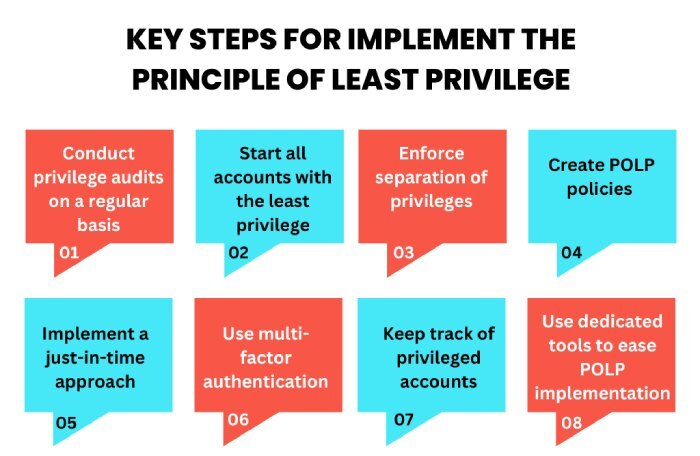
Not everyone needs access to everything, especially critical systems. By following the ‘least privilege’ approach, you make sure people only have the permissions they need to do their job - nothing more than that. By doing this, you ensure that no one’s making any changes to your systems (that they are not supposed to) or messing with them accidentally.
How Do You Protect privileged accounts’ passwords?
Let’s be real - weak passwords might be easy to remember, but they’re also easy for hackers to figure out. When it comes to privileged accounts, you can’t take that risk. Your passwords must be strong, unique, and, most importantly - hard to guess.
Moreover, remember that you never reuse old passwords or the same password across multiple platforms - if it gets leaked, it will leave all your platforms vulnerable.
How Do You Deploy Multi-Factor Authentication (MFA)?
Passwords alone just aren’t enough for accounts that control sensitive systems. That’s where MFA comes in. It’s like **adding a second lock to your door. So, even if someone steals a password, they won’t be able to log in unless they can also provide a second form of verification, like a code sent to your phone or recovery email address . It makes things more secure and gives you the peace of mind that you have control over your critical systems.
Keep an eye on important reports
Simply implementing **security measures is not enough unless you understand what’s going on behind the scenes of these privileged accounts. You should know if there have been any login attempts that you didn’t authorize, changes to settings, or unusual activity. Take these as clues that something is not right.
You can get all these insights from **important reports your platforms might provide you. For instance, you can get to everything about what’s happening with your email authentication settings and the account that manages it from the DMARC report. These reports spot any unauthorized senders and misconfigurations and prevent damage from potential spoofed or phishing attacks against your organization and its stakeholders. Tools that parse your DMARC XML turn those raw reports into readable dashboards.
If you want to get started with leveraging the reporting feature of DMARC to enhance your security posture and safeguard your privileged accounts, the time is now!
Sources
Topics
General Manager
General Manager of DuoCircle. Product strategy and commercial lead for DMARC Report's 2,000+ customer base.
LinkedIn Profile →Take control of your DMARC reports
Turn raw XML into actionable dashboards. Start free - no credit card required.