Why Google, Yahoo, Microsoft, and iCloud Are Enforcing Stricter Email Authentication Standards

Why Google, Yahoo, Microsoft, and iCloud Are Enforcing Stricter Email Authentication Standards

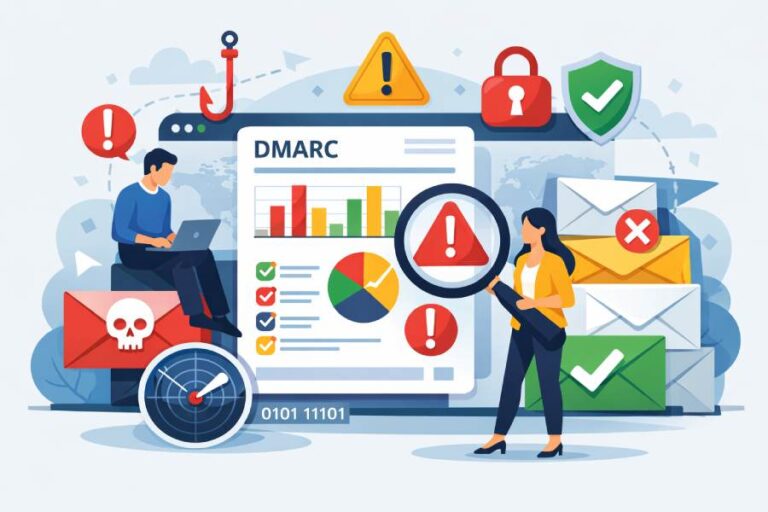
Email continues to be one of the most widely used communication channels for businesses, consumers, and service providers worldwide. However, its widespread use has also made it a prime target for abuse. Phishing, spoofing, and impersonation attacks have increased dramatically, causing significant financial losses and eroding trust in email communication. To counter these threats, major…

How can I perform a DKIM lookup for my domain to verify my email authentication?

How can I perform a DKIM lookup for my domain to verify my email authentication?

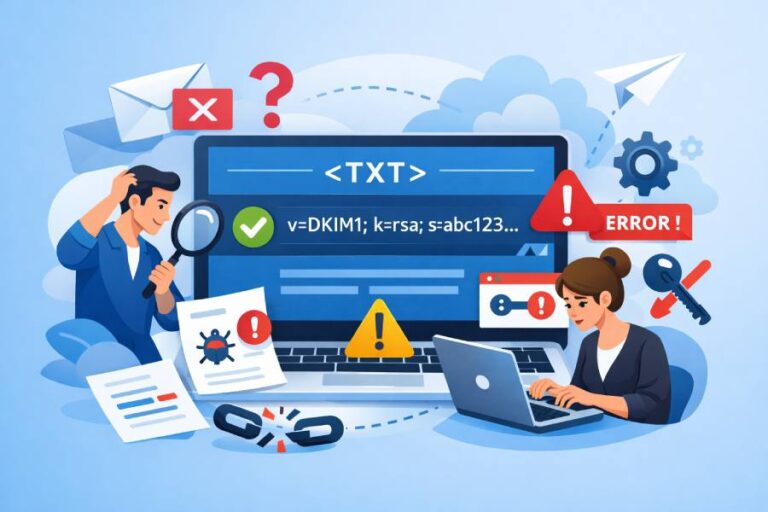
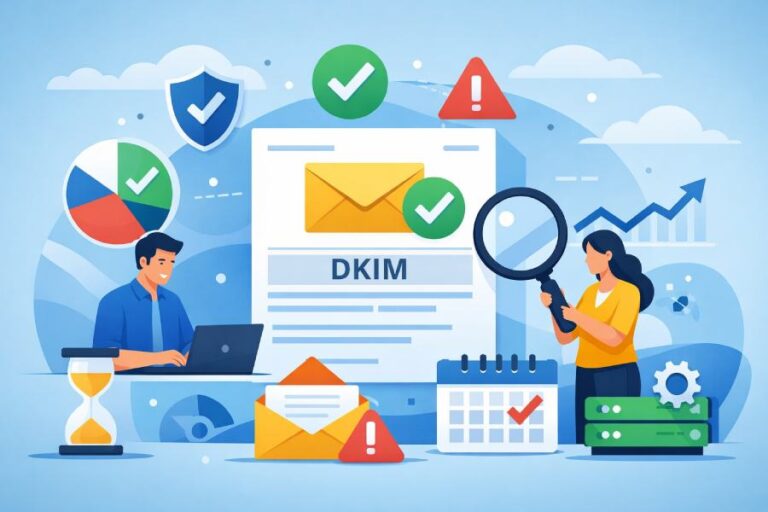
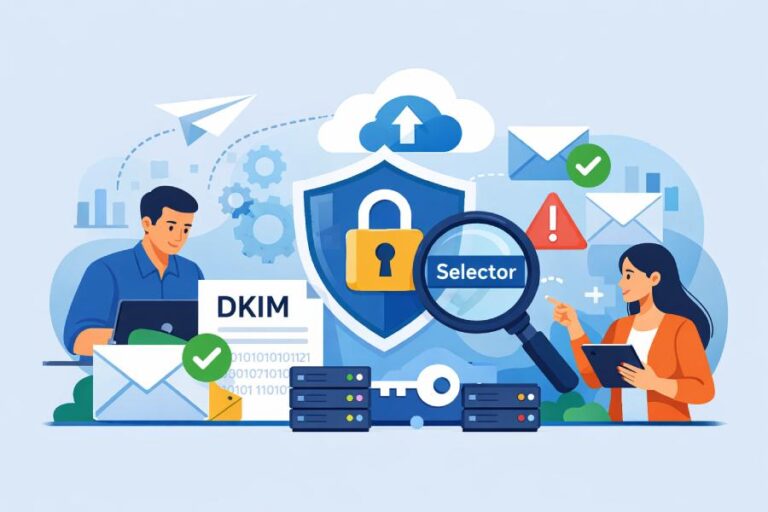
To perform a DKIM lookup for your domain and verify email authentication, extract the DKIM selector from a signed message’s header, build the DNS name as selector._domainkey.yourdomain, query its TXT record with dig/nslookup (or an API), interpret the key tags, and optionally validate a message’s DKIM-Signature against that published public key. Context and background DKIM…

Configuring WP Mail SMTP for Authenticated WordPress Emails

Configuring WP Mail SMTP for Authenticated WordPress Emails

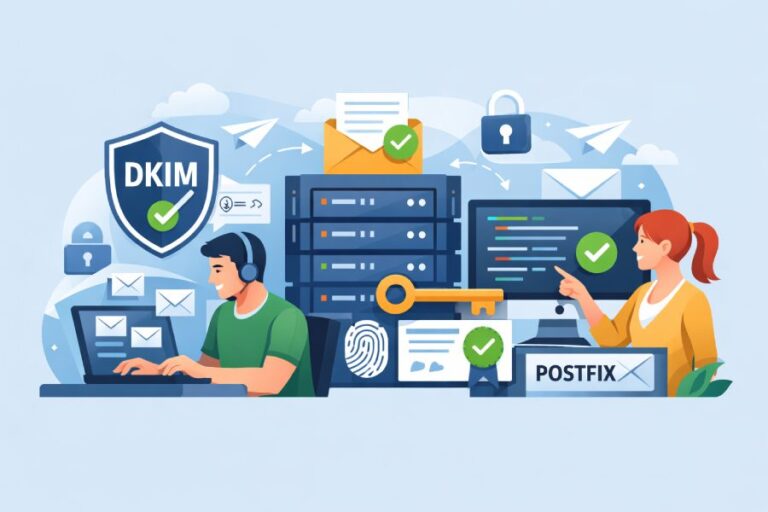
If you run a website based on WordPress and rely on it to send emails — user sign-up confirmations, notifications, password resets, newsletters, or contact-form replies — then you probably know how finicky email deliverability can be. Out-of-the-box WordPress typically uses the PHP mail() function, which often results in un-authenticated emails that get flagged as…

Why Some MSPs Keep Growing While Others Stall: 5 Behavioural Differences That Matter

Why Some MSPs Keep Growing While Others Stall: 5 Behavioural Differences That Matter

The divide between MSPs that grow year after year and those that plateau is getting wider. And it has nothing to do with: What separates growing MSPs from stagnant ones is how they operate day to day. The MSPs that scale intentionally adopt a small set of behaviours that most others either postpone, overthink, or…

A Practical DMARC Guide for MSPs: Securing Client Email and Building a Scalable Managed Service

A Practical DMARC Guide for MSPs: Securing Client Email and Building a Scalable Managed Service

Email continues to be one of the easiest ways for attackers to reach businesses. Phishing, spoofing, and brand impersonation attacks rely heavily on email because it is trusted, widely used, and difficult to police without proper controls. For service providers responsible for protecting client environments, securing email identity has become a foundational requirement. This is…

What is the impact of DMARC on email deliverability for Office 365 users?

What is the impact of DMARC on email deliverability for Office 365 users?

Implementing DMARC in Office 365 measurably improves inbox placement and reduces spoofing by giving Exchange Online Protection (EOP) and Outlook strong, aligned authentication signals (SPF/DKIM), but misconfiguration or unenrolled third‑party senders can lead to legitimate messages being quarantined or rejected—so phased rollout and continuous monitoring are essential. DMARC (Domain-based Message Authentication, Reporting, and Conformance) sits…

How to Add a DKIM Record to Cloudflare — A Complete Guide by DMARCReport

How to Add a DKIM Record to Cloudflare — A Complete Guide by DMARCReport

In today’s digital world, email continues to be one of the most essential forms of communication for businesses. From customer support to marketing campaigns and internal workflow, email delivers critical messages every second. But as the volume of email grows, so do threats like phishing, spoofing, and spam. That’s where proper email authentication steps in…

How can I use a DMARC creator to generate a correct DMARC DNS record?

How can I use a DMARC creator to generate a correct DMARC DNS record?

Use a DMARC creator like DMARCReport by entering the required tags (v=DMARC1 and p), selecting optional tags (rua, ruf, adkim, aspf, sp, pct, fo), validating syntax/alignment and report routing, then publishing the generated TXT record at _dmarc.yourdomain with a staged monitoring-to-enforcement plan and ongoing report-driven tuning. Context and background: what a DMARC creator does and…

How a DKIM Replay Attack Successfully Spoofed Google — A Deep Dive

How a DKIM Replay Attack Successfully Spoofed Google — A Deep Dive

In today’s email threat landscape, phishing attacks have grown far more sophisticated than ever before. Gone are the days when scammers relied on bad grammar, obvious spoofed domains, or clearly malicious links. Modern attacks can mimic legitimate system alerts so convincingly that even tech-savvy users hesitate to dismiss them. One such evolving threat is what’s…

How can I implement a DMARC policy for domains using Gmail or Google Workspace?

How can I implement a DMARC policy for domains using Gmail or Google Workspace?

You implement a DMARC policy for a domain using Gmail/Google Workspace by configuring SPF and DKIM alignment for all senders, publishing a DMARC TXT record at _dmarc.yourdomain with monitoring (p=none, rua/ruf), analyzing reports, and then progressively enforcing p=quarantine and p=reject—using pct and sp for subdomains—while monitoring results in Google Admin/Postmaster Tools and DMARCReport. Implementing DMARC…

How can a DMARC Analyzer help reduce phishing emails sent from my domain?

How can a DMARC Analyzer help reduce phishing emails sent from my domain?

A DMARC Analyzer like DMARCReport reduces phishing from your domain by enforcing SPF/DKIM alignment through DMARC policy, mapping and eliminating unauthorized senders with aggregate/forensic reporting, and guiding you—via dashboards, alerts, and automated policy recommendations—from monitor to quarantine/reject without disrupting legitimate mail. DMARC (Domain-based Message Authentication, Reporting & Conformance) is the control plane for email identity:…

FreshMail DKIM & SPF Setup — A Complete Guide

FreshMail DKIM & SPF Setup — A Complete Guide

If you send email marketing campaigns using FreshMail, you already know how powerful and flexible the platform is. However, to ensure your emails actually reach the inbox and don’t get blocked, flagged as spam, or rejected outright, you need to authenticate your domain properly. That’s where SPF and DKIM come in — two critical email…

What is a DMARC record and why does it matter for my email security?

What is a DMARC record and why does it matter for my email security?

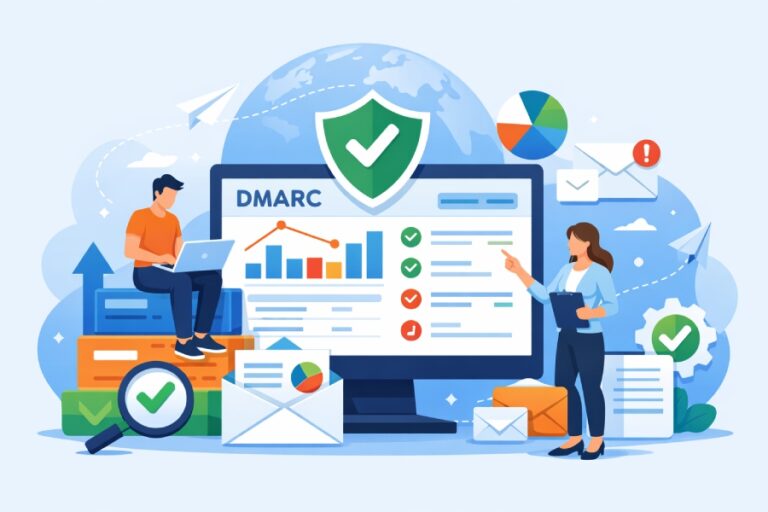
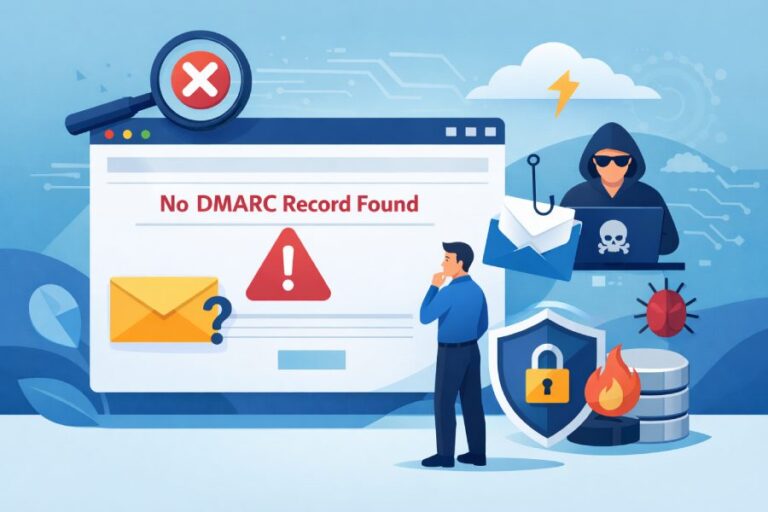
A DMARC record is a DNS TXT policy that tells receiving mail servers how to handle emails that claim to be from your domain by verifying SPF/DKIM alignment, and it matters because it prevents spoofing, improves deliverability, and gives you visibility through reports to enforce authentication safely. DMARC (Domain-based Message Authentication, Reporting & Conformance) builds…

How to Fix “External Verification Failure” — A Complete Guide by DMARCReport

How to Fix “External Verification Failure” — A Complete Guide by DMARCReport

Email authentication is no longer a luxury — it’s a critical part of protecting your domain from abuse, spoofing, phishing, and deliverability issues. At DMARCReport, we help thousands of organizations understand and resolve technical email security problems every day. One of the most common issues domain owners encounter when managing DMARC records is an error…

What are the basic components required to create a DMARC record?

What are the basic components required to create a DMARC record?

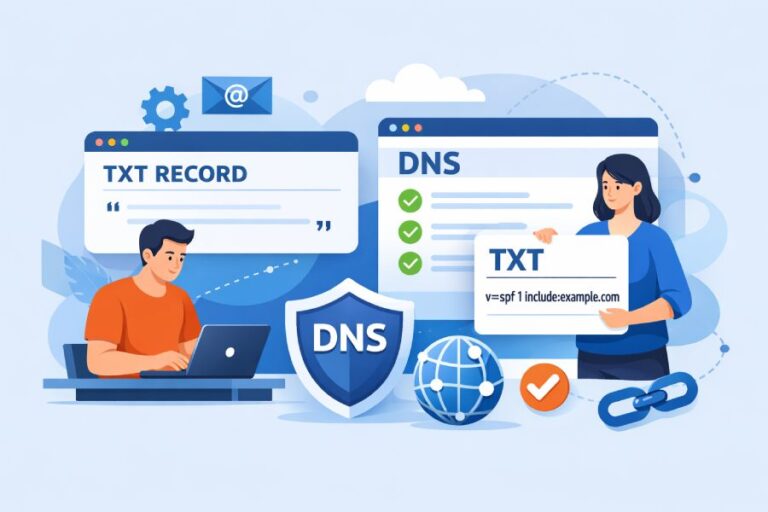
To create a DMARC record, you publish a DNS TXT record at _dmarc.yourdomain.com containing at least v=DMARC1 (this must be first) and p=(none|quarantine|reject), and you typically add optional tags like rua, ruf, pct, adkim, aspf, sp, fo, and ri to control reporting, alignment, rollout, and subdomain behavior. DMARC (Domain-based Message Authentication, Reporting, and Conformance) tells…

Setting Up DMARC for Stronger Email Authentication and Trust

Setting Up DMARC for Stronger Email Authentication and Trust

To set up DMARC for stronger email authentication and trust, correctly configure SPF and DKIM for every sending source, publish an initial monitoring DMARC policy (p=none) with aggregate/forensic reporting, analyze alignment and failure data, then progressively enforce to p=quarantine and p=reject while maintaining DKIM key hygiene and continuous monitoring. DMARC (Domain-based Message Authentication, Reporting, and…